Faculty & Staff
The Wildlife faculty is a team of ecologists with expertise in conservation, animal behavior, disease, environmental ethics, population ecology, spatial ecology, urban ecology, and wildlife-habitat relationships.
Department Chair
-
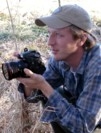
Daniel Barton
* Graduate FacultyDepartment Chair & Associate Professor
- Daniel.Barton@humboldt.edu
- (707) 826-3430
- WDFS 222
- Daniel's website »
Life history evolution, basic and applied population ecology, and wildlife conservation. Courses taught: Conservation Biology, Principles of Wildlife Management, Wildlife Ecology and Management, Ecology of Wildlife Populations.
Faculty
-
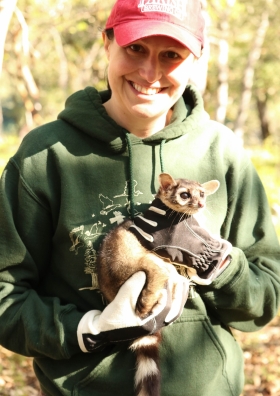
Ange Baker
Lecturer
Ecology and conservation of mammalian carnivores; spatial ecology; impacts of humans in protected areas; animal behavior; California Endangered Species Act recovery planning for terrestrial wildlife
-

Jeff Black
* Graduate FacultyProfessor
- Jeff.Black@humboldt.edu
- (707) 826-3439
- WDFS - Game Pens entry block
Conservation and management of waterfowl and wetland dependent species. Evolution of social behavior and mating systems (e.g. mate choice, pair bonds, parental care).
-

Richard Brown
* Graduate FacultyAssociate Professor
- rnb2@humboldt.edu
- (707) 826-3320
- Wildlife Game Pens Office
Ecological maintenance of pathogens that infect wildlife, transmission ecology, ecological relevance of pathogen strain variation, tick-borne disease ecology, diseases of wild carnivores, and other topics related to wildlife diseases.
-
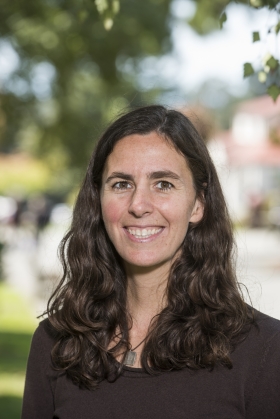
Barbara Clucas
* Graduate FacultyAssociate Professor
- barbara.clucas@humboldt.edu
- (707) 826-5651
- WDFS 154 *The best way to reach me is email
Research Interests: Conservation Biology, Urban Ecology and Animal Behavior.
-
Mark Colwell
* Graduate FacultyProfessor
- mac3@humboldt.edu
- (707) 826-3723
- WDFS 166B
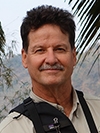
Shorebird ecology, management of wetlands for shorebirds, refuge design. Courses include: Ornithology, Conservation Biology, Management of Shorebirds, Birds and Human Society.
-
Frank Fogarty III
Assistant Professor
- Frank.FogartyIII@humboldt.edu
- (707) 826-3829
- WDFS 260
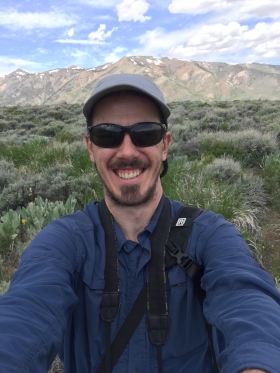
Avian ecology, passerines, community ecology, point count methods and modeling, Bayesian hierarchical modeling
-

Matthew Johnson
* Graduate FacultyProfessor
- matt.johnson@humboldt.edu
- (707) 826-3218
- WDFS 152
Wildlife habitat relationships, habitat selection, habitat quality, integration of human and wildlife needs in agriculture, ecology and conservation of songbirds
-
Nicholas Kerhoulas
* Graduate FacultyLecturer & Research Associate
- Nicholas.Kerhoulas@humboldt.edu
- (707) 826-3459
- WDFS 274
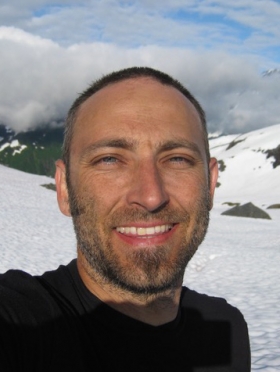
Conservation and management of alpine and arboreal mammals, biogeography, phylogenetics, and conservation genetics. Courses include: Conservation Biology, Management of Mammals.
-
Scott D. Osborn
Lecturer
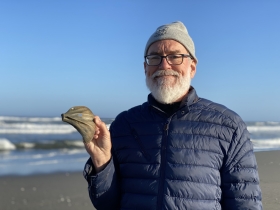
Ecology and conservation of small mammals, especially bats and native rodents. Other interests include physiological ecology of mammals, ecology of coast redwood forests, and desert ecosystems. Dr. Osborn is the statewide coordinator for small mammal conservation at the California Department of Fish and Wildlife.
-
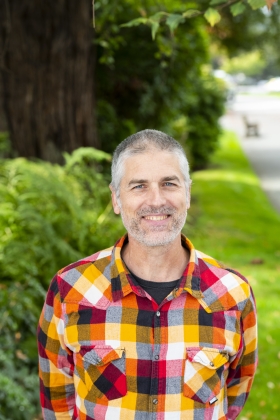
David Sinn
Lecturer
- dls511@humboldt.edu
- (707) 826-3956
- WDFS 256
Animal Behavior, Wildlife Conservation, and Behavioral Ecology. Courses taught: Intro to Wildlife Conservation & Administration, Environmental Ethics, Senior Project, Senior Seminar.
-

Micaela Szykman Gunther
* Graduate FacultyProfessor
- micaela.szykman.gunther@humboldt.edu
- (707) 826-3520
- WDFS 160
Research interests focus on the behavioral ecology of mammals. Her work is primarily based on field studies and uses naturally occurring variation in wild populations to address testable alternative evolutionary hypotheses in behavioral ecology.
-
Ho Yi Wan
* Graduate FacultyAssistant Professor
- HoYi.Wan@humboldt.edu
- (707) 826-3658
- WDFS 262
- Ho Yi's website »
- Ho Yi's research »
Specializes in Spatial and Landscape Ecology. Research interests include species distribution, habitat selection, movement, connectivity, and landscape genetics. His work applies both field and GIS data with multi-scale, machine learning, simulation, and statistical modeling methods to inform management and conservation.
Adjunct Faculty & Research Associates
-

William "Tim" Bean
Adjunct Professor
- bean@humboldt.edu
- (707) 826-3658
- WDFS 262
Spatial and landscape ecology, especially in rodents and other small mammals; uniting novel spatial methods in GIS and remote sensing with traditional field work to aid management; historical ecology and wildlife in the humanities; conservation science.
-
Alan Franklin
Adjunct Professor
Research interest inclue: Ecology and dynamics of wildlife populations, especially in the context of management and conservation problems (e.g., northern spotted owls), quantitative ecology, and wildlife disease ecology at the wildlife-agricultural interface. Dr. Franklin is a Supervisory Research Biologist and Project Leader at the USDA National Wildlife Research Center, Fort Collins, CO.
-
Brian Hudgens
Adjunct Professor
- hudgens@iws.org
- (707) 822-4258
Quantitative ecology and conservation biology. Integrating field studies with population models to predict population dynamics, disease spread in, and dispersal of rare, threatened and endangered species. Study species include amphibians, birds, birds and carnivores. Dr. Hudgens is a research ecologist at the Institute for Wildlife Studies in Arcata, CA.
-
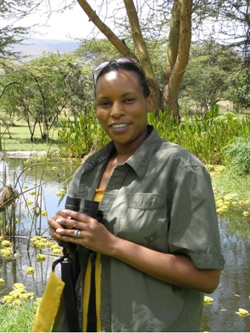
Sharon Kahara
Research Associate
Wetland ecosystem functioning in natural and modified landscapes as well as wetland wildlife use. Past research activities included evaluating impacts of urbanization on aquatic systems in a developing country, and investigating effects of climate and human activities on wetland ecosystem service delivery.
-

Seafha Ramos
Lecturer & Research Associate
- seafha.ramos@humboldt.edu
- MWCC Office
- Seafha's website »
Research interests include small mammal and mesocarnivore ecology, conservation genetics, traditional ecological knowledge in wildlife conservation, human dimensions of wildlife. Course taught: Wildlife Seminar
Emeritus Faculty
-
Richard Botzler
Professor Emeritus
Ecology of Wildlife Diseases, Environmental Ethics
-
T. Luke George
Professor Emeritus
Passerine (songbird) ecology, forest management effects on wildlife, forest fragmentation, island bird populations
-

Richard Golightly
Professor Emeritus
Animal energetics, forest carnivore ecology, nesting ecology of Marbled Murrelets.
-

Ralph Gutierrez
Professor Emeritus
Game Bird Ecology, with particular emphasis on the spotted owl; habitat relationships of wildlife with an emphasis on sustainable wildlife management strategies for forest-dwelling species.
-
David Kitchen
Professor Emeritus
Ungulate behavior and ecology, wildlife ethology.
-
Archie Mossman
Professor Emeritus
Game Management, Wildlife Utilization and Game Ranching
Staff
-

Gilly Black
Academic Advisor & Lecturer
- gcb4@humboldt.edu
- (707) 826-3458
- WDFS 268
Gilly Black is the Academic Advisor for first and second year students in the Wildlife, Environmental Science & Management and Forestry departments. Gilly's duties include meeting regularly with students to provide sound advising for course schedules, making recommendations on progress towards degree and helping freshmen and sophomore students to create personalized graduation plans. She can also connect you to relevant and appropriate resources that will help you make the most of your time in college.
Gilly also teaches WLDF 111 - Introduction to Wildlife. This class is open to all students, whether they have declared the Wildlife major or would like to know more about the program, resources and potential careers.
-
Antoine Chery
Stockroom Manager
- amc1434@humboldt.edu
- (707) 826-3460
- WDFS 168
The Wildlife and Fisheries stockroom is filled with equipment and supplies to support teaching and research such as binoculars and spotting scopes, mammal live-traps, aquatic sampling devices, GPS units, etc. With proper training, many of the items can be checked out to students enrolled is Wildlife classes for individual projects.
-
Anna E. Goldman
Wildlife Museum Curator
- aeg104@humboldt.edu
- (707) 826-4034
- WDFS 228
As curator of the wildlife museum, Anna prepares, catalogs, and maintains bird and mammal specimens and exhibits for classes and research. Areas of research interests include vertebrate and invertebrate ecology, trophic interactions, and using natural history collections to further our understanding of change over time. Ultimately, she considers herself a naturalist and wants to inspire students' curiosity with the natural world. In addition, she is the primary contact person for Humboldt County for the Marine Wildlife Care Center within the Oiled Wildlife Care Network along the California coast.
-