

Undergraduate Requirements
See Wildlife Masters Program for information on the master
of science degree with an option in Wildlife.
Department Chair
Matt Johnson, Ph.D.
Wildlife & Fisheries Building 220
(707) 826-3218
www.humboldt.edu/wildlife
The Program
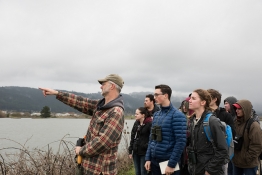
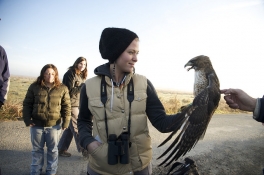
Humboldts wildlife students have the advantage of living close to the ocean, wetlands, and
many wildlife sanctuaries. Nearly five million acres of national forest, parks, and public wilderness
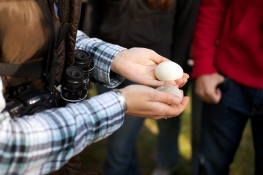
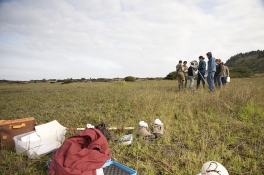
lands offer hands-on study of wildlife, ecology, and management. Students frequently take field trips
to surrounding wildlife areas and focus on laboratory study.
Humboldts graduates do well as: wildlife biologists, soil scientists, wildlife managers, wildlife
refuge managers, park rangers, naturalists, preserve managers, fish and game wardens, conservation
officers, fisheries technicians, forestry technicians, range conservationists, agricultural inspectors,
and environmental planners.
Preparation
In high school take mathematics, chemistry, biology, and any environmental studies that may be available. Students are expected to be proficient in computer applications.
Requirements for the Major
Option 1 Wildlife Management & Conservation
Download the Major Contract (pdf)
LOWER DIVISION
Life Sciences
- BIOL 105 Principles of Biology
- (4). Fundamental processes of life. Structure and function of cells, genetics, evolution, and ecology. [Prereq: CHEM 107 or 109. All with grade of C - or better. Weekly: 3 hrs lect, 3 hrs lab. GE.]
- BOT 105 General Botany
-
(4). Structure, function, reproduction, life cycles, and phylogenetic relationships of major plant groups. Relationships of plants to other organisms and to human activities. [Weekly: 2 hrs lect, 6 hrs lab. GE.]
- ZOOL 110 General Zoology
-
(4). Structure, function, evolution, and diversity of major groups of animals. [Weekly: 3 hrs lect, 3 hrs lab.]
Physical Sciences
- CHEM 107 Fundamentals of Chemistry
-
(4). Terminal course. Fundamental concepts and applications of general and inorganic chemistry. [Letter grade only. Prereq: math code 30. Weekly: 3 hrs lect, 3 hrs lab. GE.]
- or
- CHEM 109 General Chemistry
-
(5) FS. Fundamental concepts: stoichiometry, gases, atomic theory, solutions, bonding, acid/base theory, kinetics, equilibrium, thermochemistry, aqueous equilibria, thermodynamics, electrochemistry, descriptive inorganic chemistry, qualitative analysis. For students in science, engineering, and related majors. [Letter grade only. Prereq: math code 40. Prereq for CHEM 110: CHEM 109. CHEM 109: weekly: 3 hrs lect, 3 hrs lab, 1 hr disc. CHEM 110: weekly: 3 hrs lect, 6 hrs lab.]
- One of the following:
- CHEM 110 General Chemistry
-
(5) FS. Fundamental concepts: stoichiometry, gases, atomic theory, solutions, bonding, acid/base theory, kinetics, equilibrium, thermochemistry, aqueous equilibria, thermodynamics, electrochemistry, descriptive inorganic chemistry, qualitative analysis. For students in science, engineering, and related majors. [Letter grade only. Prereq: math code 40. Prereq for CHEM 110: CHEM 109. CHEM 109: weekly: 3 hrs lect, 3 hrs lab, 1 hr disc. CHEM 110: weekly: 3 hrs lect, 6 hrs lab.]
- CHEM 328 Brief Organic Chemistry
-
(4) FS. For majors in biological science/natural resource areas. Nomenclature, physical properties, synthesis, and reactions of compounds representing major functional group categories. Reaction mechanisms emphasized. [Letter grade only. Prereq: CHEM 107 or 109 with C- or higher. Weekly: 3 hrs lect, 3 hrs lab.]
- PHYX 106 College Physics: Mechanics & Heat
-
(4). Noncalculus, for science majors. Mechanics, fluids, heat, sound. [Prereq: MATH 115 or math code 50. Weekly: 3 hrs lect, 3 hrs lab. GE.]
- SOIL 260 Introduction to Soil Science
-
(3). Soil's physical, chemical, and biological properties. Implications for land management. Identify soil parent materials; use soil survey reports. [Prereq: CHEM 107 or 109 or IA. Weekly: 2 hrs lect, 3 hrs lab.]
Mathematics
- MATH 115 Algebra & Elementary Functions
-
(4) FS. In-depth treatment of exponential, logarithmic, trigonometric, and polynomial functions. [Prereq: HSU MATH 42, or math code 40, or MATH 44. Weekly: 3 hrs. lect. and 1 hr. discussion.]
- BIOM 109 Introductory Biometrics
-
(4). Descriptive statistics, probability, random variables, discrete and continuous distributions, confidence intervals, contingency tests, regression and correlation, tests of hypothesis, analysis of variance. Emphasis: methods and applications used in the biological and natural resource sciences. [Prereq: MATH 115 (may be concurrent with IA) or math code 50 or IA. GE.]
Conservation, Policy & Administration
-
WLDF 210 Introduction to Wildlife Conservation & Administration
-
(3). History of relationship between wildlife and people, including laws and regulatory agencies. Different cultural perspectives.
- WLDF 244 Wildlife Policy & Animal
- Welfare
(1). Roles of policy, values, ethics, and animal welfare in research and the management of wildlife. Review relevant laws, with emphasis on Animal Welfare Act. [CR/NC.]
UPPER DIVISION
-
BOT 330 Plant Ecology (lecture only)
-
(2). Principles governing structure and dynamics of plant populations and communities. Topics include community sampling, interspecific interactions, population viability analysis, and conservation issues. [Prereq: BIOL 330 or WLDF 301 or WLDF 310 or FOR 231 with a grade of C- or higher.]
- BOT 350 Plant Taxonomy
-
(4). Identify ferns, gymnosperms, and flowering plants. Recognize families and key plants in the local flora. [Prereq: BIOL 105 and BOT 105, or their equivalents. Both with a grade of C- or higher. Weekly: 2 hrs lect, 6 hrs lab or field trip.]
- WLDF 301 Principles of Wildlife Mgmt.
-
(3). Plant / animal ecology; population dynamics;
philosophy. [Prereq: MATH 115 or equivalent,
WLDF 210, BIOL 105 or BOT 105 or ZOOL
110. GE. Weekly: 2 hrs lect, 1 hr disc/quiz; or
3 hrs lect.]
- WLDF 302 / PHIL 302 Environmental Ethics
-
(3). Philosophical approaches to natural resource
use. Ethical and legal perspectives. Weekly: 2 hrs
lect, 1 hr disc. GE.]
- or
- WLDF 309 / PHIL 309 Case Studies in Environmental Ethics
-
(3). Human influence on
distribution of world's fauna. Ethical perspectives.
[GE. CWT. Prereq: completed lower division
GE area B.]
- or
- EMP 425 Environmental Impact Assessment
-
(3). Legislative/judicial history and current implementation
of National Environmental Policy Act
(NEPA) and California Environmental Quality Act
(CEQA). Practice analyzing and preparing impact
assessments for development projects. [Recommended
preparation: EMP 325. Weekly: 2 hrs
lect, one 3-hr lab.]
- WLDF 311 Wildlife Techniques
-
(4). Management
and research techniques. [Prereq: WLDF
244, WLDF 301, STAT 109 or equivalent, or IA.
Weekly: 2 hrs lect, 1 hr disc, 3 hrs lab.]
- WLDF 365 Ornithology I
-
(3). Classification, life
histories, ecology, behavior, and special adaptations
of birds. Identification in field and lab. [Prereq:
BIOL 105 and ZOOL 110, or their equivalents.
Weekly: 2 hrs lect, 3 hrs lab.]
- ZOOL 356 Mammalogy
-
(3). Comparative mammalian
biology. Systematics, morphology, behavior,
reproduction, physiology, ecology, zoogeography.
[Prereq: BIOL 105 and ZOOL 110. All with grades
of C- or higher. Weekly: 2 hrs lect, 3 hrs lab.]
- ZOOL 354 Herpetology
-
(4). Biology, classification,
anatomy, distribution, and life histories of
amphibians and reptiles. [Prereq: BIOL 105 and
ZOOL 110. All with grades of C- or higher. Weekly:
2 hrs lect, 6 hrs lab.]
- or
- FISH 310 Ichthyology
-
(4) FS. Biology of fishes
and fishlike vertebrates. Anatomy/concepts of
systematics of fishes; classifying fishes, particularly
commercial, game, and forage species. [Prereq:
ZOOL 110. Weekly: 3 hrs lect. 3 hrs lab.]
- or
- ZOOL 314 Invertebrate Zoology
-
(5). Comparative
functional morphology, life histories, and phylogeny
of invertebrates. [Prereq: BIOL 105 and ZOOL
110. All with grades of C- or higher. Weekly: 3 hrs
lect, 6 hrs lab.]
- or
- ZOOL 358 General Entomology
-
(4). Classification,
identification, anatomy, physiology, ecology,
behavior, control of insects. [Prereqs: BIOL 105
and ZOOL 110. All with grades of C- or higher.
Weekly: 2 hrs lect, 6 hrs lab/field trip.]
Life Forms & Applied Science / Management
Two of the following courses:
-
WLDF 420 Wildlife Management (Waterfowl)
-
(3). Life histories, ecology, behavior, management
of waterfowl and allied species. [Prereq: WLDF
301, 311, or IA. Recommended: WLDF 365.
Weekly: 2 hrs lect, 3 hrs lab.]
- WLDF 421 Wildlife Management (Upland Game)
-
(3). Life histories, ecology, management of
upland game/allied species. [Prereq: WLDF 301,
311, or IA. Recommended: WLDF 365. Weekly:
2 hrs lect, 3 hrs lab.]
- WLDF 422 Wildlife Management (Mammals)
-
(3). Life histories, ecology, management. [Prereq:
WLDF 301, 311, ZOOL 356, or IA. Weekly: 2 hrs
lect, 3 hrs lab.]
- WLDF 423 Wildlife Management (Nongame Wildlife)
-
(3). Life histories, special management
considerations. Specific taxonomic/ecological
groups vary. [Prereq: WLDF 301, 311. Rep once.
Weekly: 2 hrs lect, 3 hrs lab.]
Habitat Ecology / Management
One of the Following:
- WLDF 430 Ecology & Management of Wetlands Habitats for Wildlife
-
(3). Historical, ecological,
and management implications of manipulating
wetland habitats to benefit wildlife. [Prereq: WLDF
301, 311, or IA. Weekly: 2 hrs lect, 3 hrs lab.]
- WLDF 431 Ecology & Management of Upland Habitats for Wildlife
-
(3). Theoretical and applied
considerations for managing upland habitats to
benefit wildlife species. [Prereq: WLDF 301, 311,
or IA. Weekly: 2 hrs lect, 3 hrs lab.]
Advanced Classes
Two of the following courses:
-
WLDF 450 Principles of Wildlife Diseases
-
(3). Role of disease in wildlife populations; host/
parasite relationships; strategies in controlling
diseases. [Prereq: BIOL 105, ZOOL 110, or their
equivalents. Weekly: 2 hrs lect, 3 hrs lab.]
- WLDF 460 Conservation Biology
-
(3). Endangered
species management, reserve design,
conservation genetics, related concepts. [Prereq:
WLDF 301 (BIOL 330 may substitute), or IA.]
- WLDF 470 Animal Energetics
-
(3). How mammals
and birds acquire, conserve, and exploit
energy and other resources. Microclimates; relationships
to habitat management. [Prereq: BIOL
105; WLDF 301, 311 (ZOOL 310 recommended),
or IA. Weekly: 2 hrs lect, 3 hrs lab.]
- WLDF 475 Wildlife Ethology
-
(3). Behavior of
vertebrates. Relationships between animal behavior
and wildlife management/research. [Prereq:
WLDF 301, 311, or equivalent, or IA. Weekly: 2
hrs lect, 3 hrs lab.]
- WLDF 478 Ecology of Wildlife Populations
-
(3).
Factors influencing growth, regulation, structure,
and fluctuations of wildlife populations. Population
growth, competition, and predator/prey models.
[Prereq: WLDF 301, 311, or IA. Weekly: 2 hrs
lect, 3 hrs lab.]
Capstone Classes
- WLDF 485 Senior Seminar
-
(1). Oral presentation of topic from current
literature. [Prereq: WLDF 311 & senior standing.
Rep twice.]
- WLDF 490 Honors Thesis
-
(3). Independent
research conducted under faculty supervision.
[Prereq: WLDF 311, GPA 3.0 or better. Must take
in last semester or IA.]
- or
- WLDF 495 Senior Project
-
(3). Independent research,
including proposal writing, fieldwork, and
completion of a scientific paper. [Prereq: WLDF
311. Must take in last semester or IA. Rep.]
Option 2 Conservation Biology/Applied Vertebrate Ecology
Download the Major Contract (pdf)
LOWER DIVISION
Life Sciences
- BIOL 105 Principles of Biology
- (4). Fundamental processes of life. Structure and function of cells, genetics, evolution, and ecology. [Prereq: CHEM 107 or 109. All with grade of C - or better. Weekly: 3 hrs lect, 3 hrs lab. GE.]
- BOT 105 General Botany
-
(4). Structure, function, reproduction, life cycles, and phylogenetic relationships of major plant groups. Relationships of plants to other organisms and to human activities. [Weekly: 2 hrs lect, 6 hrs lab. GE.]
- ZOOL 210 Principles of Zoology
-
(4). Fundamental processes shaping lives of animals. Emphases: vertebrate form/function. Selected groups illustrate the diversity of animals and their relations with the environment. Designed for BIOL, BOT, or ZOOL majors. [Prereq: BIOL 105 with a grade of C- or higher. Weekly: 2 hrs lect, 6 hrs lab.]
Physical Sciences
- CHEM 109 General Chemistry
-
(5)
FS. Fundamental concepts: stoichiometry, gases,
atomic theory, solutions, bonding, acid/base
theory, kinetics, equilibrium, thermochemistry,
aqueous equilibria, thermodynamics, electrochemistry,
descriptive inorganic chemistry, qualitative
analysis. For students in science, engineering, and
related majors. [Letter grade only. Prereq: math
code 40. Prereq for CHEM 110: CHEM 109.
CHEM 109: weekly: 3 hrs lect, 3 hrs lab, 1 hr disc.
CHEM 110: weekly: 3 hrs lect, 6 hrs lab.]
- CHEM 328 Brief Organic Chemistry
-
(4) FS. For
majors in biological science/natural resource areas.
Nomenclature, physical properties, synthesis,
and reactions of compounds representing major
functional group categories. Reaction mechanisms
emphasized. [Letter grade only. Prereq:
CHEM 107 or 109 with C- or higher. Weekly: 3
hrs lect, 3 hrs lab.]
Mathematics
- MATH 105 Calculus for the Biological Sciences & Natural Resources
-
(3) FS. Differential
and integral calculus. Apply to biological sciences,
including exponential growth and decay. [Prereq:
MATH 115 or math code 50. GE.]
- BIOM 109 Introductory Biometrics
-
(4). Descriptive statistics, probability, random variables, discrete and continuous distributions, confidence intervals, contingency tests, regression and correlation, tests of hypothesis, analysis of variance. Emphasis: methods and applications used in the biological and natural resource sciences. [Prereq: MATH 115 (may be concurrent with IA) or math code 50 or IA. GE.]
UPPER DIVISION
- BOT 330 Plant Ecology (Lecture/Lab)
-
(2). Principles governing
structure and dynamics of plant populations and
communities. Topics include community sampling,
interspecific interactions, population viability analysis,
and conservation issues. [Prereq: BIOL 330
or WLDF 301 or WLDF 310 or FOR 231 with a
grade of C- or higher.]
- BIOL 340 Genetics
-
(4). Principles of heredity;
nature and function of genetic material, with
quantitative analyses; genetic constitution of
populations. [Prereq: BIOL 105, STAT 109 (or
equivalent). All with grade of C- or higher. Weekly:
3 hrs lect, 2 hrs disc/quiz.]
- or
- BIOL 345 Genetics with Population Emphasis
-
(4). Theory and basic processes of transmission,
molecular, and population genetics. Causes and
significance of genetic variation within and between
populations; applications in conservation
genetics. [Prereq: BIOL 105, STAT 109. Weekly:
3 hrs lect, 1 hr disc/quiz.]
- or
- FISH 474 Genetic Applications In Fish Management
-
(4) S. Introductory genetic principles using
fish examples. Cytogenetic and quantitative genetic
methods in fish culture. Population genetic
methods in fishery management. [Prereq: BIOL
105 or equivalent. Weekly: 3 hrs lect, 3 hrs lab.]http://www.humboldt.edu/wildlife/underprog.html
- BOT 350 Plant Taxonomy
-
(4). Identify ferns,
gymnosperms, and flowering plants. Recognize
families and key plants in the local flora. [Prereq:
BIOL 105 and BOT 105, or their equivalents. Both
with a grade of C- or higher. Weekly:
2 hrs lect, 6
hrs lab or field trip.]
- WLDF 301 Principles of Wildlife Management
-
(3). Plant / animal ecology; population dynamics;
philosophy. [Prereq: MATH 115 or equivalent,
WLDF 210, BIOL 105 or BOT 105 or ZOOL
110. GE. Weekly: 2 hrs lect, 1 hr disc/quiz; or
3 hrs lect.]
- WLDF 311 Wildlife Techniques
-
(4). Management
and research techniques. [Prereq: WLDF
244, WLDF 301, STAT 109 or equivalent, or IA.
Weekly: 2 hrs lect, 1 hr disc, 3 hrs lab.]
- WLDF 365 Ornithology I
-
(3). Classification, life
histories, ecology, behavior, and special adaptations
of birds. Identification in field and lab. [Prereq:
BIOL 105 and ZOOL 110, or their equivalents.
Weekly: 2 hrs lect, 3 hrs lab.]
- WLDF 460 Conservation Biology
-
(3). Endangered
species management, reserve design,
conservation genetics, related concepts. [Prereq:
WLDF 301 (BIOL 330 may substitute), or IA.]
- ZOOL 356 Mammalogy
-
(3). Comparative mammalian
biology. Systematics, morphology, behavior,
reproduction, physiology, ecology, zoogeography.
[Prereq: BIOL 105 and ZOOL 110. All with grades
of C- or higher. Weekly: 2 hrs lect, 3 hrs lab.]
Life Forms & Applied Science/Management
One of the following courses:
- WLDF 420 Wildlife Management (Waterfowl)
-
(3). Life histories, ecology, behavior, management
of waterfowl and allied species. [Prereq: WLDF
301, 311, or IA. Recommended: WLDF 365.
Weekly: 2 hrs lect, 3 hrs lab.]
- WLDF 421 Wildlife Management (Upland Game)
-
(3). Life histories, ecology, management of
upland game/allied species. [Prereq: WLDF 301,
311, or IA. Recommended: WLDF 365. Weekly:
2 hrs lect, 3 hrs lab.]
- WLDF 422 Wildlife Management (Mammals)
-
(3). Life histories, ecology, management. [Prereq:
WLDF 301, 311, ZOOL 356, or IA. Weekly: 2 hrs
lect, 3 hrs lab.]
- WLDF 423 Wildlife Management (Nongame Wildlife)
-
(3). Life histories, special management
considerations. Specific taxonomic/ecological
groups vary. [Prereq: WLDF 301, 311. Rep once.
Weekly: 2 hrs lect, 3 hrs lab.]
Habitat Ecology/Management
One of the following:
- WLDF 430 Ecology & Management of Wetlands
Habitats for Wildlife
-
(3). Historical, ecological,
and management implications of manipulating
wetland habitats to benefit wildlife. [Prereq: WLDF
301, 311, or IA. Weekly: 2 hrs lect, 3 hrs lab.]
- WLDF 431 Ecology & Management of Upland
Habitats for Wildlife
-
(3). Theoretical and applied
considerations for managing upland habitats to
benefit wildlife species. [Prereq: WLDF 301, 311,
or IA. Weekly: 2 hrs lect, 3 hrs lab.]
Advanced Classes
Two courses from the following:
- WLDF 450 Principles of Wildlife Diseases
-
(3). Role of disease in wildlife populations; host/
parasite relationships; strategies in controlling
diseases. [Prereq: BIOL 105, ZOOL 110, or their
equivalents. Weekly: 2 hrs lect, 3 hrs lab.]
- WLDF 470 Animal Energetics
-
(3). How mammals
and birds acquire, conserve, and exploit
energy and other resources. Microclimates; relationships
to habitat management. [Prereq: BIOL
105; WLDF 301, 311 (ZOOL 310 recommended),
or IA. Weekly: 2 hrs lect, 3 hrs lab.]
- WLDF 475 Wildlife Ethology
-
(3). Behavior of
vertebrates. Relationships between animal behavior
and wildlife management/research. [Prereq:
WLDF 301, 311, or equivalent, or IA. Weekly: 2
hrs lect, 3 hrs lab.]
- WLDF 478 Ecology of Wildlife Populations
-
(3).
Factors influencing growth, regulation, structure,
and fluctuations of wildlife populations. Population
growth, competition, and predator/prey models.
[Prereq: WLDF 301, 311, or IA. Weekly: 2 hrs
lect, 3 hrs lab.]
Capstone Classes
- WLDF 485 Senior Seminar
-
(1). Oral presentation of topic from current
literature. [Prereq: WLDF 311 & senior standing.
Rep twice.]
- WLDF 490 Honors Thesis
-
(3). Independent
research conducted under faculty supervision.
[Prereq: WLDF 311, GPA 3.0 or better. Must take
in last semester or IA.]
or
- WLDF 495 Senior Project
-
(3). Independent research,
including proposal writing, fieldwork, and
completion of a scientific paper. [Prereq: WLDF
311. Must take in last semester or IA. Rep.]
Elective Course
One of the following courses:
- BIOM 333 Intermediate Statistics
-
(4). Topics from beginning statistics covered in
more depth. More sophisticated concepts related
to scientific applications, including probability
distributions, methods of estimation, properties
of estimators, sampling theory, linear regression,
and analysis of variance. [Prereq: math code 50
or MATH 115; either BIOM 109 or STAT 108.
Weekly: 3 hrs lect, 2 hrs lab.]
- BIOM 406 Sampling Theory
-
(4)
F. Introduction to and survey of applied sampling
theory. Equal and unequal probability selection
methods; simple and complex survey designs.
[Prereq: BIOM 109 or equivalent.
Weekly: 3 hrs
lect, 2 hrs activ.]
- BIOM 408 Experimental Design & ANOVA
-
(4).
Analysis of variance and nonparametric alternatives.
Designs: nested, randomized complete
block, factorial, and fractional factorial. Covariance
designs. [Prereq: BIOM 109 or STAT 108 or
equivalent. Weekly: 3 hrs lect, 2 hrs activ.]
- BIOM 508 Multivariate Biometry
-
(4). Explore
and model multivariate systems. Matrix algebra,
correlation matrices, principal components,
common factors, canonical correlation. Use and
interpret computer-assisted analyses. [Prereq:
BIOM 109 or equivalent; matrix algebra highly
recommended. Weekly: 3 hrs lect, 2 hrs activ.]
- FISH 310 Ichthyology
-
(4) FS. Biology of fishes
and fishlike vertebrates. Anatomy/concepts of
systematics of fishes; classifying fishes, particularly
commercial, game, and forage species. [Prereq:
ZOOL 110. Weekly: 3 hrs lect. 3 hrs lab.]
- EMP 377 Introduction to GIS Concepts
-
(3). Geographic Information Systems (GIS) mapping
concepts including map projections, coordinate
systems and datums. Location and incorporation
of a variety of data types. View and query spatial
data; create layouts and maps. [Prereq: familiarity
with Windows environment. Weekly: 2 hrs lect,
3 hrs lab.]
- ZOOL 310 Animal Physiology
-
(4). Comparative
organ system physiology of animals. Adaptive
strategies. [Prereq: BIOL 105, CHEM 109,
PHYX 106, ZOOL 110, or their equivalents. All
with grades of C- or higher. Weekly: 2 hrs lect,
6 hrs lab.]
- ZOOL 314 Invertebrate Zoology
-
(5). Comparative
functional morphology, life histories, and phylogeny
of invertebrates. [Prereq: BIOL 105 and ZOOL
110. All with grades of C- or higher. Weekly: 3 hrs
lect, 6 hrs lab.]
- ZOOL 354 Herpetology
-
(4). Biology, classification,
anatomy, distribution, and life histories of
amphibians and reptiles. [Prereq: BIOL 105 and
ZOOL 110. All with grades of C- or higher. Weekly:
2 hrs lect, 6 hrs lab.]
- ZOOL 358 General Entomology
-
(4). Classification,
identification, anatomy, physiology, ecology,
behavior, control of insects. [Prereqs: BIOL 105
and ZOOL 110. All with grades of C- or higher.
Weekly: 2 hrs lect, 6 hrs lab/field trip.]
Requirements for the Minor
Required Courses
- WLDF 301 Principles of Wildlife Management
-
(3). Plant / animal ecology; population dynamics;
philosophy. [Prereq: MATH 115 or equivalent,
WLDF 210, BIOL 105 or BOT 105 or ZOOL
110. GE. Weekly: 2 hrs lect, 1 hr disc/quiz; or
3 hrs lect.]
- WLDF 311 Wildlife Techniques
-
(4). Management
and research techniques. [Prereq: WLDF
244, WLDF 301, STAT 109 or equivalent, or IA.
Weekly: 2 hrs lect, 1 hr disc, 3 hrs lab.]
- WLDF 365 Ornithology I
-
(3). Classification, life
histories, ecology, behavior, and special adaptations
of birds. Identification in field and lab. [Prereq:
BIOL 105 and ZOOL 110, or their equivalents.
Weekly: 2 hrs lect, 3 hrs lab.]
- or
- ZOOL 354 Herpetology
-
(4). Biology, classification,
anatomy, distribution, and life histories of
amphibians and reptiles. [Prereq: BIOL 105 and
ZOOL 110. All with grades of C- or higher. Weekly:
2 hrs lect, 6 hrs lab.]
- or
- ZOOL 356 Mammalogy
-
(3). Comparative mammalian
biology. Systematics, morphology, behavior,
reproduction, physiology, ecology, zoogeography.
[Prereq: BIOL 105 and ZOOL 110. All with grades
of C- or higher. Weekly: 2 hrs lect, 3 hrs lab.]
- Note: WLDF 301 and 365 have the following prerequisites:
MATH 115, BIOL 105, ZOOL 110; BIOM 109 or STAT 108; or their equivalents.
Restricted Electives
One course from the following:
- WLDF 430 Ecology &
Management of Wetlands Habitats for Wildlife
-
(3). Historical, ecological,
and management implications of manipulating
wetland habitats to benefit wildlife. [Prereq: WLDF
301, 311, or IA. Weekly: 2 hrs lect, 3 hrs lab.]
- WLDF 431 Ecology & Management
of Upland Habitats for Wildlife
-
(3). Theoretical and applied
considerations for managing upland habitats to
benefit wildlife species. [Prereq: WLDF 301, 311,
or IA. Weekly: 2 hrs lect, 3 hrs lab.]
- WLDF 460 Conservation Biology
-
(3). Endangered
species management, reserve design,
conservation genetics, related concepts. [Prereq:
WLDF 301 (BIOL 330 may substitute), or IA.]
- One additional course from the following:
- WLDF 420 Wildlife Management (Waterfowl)
-
(3). Life histories, ecology, behavior, management
of waterfowl and allied species. [Prereq: WLDF
301, 311, or IA. Recommended: WLDF 365.
Weekly: 2 hrs lect, 3 hrs lab.]
- WLDF 421 Wildlife Management (Upland Game)
-
(3). Life histories, ecology, management of
upland game/allied species. [Prereq: WLDF 301,
311, or IA. Recommended: WLDF 365. Weekly:
2 hrs lect, 3 hrs lab.]
- WLDF 422 Wildlife Management (Mammals)
-
(3). Life histories, ecology, management. [Prereq:
WLDF 301, 311, ZOOL 356, or IA. Weekly: 2 hrs
lect, 3 hrs lab.]
- WLDF 423 Wildlife Management (Nongame Wildlife)
-
(3). Life histories, special management
considerations. Specific taxonomic/ecological
groups vary. [Prereq: WLDF 301, 311. Rep once.
Weekly: 2 hrs lect, 3 hrs lab.]
- WLDF 430 Ecology & Management of Wetlands Habitats for Wildlife
-
(3). Historical, ecological,
and management implications of manipulating
wetland habitats to benefit wildlife. [Prereq: WLDF
301, 311, or IA. Weekly: 2 hrs lect, 3 hrs lab.]
- WLDF 431 Ecology & Management of Upland Habitats for Wildlife
-
3). Theoretical and applied
considerations for managing upland habitats to
benefit wildlife species. [Prereq: WLDF 301, 311,
or IA. Weekly: 2 hrs lect, 3 hrs lab.]
- WLDF 450 Principles of Wildlife Diseases
-
(3). Role of disease in wildlife populations; host/
parasite relationships; strategies in controlling
diseases. [Prereq: BIOL 105, ZOOL 110, or their
equivalents. Weekly: 2 hrs lect, 3 hrs lab.]
- WLDF 460 Conservation Biology
-
(3). Endangered
species management, reserve design,
conservation genetics, related concepts. [Prereq:
WLDF 301 (BIOL 330 may substitute), or IA.]
- WLDF 470 Animal Energetics
-
(3). How mammals
and birds acquire, conserve, and exploit
energy and other resources. Microclimates; relationships
to habitat management. [Prereq: BIOL
105; WLDF 301, 311 (ZOOL 310 recommended),
or IA. Weekly: 2 hrs lect, 3 hrs lab.]
- WLDF 475 Wildlife Ethology
-
(3). Behavior of
vertebrates. Relationships between animal behavior
and wildlife management/research. [Prereq:
WLDF 301, 311, or equivalent, or IA. Weekly: 2
hrs lect, 3 hrs lab.]
- WLDF 478 Ecology of Wildlife Populations
-
(3).
Factors influencing growth, regulation, structure,
and fluctuations of wildlife populations. Population
growth, competition, and predator/prey models.
[Prereq: WLDF 301, 311, or IA. Weekly: 2 hrs
lect, 3 hrs lab.]