
Sean Craig Ph.D.
Professor - Zoology and Marine Biology
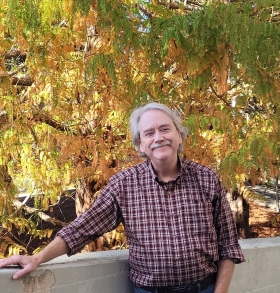
I grew up in Durham, NH and attended the University of New Hampshire as an undergraduate.
Specialty Area
Marine evolutionary ecology, Bryozoan evolution and ecology, Invertebrate Zoology, and Applied Ecology of Kelp Beds and Marine Protected Areas
Education
PhD in Ecology & Evolution, Stony Brook University, 1995
M.S. in Biology, University of Houston, Texas, 1987
B.A. in Zoology, University of New Hampshire, 1983
Courses Taught
General Zoology (Zool 110)
Invertebrate Zoology (ZOOL 314)
Intertidal Ecology (Bio 430)
Advanced Invertebrate Zoology (Zoo 552)
Seminar on Invasive Species (Bio 685)
Research
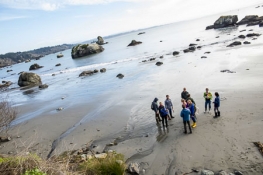
I study Life history variation in marine invertebrates and the ecology and evolution of invasive marine species, particularly bryozoans (using molecular genetic tools). I am also interested in marine community ecology and work on Marine Protected Areas in rocky intertidal, sandy beach and subtidal kelp bed habitats to help promote conservation of important nearshore marine habitats.
Publications
- Orr, R.J.S., DiMartino, E., Ramsfjell, M.H., Gordon, D., Berning, B., Chowdhury, I., Craig, S.F., Cumming, R., Figuerola, B., Florence, W., Harmelin, J., Hirose, M., Huang, D., Jain, S., Jenkins, S., Kotenko, O., Kuklinski, P., Lee, H., Madurell, T., McCann, L., Mello, H., Obst, M., Ostrovsky, A., Paulay, G., Porter, J., Shunatova, N., Smith, A., Souto-Derungs, J., Vieira, L., Voje, K., Waeschenbach, A., Zagorsek, K., Warnock, R., Liow, L.H. Paleozoic origins of cheilostome bryozoans and parental care inferred by a new genome-skimmed phylogeny, 2022 (Science Advances, in press).
- Nielsen, K.J., Dugan, J.E., Mulligan, T., Hubbard, D.M., Craig, S.F., Laucci, R., Wood, M.E., Barrett, D.R., Mulligan, H.L., Schooler, N., Succow, M.L. 2017. Baseline characterization of sandy beach ecosystems along the north coast of California. Final report to CA Sea Grant.
- Jenkinson, R. and S.F. Craig. 2017. Baseline monitoring of rocky reef and kelp forest habitats of the north coast study region. Final report to CA Sea Grant.
- Craig, S.F., Tyburczy, J., Aiello, I., Laucci, R., Kinziger, A., Raimondi, P., Miner, M., Gaddam, R., Ammann, K., George, M., Anderson, L., Lose, D., Douglas, M., Fletcher, N., Lopiccolo, J., Hinterman, K. 2017. North coast baseline surveys of rocky intertidal ecosystems. Final report to CA Sea Grant.
- Lindsay, T., Kelly, J., Chichvarkhin, A., Craig, S.F., Kajihara, H., Mackie, J., Valdes, A. 2016. Changing spots: pseudocryptic speciation in the north pacific dorid nudibranch Diaulula sandiegensis (Cooper, 1863) (Gastropoda: Heterobranchia). J. Mollusc. Stud. 82 (4): 564-574.
- Nelson, M.L. and S.F. Craig. 2011 Role of the sea anemone Metridium senile in structuring a developing subtidal fouling community. Mar. Ecol. Progr. Ser. 421: 139-149.
- Boyle, M., Janiak, D. and S.F. Craig. 2007. Succession in a Humboldt bay marine fouling community: the role of exotic species, larval settlement and winter storms. Proc. 2004 Humboldt Bay Symposium (CA Sea Grant). Pgs 215-234.
- Pemberton, A.J., Hansson, L.J., Craig, S.F., Hughes, R.N., J.D.D. Bishop. 2007. Microscale genetic differentiation in a sessile invertebrate with cloned larvae: investigating the role of polyembryony. Mar. Biol. 153 (1): 71-82.
- Hughes, R.N., D'Amato, M.E., Bishop, J.D.D., Carvalho, G.R., Craig, S.F., Hansson, L.J., Harley, M.A., Pemberton, A.J. 2005. Paradoxical polyembryony? Embryonic cloning in an ancient order of marine bryozoans. Biol. Lett. 1: 178-180.
- Hughes, R.N., Manriquez, P.H., Morley, S., Craig, S.F. 2004. Kin or self-recognition? Colonial fusibility of the bryozoan Celleporella hyalina. Evol. and Devel. 6 (6): 431-437
- Craig, S.F., D'Amato, M.E., Harley, M., Bishop, J.D.D., Hughes, R.N., Carvalho, G.R. 2001. Isolation and characterization of microsatellites in the bryozoan Crisia denticulata. Mol. Ecol. Notes 100(1): 1-2
Graduate Students
Current
Taylor Bruntil, Ismael Chowdhury, Lindsey Desantis, Duncan Jackson, Dana Johnstun, Franklin Moitoza, Sheena Stephens, Marina Storey, Alex Strawhand, Claire Windecker
Former
- Jason Lopiccolo "Variation of Larval Traits and Copper Tolerance in an Invasive Cryptic Species Complex (Watersipora: Bryozoa)"
- Hannah Lee "Phylogenetic and Phylogeographic relationships of Cheilostome Bryozoans in the Eastern Pacific"
- Jonathan Centoni "Negatively correlated abundance suggests competition between red abalone (Haliotis rufescens) and red sea urchins (Mesocentrotus franciscanus) insidea nad outside established MPAs closed to commercial sea urchin harvest in northern California"
- Katie Houle "The effects of suspended sediment and accreted sediment on the marine invertebrate fouling community of Humboldt Bay"
- Brendan Kelly "The impacts of Spartina densiflora on benthic macroinvertebrates in a Humboldt Bay salt marsh"
- Kellan Korcheck "Variation in temperature tolerance in a widely invasive bryozoan species complex (Watersipora spp.)"
- Michelle Succow "Population characteristics and trophic interactions between Pacific mole crabs and redtail surfperch on northern California sandy beaches"
- Cara McGary "A long term comparison of rocky intertidal communities in Redwood National and State Parks"
- Alison Young "The effects of temperature on the composition of communities associated with Mytilus californianus"
- Kirby Morejohn "Growth inhibition of red abalone (Haliotis rufescens) infested with an endolithic sponge (Cliona sp.)"
- Matthew Nelson "Growth morphology and succession in a temperate marine fouling community"
- Julie Koeppel "High predation may hinder native oyster (Ostrea Lurida) restoration in North Humboldt bay, California"
- Emily Wilson "The facilitative role of an introduced bryozoan (Watersipora spp.): structuring fouling community assemblages within Humboldt Bay"
- Julie Kelly "Distribution, genetic differentiation, and assortative mating of distinct morphotypes of Diaulula sandiegensis, a nudibranch with high dispersal potential"
- Catherine Roscoe "Three factors affecting the invasion of Watersipora subtorquata in the marine fouling community of Humboldt Bay, California"
- Emily Morris "Variation in photosynthate release from symbiotic dinoflagellates and its potential role in cnidarian health" (Co-advised by Dr. Ruth Gates, Hawaii Institute of Marine Biology)
- Matt Absher "Boulders over easy: Natural and anthropogenic disturbance in Patrick's Point State Park"