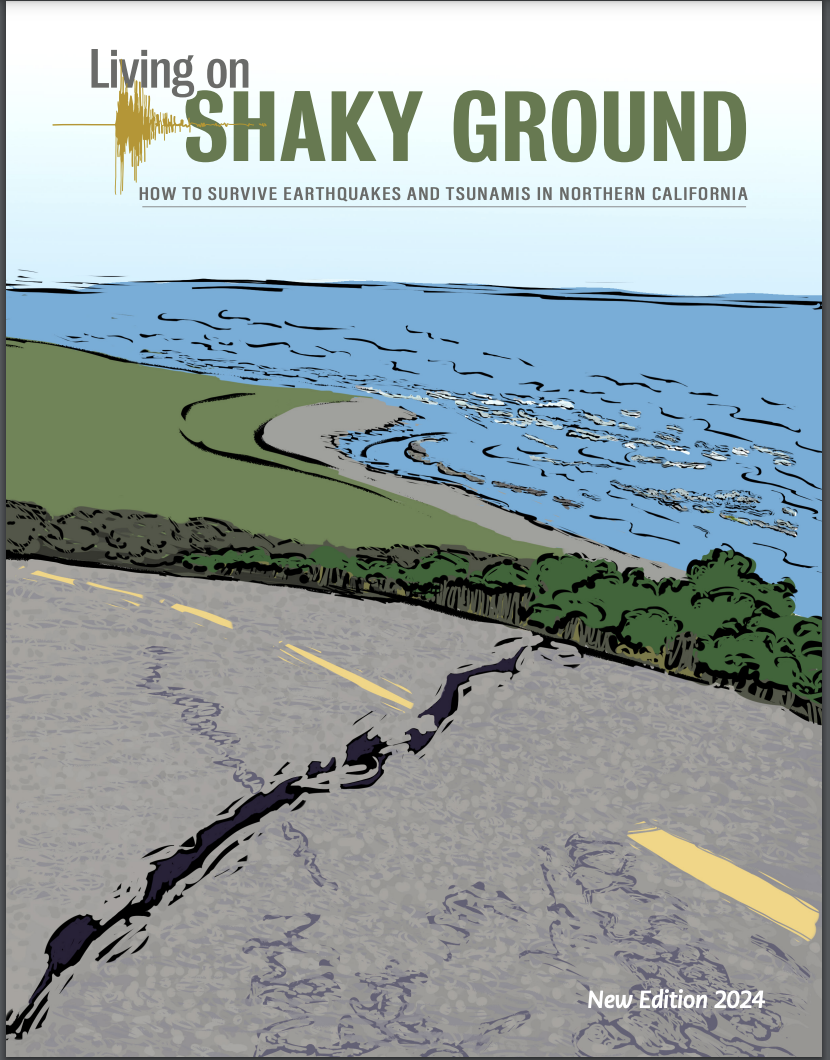
The brand new 2024 edition of Living on Shaky Ground is here!
Download the interactive Living on Shaky Ground PDF by clicking on the link below. Completely revised, this 2024 edition includes information on recent earthquakes and tsunamis, the ShakeAlert earthquake warning system, and more background content on why California’s North Coast is the shakiest place in the lower 48 states.
This handbook explains how you can prepare for, survive, and recover from earthquakes and tsunamis. It also describes what you can do today to save lives, reduce injuries, and minimize damage.
About the publication: Advisory Board, Credits & Disclaimer
Download in Spanish- update in progress
Highlights from the Magazine:
Earthquakes
You live in earthquake country
ShakeAlert® for California residents
Tsunamis
Tsunami Warnings: Natural & Official
Human Interest
The "miracle of Kamaishi" (PDF)
The importance of education, tsunami heroes & heroines (PDF)
Your kids may know more than you do (PDF)
How a tsunami and a small boat connected
two cities on opposite side of the Pacific (PDF)
The little boat that could -
a story of tsunami endurance (PDF)
Seven Steps
Overview: Seven steps that may save your life
PREPARE
Step 1: Identifying Hazards & How to Fix Them
- Identify items that may fall, topple or slide
- Secure potentially hazardous and valuable items
- Determine if you live, work or play in a tsunami hazard zone
Step 2: Create a Disaster Preparedness Plan
- Collect critical supplies
- Sign up for emergency alerts
- Special considerations: Children, elderly, pets, and livestock.
Step 3: Organize Disaster Supplies
- Create kits for home, work, and car
- Be prepared to be isolated for at least a week
Step 4: Minimize Financial Hardships
- Identify weaknesses in your building and fix them
- Consider earthquake and/or flood insurance
SURVIVE
Step 5: Drop, Cover, and Hold On
- DROP to the floor
- TAKE COVER under a sturdy table or desk
- HOLD ON until the shaking stops
Step 6: Improve Safety
- If you are in a tsunami hazard zone, immediately WALK to higher ground or inland away from coast
- Check for injuries and damage
RECOVER
Step 7: Reconnect and Restore
- If you evacuated coastal areas—stay away until officials permit you to return
- Be in communication—use your radio for info
- Expect aftershocks—some may be large enough to do additional damage