

Why this Program?
For Wildlife students, access to an array of natural habitats and supportive faculty make Cal Poly Humboldt the perfect place to live and learn.
Location
Located in Northern California, Cal Poly Humboldt is near the Pacific Ocean and surrounded by ancient redwoods. Nearly five million acres of national forest, parks, and public wilderness lands provide opportunities to study wildlife, ecology, and management. Among those regions: the Humboldt Bay and coastal habitats attract a wealth of the Pacific Flyway’s migratory shorebirds, raptors, and waterfowl. At the Arcata Marsh & Wildlife Sanctuary alone, there are more than 270 species of birds throughout the year. Redwood National and State Parks and Six Rivers National Forest are also home to black bears, river otters, Roosevelt elk, bobcats, and mountain lions, too.
Career
Our Wildlife program graduates are highly trained and in high demand, thanks to a rigorous curriculum and practical experience. You’ll also have several opportunities to meet local professionals such as biologists from U.S. Fish & Wildlife Service, the U.S. Forest Service, and state parks who give guest lectures and attend on-and off-campus meetings.
Faculty
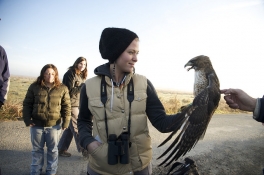
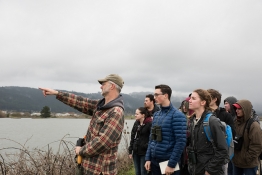
The foundation of our program is our faculty, a team of ornithologists and mammalogists who are committed to your education. They’ll work closely with you in the classroom, in the lab, and in the field, providing the extra support you may need to be successful.
Hands-on Learning
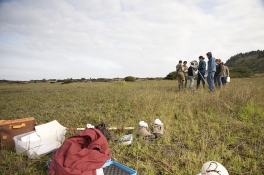
Conduct field research in diverse natural habitats and take weekend camping field trips to practice field techniques. And in your senior year, work on an independent research project under the supervision of a faculty member for your culminating experience.
Diversity and Inclusion
The following diversity and inclusion statement was written in the early 2000s and we now recognize how much our program and our field has changed in the intervening years - and we are currently at work on a newer statement than reflects what we have learned in the intervening years. Coming soon. -July 2020
Faculty support diversity, equity and inclusion in their teaching and research, regardless of race, gender, religion, sexual orientation, or socio-economic background.
We believe that diverse faculty, students, and educational experience promotes learning, personal growth, and community relations and addresses future needs in natural resource conservation and management. Roel Lopez and Columbus Brown say:
“We face a simple truth: Unless we diversify our ranks and become more representative of the nation’s changing demographics, our profession and the resources we protect will not survive. This reality doesn’t hinge on a philosophical debate about whether achieving diversity is the “right” thing to do. It’s simply the “smart” thing to do. And it’s consistent with the premise of the North American Model—to conserve our diverse natural resources for the benefit of all.”
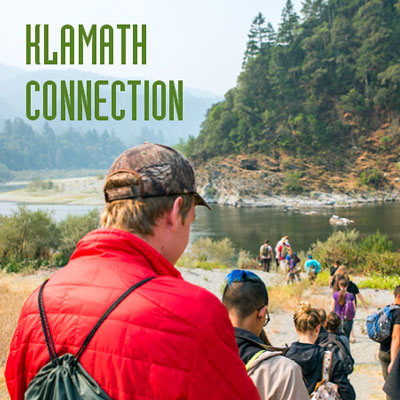
Klamath Connection
Freshmen Learning Community
As a Wildlife major, you’re also eligible to join a free science program called the Klamath Connection. For one year, freshmen in specific science majors will explore the relationships between science, traditional ecological knowledge, the environment, and Native American communities all through the lens of California’s second largest river, the Klamath. You’ll gain confidence and be more prepared for your future studies at Humboldt. You’ll also find the support to navigate college life, all while making new friends.
