


Breadcrumb
Environmental Resources Engineering, B.S. | Class of
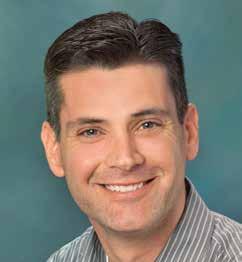
Clayton Guiraud
Land Records Section Chief
Employer: California Department of Water Resources
Job description: My job here is twofold. First, I manage information about all the land DWR has an interest in. I’m focused on the land rights and the boundary of those rights. Whether it is along our 850-mile California Aqueduct or with our 1600 miles of levees, these systems are complex, and land rights span nearly 100 years. Second, I am creating a GIS database of all this information. This system will make identifying these rights easy and efficient.
About Clayton
Why did you choose this program?
In high school, I was a builder. I designed model cars, planes, and boats from scratch, always thinking about how I could build something better. So, an engineering degree was fitting, but which one? At the HSU Career Center, I learned about Environmental Engineering. It was a new discipline, sounded exciting, and with the future in mind, I liked the idea of being out in front of something new.
How did this program prepare you for your job?
Bottom line: the ERE program taught me how to learn. Who had any idea what Calculus III, Fluid Mechanics, or Transport Phenomena meant when we started the program? Working today, knowing you can learn anything you put your mind to, translates to confidence in interviews – a powerful quality to have.
Yes, it is generally true that the shortest distance between two points is a straight line. However, when finding your livelihood, traveling a straight line is nearly impossible. When I reflect back to my childhood, to my tenure at Humboldt, and to my different positions at my current employer, my path has not been either linear or direct (although, perhaps a bit circular). However, I was prepared with the proper skills and the confidence to excel, and that got me to this point. This is what the ERE degree has to offer.
In high school, I was a builder. I designed model cars, planes, and boats from scratch, always thinking about how I could build something better. So, an engineering degree was fitting, but which one? At the HSU Career Center, I learned about Environmental Engineering. It was a new discipline, sounded exciting, and with the future in mind, I liked the idea of being out in front of something new. During my final semester in 1999, the California Department of Water Resources (DWR) came to HSU to conduct job interviews with interested students. I signed up without thinking much about it, mainly for the experience. Before I left, though, they offered me an engineering job (score!). However, my first work assignment wasn’t design and build; it was running a GIS database for keeping track of entry permits for the environmental scientists doing field studies. It didn’t take me long to interview with DWR again and rehire at the headquarter office in Sacramento, this time with the Division of Engineering. After a couple years designing water flow control structures for the DWR in the San Joaquin Delta, I successfully passed all three tests for the PE exam in one try. My success with the PE exam is attributable to the faculty at HSU. Although the curriculum covered many civil engineering topics, it didn’t cover all of them. HSU honed my ability to learn.
In 2003, I moved to the Geodetic Branch of DWR, working in the Photogrammetry Unit (measuring with photos). This was a challenging move because I knew nothing about land surveying when I started. However, three years later, I passed both surveying tests and became a licensed land surveyor as well. After 8 wonderful years in Photogrammetry, I joined the Property Management and Land Records section. My job here is twofold. First, I manage information about all the land DWR has an interest in. I’m focused on the land rights and the boundary of those rights. Whether it is along our 850-mile California Aqueduct or with our 1600 miles of levees, these systems are complex, and land rights span nearly 100 years. Second, I am creating a GIS database of all this information. This system will make identifying these rights easy and efficient.
Bottom line: the ERE program taught me how to learn. Who had any idea what Calculus III, Fluid Mechanics, or Transport Phenomena meant when we started the program? Working today, knowing you can learn anything you put your mind to, translates to confidence in interviews – a powerful quality to have. What’s next for me? JD?