

Breadcrumb
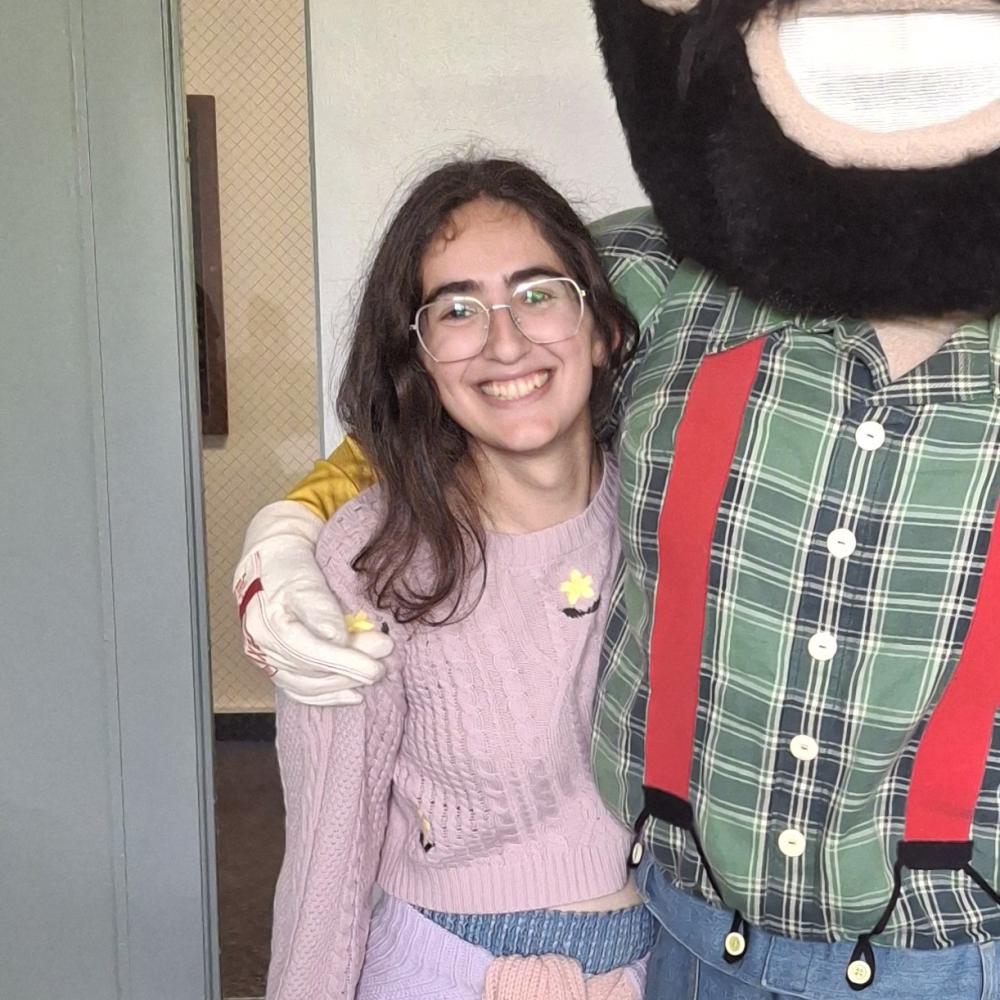
Bailey Tara Schultz
Bailey Schultz is the President of the Cal Poly Humboldt ASL Club. She is Deaf and works closely with fellow club officers to ensure strong representation and inclusion. Originally elected Vice President, she was unanimously elected President because she was already carrying additional leadership responsibilities. Following the club’s inactivity during COVID-19, Bailey helped spearhead its revival, recognizing its importance to our department, which offers an ASL and Special Populations minor, and to the wider campus community. Since fall 2025, Bailey has focused on building a sustainable, community-centered organization that will outlast her tenure. She has developed consistent programming, organized events and fundraisers, strengthened partnerships with the local Deaf community, and created clear systems to guide future officers—regardless of their ASL proficiency. Under her leadership, weekly attendance has increased from 0 to 35 members. Through her outreach efforts, the club's membership has expanded to the entire university community. By fostering collaboration, reducing barriers to participation, and prioritizing ethical community engagement, Bailey ensures the ASL Club is both impactful and sustainable.
Bailey also brings established ties to the local Deaf community through her Directed Field Experience with Humboldt County Office of Education’s Special Beginnings program and her support for hard-of-hearing children in the Child Development Laboratory preschool. Her Special Beginnings supervisor was excited to have Bailey, with a strong foundation in Child Development and ASL, who interacted with children, their families, and other professionals with confidence. She helped with programming for families with Deaf and hard-of-hearing children in Humboldt County during her internship. Even after completing her internship hours, she continued to volunteer with the program because of her passion for Deaf and hard-of-hearing children and their families.
The Child Development department has benefited from Bailey’s experience and her openness in offering feedback to make the program more inclusive.
Bailey noted that a practicum document, the operationalization of developmental domains/subdomains, for Methods of Observation and Supervised Work with Children I & II emphasized speech development but did not fully capture the complexity of nonverbal communication. She took the initiative to research developmental competencies and revise the document as part of a class project, ensuring it reflects and supports children who communicate in diverse ways beyond English. This revised document has been adopted by the Child Development Department and is being used in our practicum and observation courses. In addition, Bailey is currently working with a faculty member on her Directed Study to develop a curriculum and lesson plans to introduce ASL to the department’s staff and faculty. She feels confident in creating and delivering the curriculum. This is another example of Bailey's innovative approach and her strong interest in the ASL program's sustainability beyond the student club.
Overall, Bailey is a dynamic presence who exemplifies true professionalism in the field of Child Development and within Deaf and Hard-of-Hearing communities, consistently demonstrating thoughtfulness, collaboration, and the ability to strategically plan, effectively execute, and reflect on their outcomes. She doesn’t choose the path of least resistance. We, wholeheartedly, are thrilled for Bailey to receive this award.