


Breadcrumb
Environmental Studies, B.A. | Class of
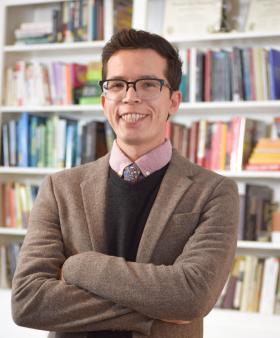
Ivan G. Soto
Ph.D. Student / Ford Foundation Predoctoral Fellow
Employer: University of California, Merced
Job description: I’m a doctoral student with the Interdisciplinary Humanities Graduate Group at the University of California, Merced (UCM) and a Ford Foundation Predoctoral Fellow through the National Academies of Sciences, Engineering, and Medicine. At UCM, I work under the advisement of Dr. Mario Sifuentez through the Department of History & Critical Race and Ethnic Studies.
My cross-disciplinary dissertation research explores the ways in which built and natural environments, social relations, and large-scale economies precipitated through industrial agriculture, water development, and electrification of twentieth-century California’s Imperial Valley. Through the lens of ethnic studies, history, and environmental studies, my research highlights how environmental conditions in the arid American West are rooted in structures of resource extraction, racialized labor, and industrial capital accumulation.
You can learn more about my work at www.ivan-g-soto.com.
About Ivan
Why did you choose this program?
I chose HSU’s ENST program to broaden my understanding of built and natural environments. I was searching for a humanities program that would develop my intellectual, personal, and professional networks and I found that at HSU. The program’s emphasis on Community Organizing introduced practical methods for environmental justice in my community along the US-Mexico border.
How did this program prepare you for your job?
The ENST program prepared me for graduate school by fostering strong foundations in cross-disciplinary scholarship, public engagement, and experiential learning. At Humboldt State, I took opportunities to lead class discussions, co-facilitate ENST 123, and write for campus newspapers (The Lumberjack and El Leñador/La Leñadora). Today, my experiences at HSU inform my public scholarship, research methods in applied history, and pedagogical approaches with students at the University of California. My long-term career goal is to become a university professor for an interdisciplinary program like ENST.
What did you enjoy most about the program?
HSU’s ENST program cultivates a community of support both on and off campus. I enjoyed the high level of faculty engagement, classroom conversations, and networks that formed through the program’s inherently interdisciplinary structure. I remember that course readings, classroom discussions, and program activities always left me with a renewed sense of purpose. There were always moments to practice what was learned in the classroom through the ENST Club or the surrounding community. As a Ph.D. student, I strive to bring that level of commitment to the classrooms and students I work with at the University of California.
What would you say to prospective students who are thinking about applying to this program?
I encourage prospective ENST students to apply what they learn in the program to something they care deeply about—while stepping outside their comfort zone. Join study groups to unpack course readings before class (the readings can be dense), participate in class dialogue, and connect your written assignments to something you are passionate about. Take time to visit your professor’s office/student hours and volunteer with the ENST Club, the Campus Center for Appropriate Technology (CCAT), or local organizations. Together, these actions support your ability to transfer valuable skills in the humanities after college.
If you’re unsure about how to apply course concepts off campus, the examples above can help. Of course, don't forget to pack a waterproof rain jacket—you’ll need one.
As a Ph.D. student, program alumnus, and recent Ford Foundation Predoctoral Fellow, I am happy to help answer questions that ENST students might have about graduate school, postgraduate fellowships, and ENST-related activities. You can reach me on my website, www.ivan-g-soto.com.