
Breadcrumb
About
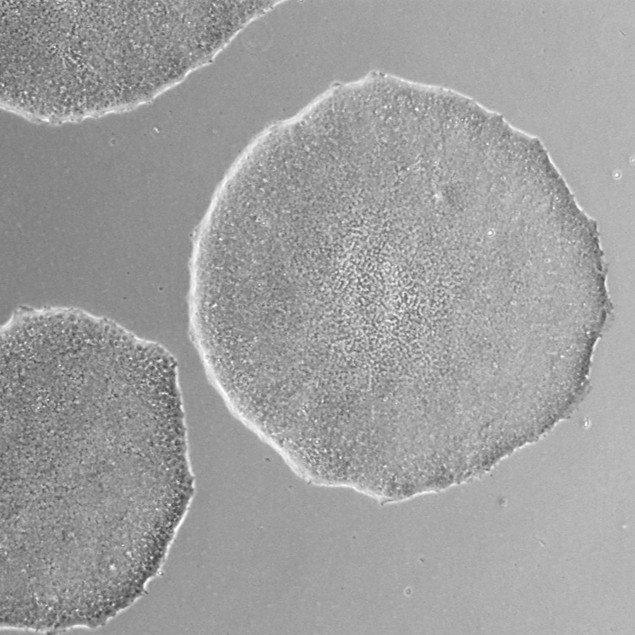
The Humboldt-CIRM Shared Resources Laboratory
The Humboldt-CIRM Shared Resources Laboratory (SRL) provides advanced stem cell research infrastructure and specialized training for rural and remote communities across Northern California.
Supported by a $4.4 million CIRM grant, the lab offers dedicated laboratory space, validated hiPSC lines, access to sophisticated instrumentation, and training.
By integrating standardized protocols with immersive educational workshops, the lab was designed to develop a diverse regional workforce prepared to advance regenerative medicine and expand scientific access in underserved regions.
Contact
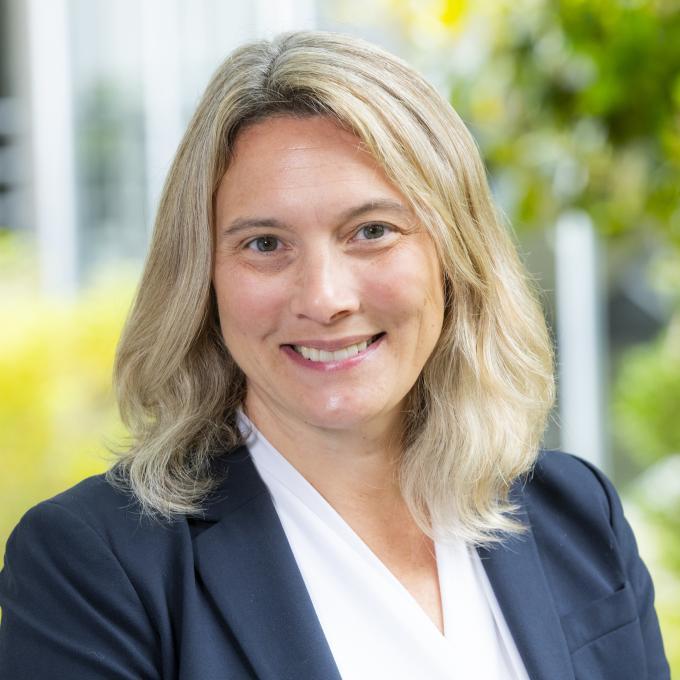
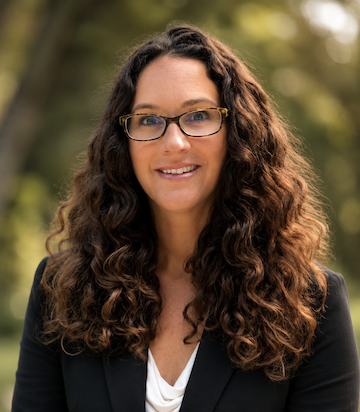
Amy Sprowles, PhD
Professor of Cellular & Molecular Biology | Director of the Humboldt-CIRM SRL
Contact
Email: aes54@humboldt.edu
Phone: 707.826.4180
Office: SCIB 324A
Amy grew up in a small college town in Maine. She received a BA in Biology from Clark University and a PhD in Biochemistry from Vanderbilt University. She was a postdoctoral researcher at the UC Davis Cancer Center and in the Animal Genomics Laboratory. She has taught and mentored students at Humboldt since 2006.
She has served as the Co-Director of the Humboldt CIRM Bridges Program, Program Director of the Humboldt Howard Hughes Medical Institute Inclusive Excellence ’17 Program, Co-Director of the Humboldt HSI STEM grant, Co-PI NSF INCLUDES Transcending Barriers Planning Grant, the Program Lead for the Humboldt Transcending Barriers to Student Success Pilot Project, and as the Humboldt CSU STEM NET Faculty Advisor. In 2020, she was honored to be a recipient of the CSU Faculty Innovation and Leadership Award.
Research Focus
I am interested in the signal transduction mechanisms that regulate early embryonic development, particularly those that promote the onset of cancer when mutated. I am also a discipline-based educational researcher interested in improving learning for all students.
Current Graduate Students:
Sheng Yang, Madison Gutierrez, Alyssa Paynton, Jon Tierney
Former Graduate Students:
Ariah Mackie (2022) Determining haplotype specific X chromosome inactivation state and related epigenetic features in female X-linked genes
Amin Cressman (2022) Modulation of polyamines to elucidate function within osteogenesis of mesenchymal stromal cells
Natalie Pedicino (2022) Characterizing the relationship of Lgl1 and AKT in migration of murine neural stem and progenitor cells
Monique LaCourse (2018) The effect of the loss of Lgl1 in murine neural progenitor cells on MAPK signaling and proliferation
Kristine Teague (2018) Characterizing the effect of cJun on the expression of Oct4 variants and how they correlate with the expression of genes associated with potency and cell fate of murine embryonic stem cells
Elizabeth Zepeda (2018) The effects of increased cAMP levels on neuronal differentiation in murine embryonic stem cells and the creation of a CRISPR-induced c.1252c>t point mutation in the ADCY5 gene
Rachel Brewer (2017) The developmental implications of the regulatory relationship between cJun and OCT4 in murine embryonic stem cells
Manal Hosawi (2016) Regulation of Oct4 expression by Jun-N terminal kinase/cJun signaling in murine embryonic stem cells
Sharon Otis and Jacob Nowatzke
Education
BA (1995) Clark University, Biology / Minor: Piano Performance
PhD (2003) Vanderbilt University, Biochemistry
Publications
Sprowles, A.E., Martell, S., Malloy, K.J., Hillman, L.T., Hillman, L.C., Rich, A., Smith, J., Shaughnessy, F., Hurst, M.P., Manor, S., Mazzag, B., Oliver, D., Siering, P., Cashman, E., O’Dowd, A.P., Goley, P.D., Black, G., Goldenberg, K., and Johnson, M.D. “First year STEM curriculum co-created with Indigenous scientists improves intellectual growth, psychosocial factors associated with retention, and academic achievement of students from racially minoritized groups historically underrepresented in STEM,” Discovering Education (in review).
Sprowles, A., and Johnson, M. (2021). “A Faculty-Led Effort to Build Campus Community Around Inclusive Excellence in Stem,” in Shared Leadership in Higher Education (pp. 81–92), Routledge.
Johnson, M. D., Sprowles, A. E., Goldenberg, K. R., Margell, S. T., & Castellino, L. (2020). Effect of a place-based learning community on belonging, persistence, and equity gaps for first-year STEM students. Innovative Higher Education, 45(6), 509-531.
Harper, M., Bernard, T., Sprowles, A., and A. Jacobson. 2020. Energy Requirements of the Screening Sites in a COVID-19 Hub and Spoke Testing Approach. Covid-19 Resources. Washington D.C. Lightening Global.
Sprowles, A.E., Goldenberg, K. , Goley, P. D. , Ladwig, S. , Shaughnessy, F. J. , Malloy, K. J. , Baldy, C. R. , Mola, M. M. , Smith, J. R. et al. (2019). Place-Based Learning Communities on a Rural Campus: Turning Challenges into Assets. Learning Communities Research and Practice, 7(1), Article 6.
Johnson, M.D., Sprowles, A.E., Overeem, K.M., Rich, A. (2017). “A Place-based Learning Community: Klamath Connection at Humboldt State University”. Learning Communities Research and Practice Vol. 5:2, Article 4.
Eschenbach, E., Cashman E., Johnson, M., Sprowles, A. (2017). Connecting Environmental Engineers to the Klamath River via a Place Based Learning Community. Proceedings of the 2017 IEEE Frontiers in Education Conference, Indianapolis, IN. DOI: 10.1109/FIE.2017.8190541, IEEE.
Sprowles, A and Malloy, K.J. 2017. Klamath Connection and Critical Histories/Activist Futures: The Role of Interdisciplinary Discourse in Addressing Racism and Inequity in STEM Education. Somatosphere (accessed October 24, 2017).

Brendan Kelly, PhD
Lab Coordinator
Contact
Email: bpk10@humboldt.edu
Phone: 707.826.4180
Office: SCIB 320A
Brendan received his BS and MS in Biology from Humboldt State University. Initially trained in marine biology, he moved into regenerative medicine via a CIRM Bridges Fellowship, focusing on disease modelling using human induced pluripotent stem cells (iPSCs). He carried these techniques into his PhD from Cardiff University, where studied lysosomal dysfunction in Huntington’s Disease. Brendan has since held postdoctoral positions at the UK Dementia Research Institute and Cardiff University’s Brain Repair Group, specializing in the use of iPSC-derived neurons for disease modelling and transplantation therapy. His background also includes experience in the biotech industry as the first employee of an iPSC manufacturing startup. In addition to his research, Brendan is a Cardiff University Higher Education Associate Fellow and has extensive experience mentoring both undergraduate and graduate students.
Areas of Interest
I am interested in understanding how neurons malfunction in brain diseases. I specialize in turning stem cells into specific neuronal subtypes and using tools like advanced microscopy, sequencing, and standard lab assays to examine how these model cells change in disease conditions. In my current role, I use this experience to facilitate regenerative medicine research for others, providing the technical support and training necessary to make complex stem cell technologies accessible to the broader scientific community.
Education
BS (2010) Humboldt State University, Biology - Marine Emphasis
MS (2014) Humboldt State University, Biology
PhD (2022) Cardiff University, Biology
Professional development
AFHEA Higher Education Fellowship (2022)
CIRM Bridges Fellowship (2014)
Research Supervision
Supervised four MS theses and multiple undergraduate research projects. I provide the direct technical oversight and hands-on training required for research in hPSC culture, neuronal differentiation, microscopy, and molecular assays.
Publications