



Breadcrumb
Department of Computer Science
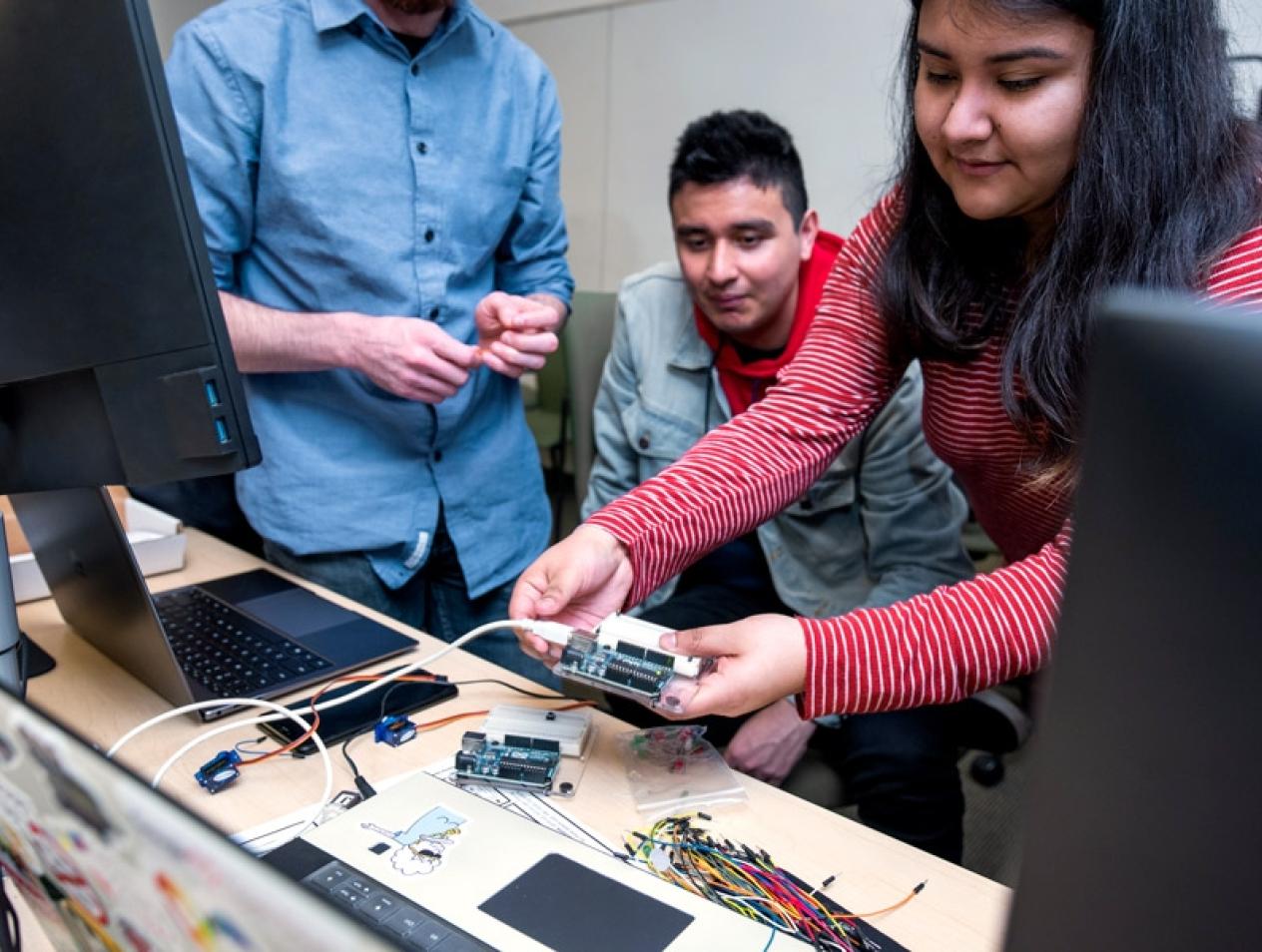
Hands-on learning is the core of our programs. Our small class sizes mean you can always get the major courses you need and attention from professors who are eager to help you learn. And our graduates are in high demand in this high tech world.
Choose from Two Majors
Computer Science, B.S.
The primary goal of the major is to produce graduates capable of succeeding as computing professionals, while the minor introduces students to computing. The minor introduces students in other disciplines to key elementary concepts in computing. Though this is not always sufficient for many careers in computing, many computer science minors obtain additional training in order to launch careers in the field.
Prerequisites
Find out what prerequisites you will need.
Software Engineering, B.S.
This bachelor’s of science degree program encompasses the development, operation and maintenance of programs. The curriculum of software engineering programs includes computing fundamentals, software design and construction, requirements analysis, security, verification, and validation; software engineering processes and tools appropriate for the development of complex software systems; and discrete mathematics, probability, and statistics, with applications appropriate to software engineering.
Software Engineering Prerequisites
Find out what prerequisites you will need.
Senior Capstone - CS 458
Everything you’ve learned inside and outside the classroom comes together your senior year with the senior capstone project within CS 458 - Software Engineering.
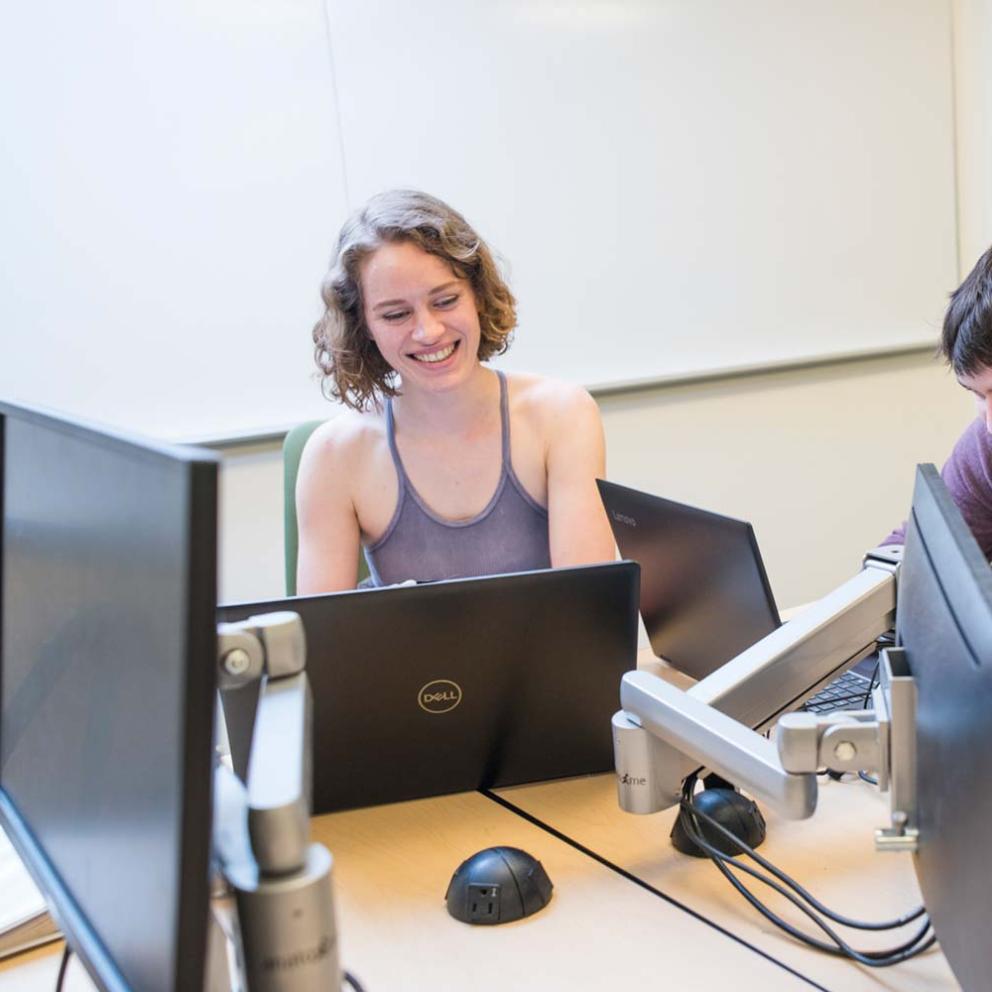
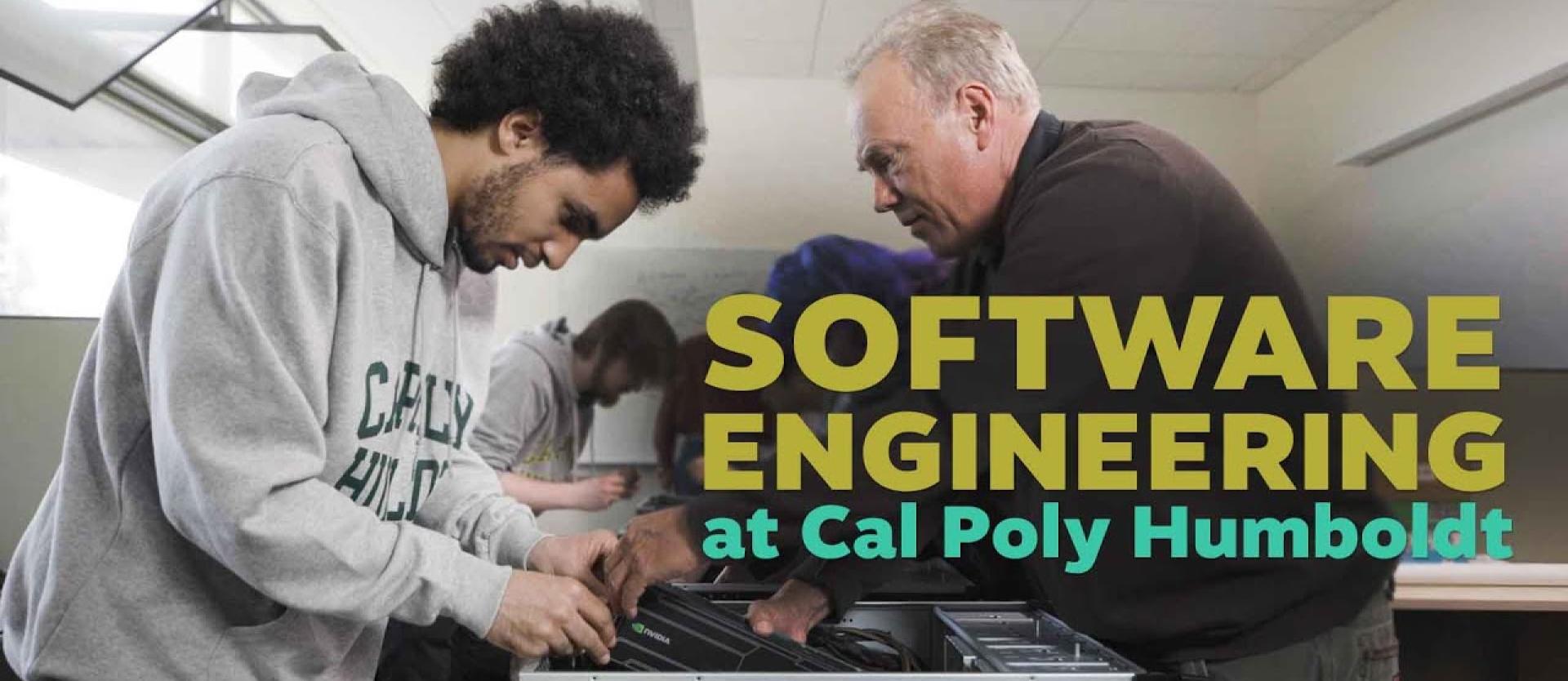
Software Engineering at Cal Poly Humboldt
Career Options
There’s a wide diversity of applications: computer scientists may be found working alongside businessmen and biologists, lumbermen and oceanographers, artists, and community activists. If you’re eager to learn and solve problems, you’ll be able to use computers to help improve the world.
Here are a few examples of possible career fields:
- Computer Software Engineer
- Database Developer
- Computer Security Specialist
- Network Administrator
- Computer Game Developer
- Web & Mobile Application Developer
In the fast-growing field of software engineering, graduates are qualified to pursue highly paid careers in software development. Graduates may also have opportunities to work on projects related to embedded software, which is used in virtually every industry, including:
Here are a few examples of possible career fields:
- Aeronautics
- Communications
- Medicine
- Transportation
Minor
Featured Alumni


Achievements
Find out what our students, faculty, and staff are being recognized for.
Sherrene Bogle
Computer Science
Dr. Sherrene Bogle received a travel award to attend the NSF ACCESS Regional AI Workshop on January 22, 2026 at University of Southern California. She presented a poster on "ACOSUS - An AI-driven Counseling System for Transfer Students". The NSF funded ACOSUS, on which Dr. Bogle is a co PI, is designed to complement existing advising by providing personalized readiness assessments, success predictions, and actionable recommendations for computing transfer students.
Sherrene Bogle
Computer Science
Prof. Sherrene Bogle received a travel award from the University of Missouri, Kansas City to attend the 2025 Workshop on Large Language Models for CS Undergraduate Education. At the September 2025 workshop, she gave a presentation on “Experience Report of Generative AI for Contrasting Undergrad Courses”. This included how generative AI tools have evolved in the past two years to student prompts and best practices for incorporating the tool in both GE and STEM courses.
Sherrene Bogle, Cheyenne Ty
Computer Science
Prof. Sherrene Bogle, 2024-25 student of the year Cheyenne Ty and their collaborators in the NSF funded ACOSUS (AI Counseling System for Under-represented Transfer Students) research group had their double blind peer review paper entitled School or Student? A Mixed Method Analysis on Reddit Data for Transfer Barrier Identification was accepted for publication and presentation at the 2025 Decision Sciences Institute Annual Conference in November. The paper examines the institutional and student-based barriers faced by computing transfer students.