



Registration Status
Registration closed
View all courses for this program:
RRS 720: Rangeland Animal Husbandry
Oct. 24-Nov. 18, 2026: In-person/Online
With Dr. Stephanie Larson
This course is one of five short courses designed to help review for the California Certified Rangeland Manager (CRM) exam administered by the Professional Forester Examination Committee (PFEC). Appearance of course completion on university transcripts provides evidence of range management coursework for the CRM application and for federal job series 0454 (Rangeland Management Specialist) and other qualifications.
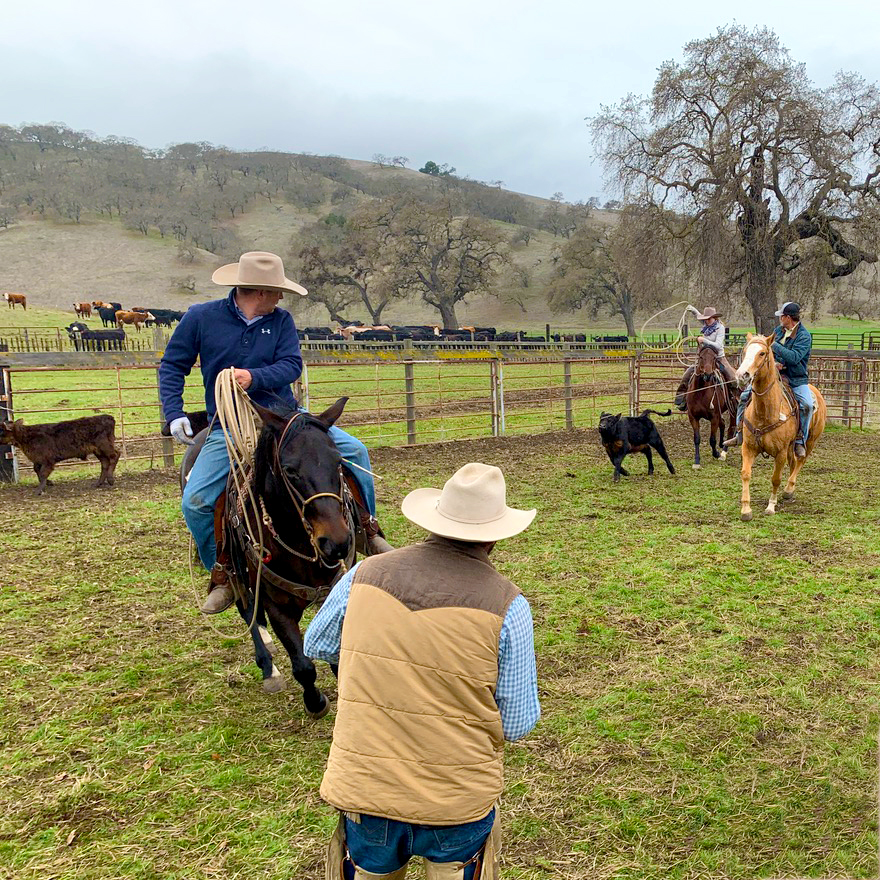
Rangeland Animal Husbandry focuses on practical aspects of livestock production and fuel reduction on California rangelands. CRMs should know the basics of livestock types, reproduction cycles, nutritional needs, poisonous plants and other hazards, and marketing of food and fiber products.
Rangeland Animal Husbandry provides an overview of the characteristics, physiology, adaptation, and improvements of livestock species, as well as animal health, nutrition, grazing, and marketing on California rangelands.
Upon completion of this course, you will be able to:
- Describe basic features of the rangeland-supported livestock industry in different California ecosystems.
- Interpret how rangeland forage productivity influences annual cycles of livestock production and how it varies from year to year. For example, how do pregnant animal nutritional needs match up with natural cycles of forage production? When is supplementation necessary?
- Describe different livestock marketing strategies using different operations such as cow-calf pairs, stockers, wool versus lamb, targeted grazing for fuel reduction, etc.
- Identify hazards to livestock health caused by poisonous plants and other factors.
- Understand basic animal health protocols and regional considerations (e.g. selenium deficiency, routine vaccinations)
- Calculate water quality and quantity demands for different types and classes of livestock.
- Suggest strategies to prevent and deal with livestock predator conflicts and competition with wildlife species.
- Learn about existing and new technologies for managing forage utilization and livestock movement (e.g. virtual fencing).
Prerequisites: Introductory rangeland management and ecology course preferred. Senior or post-baccalaureate standing.
In-Person: Sat., Oct. 24, 9 a.m.-4 p.m., Santa Rosa, CA
Online: Wed., Oct. 28-Nov. 18, 6-7:50 p.m.
RRS 720, 1 unit: $400
Registration is closed.
Return to CRED courses main page

Stephanie Larson
Dr. Stephanie Larson earned her Ph.D. in rangeland ecology and management from Oregon State University in 2010. She is emeritus county director for Sonoma County and served as livestock range management advisor for Sonoma and Marin counties. She promoted economic viability, agritourism, and local sustainable food systems. Dr. Larson is a member of the Certified Rangeland Manager (CRM) panel and has taught rangeland management courses at Santa Rosa Junior College for many years.