Breadcrumb
Klamath Basin Field Course
June 20-July 3, 2026
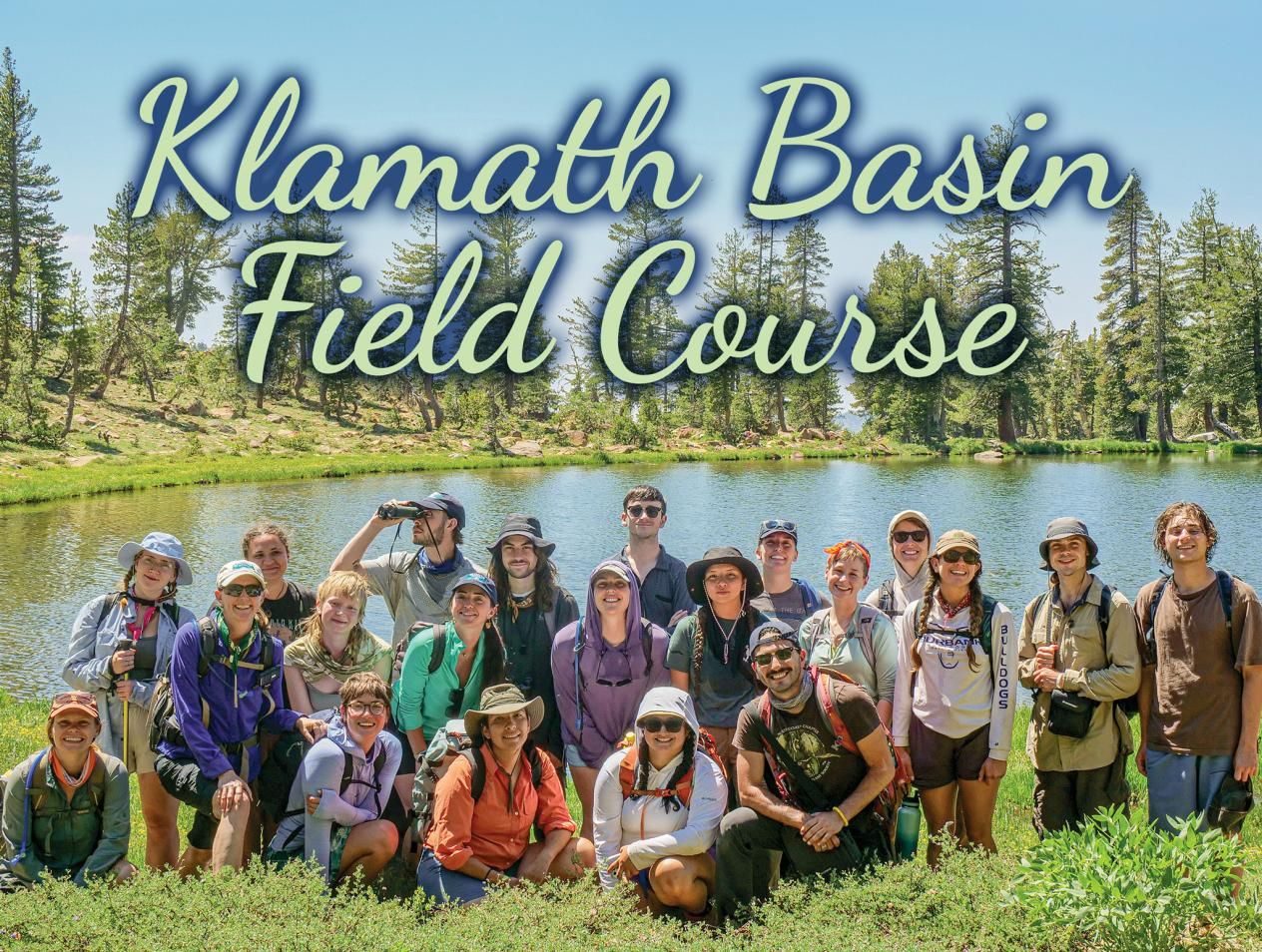
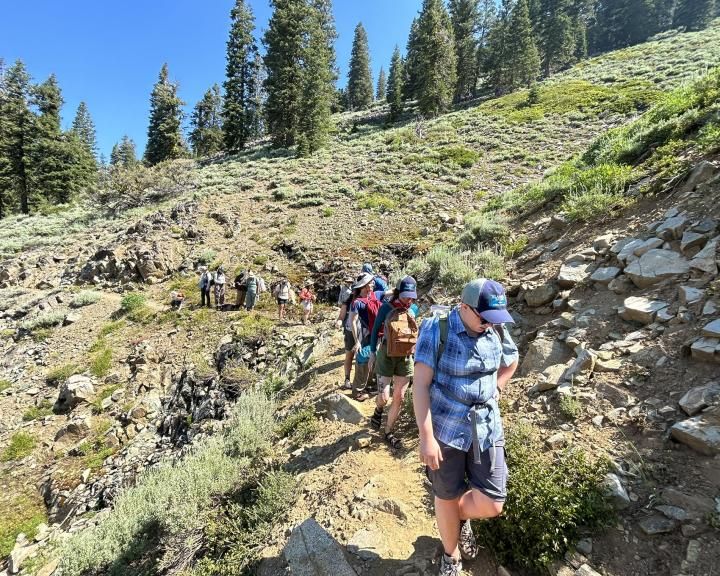
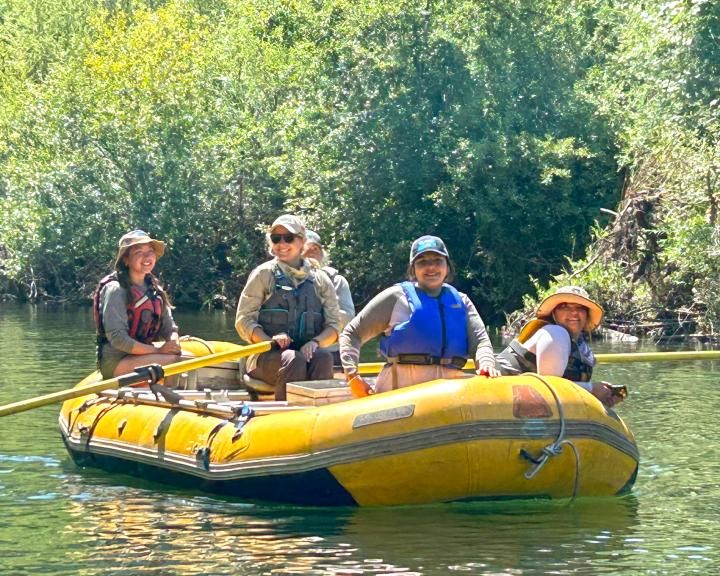
In this action-packed 14-day field program with Dr. Alison O’Dowd, learn about the natural history of the Klamath Basin while studying its socio-ecological systems and working on restoration projects. Hike to high alpine lakes, raft the mid-Klamath River, snorkel in Klamath tributaries, visit Klamath dam removal sites, and camp throughout the basin.
- Apply by Feb. 2, 2026.
- Cost: $1,150 plus $900 for 3 units (ESM 469). Total: $2,050. (See below for details.)
- To receive information and updates about this course, complete the interest form.
- Learn more about this program below!
About this course
This course is an interdisciplinary synthesis of topics concerning restoration, ecology, and natural history within the Klamath River Basin.
The Klamath River flows 253 miles from Southern Oregon to the California coast, draining a basin of more than 15,000 square miles. The Klamath River was once the third most productive salmon and steelhead river in the west, surpassed only by the Columbia and the Sacramento Rivers. With a long history of impact and over-allocated resources, the Klamath Basin faces numerous water quality and quantity challenges.
The Klamath River Basin is an ideal location to study restoration, ecology, and natural history because of the expansive diversity in habitat types, hydrology, geology, ecology, vegetative communities, land ownership, and land use. Numerous restoration projects within the Klamath Basin incorporate all of these themes. Of particular focus in this course is the recent removal of four large dams on the mainstem Klamath River, which was completed in 2024 and was the largest dam removal project in history.
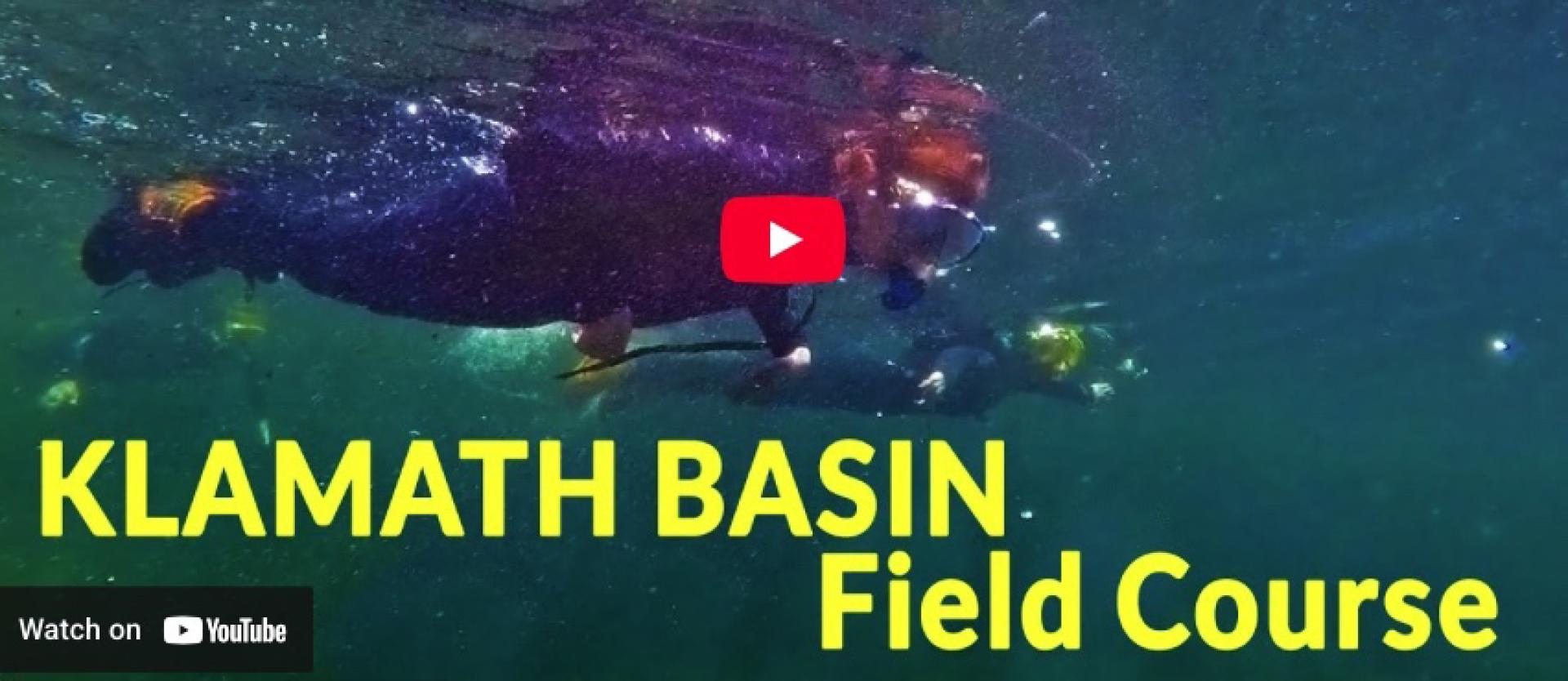
We will explore the California portion of this Klamath Basin through hiking, rafting, snorkeling and driving. We will visit the former location of Iron Gate Dam and reservoir, high alpine lakes, deep clear pools of the Salmon River via snorkel and mask, and experience the Klamath River first-hand as we raft down the mid-Klamath region. Throughout our exploration of the Basin, we will learn about principles of restoration, ecology, and natural history as we meet with representatives from local nonprofit organizations, government agencies, and Native tribes.
What you’ll learn
Following this program, you will gain a working knowledge of and experience in:
- the variety of restoration projects in the Klamath Basin and how and why they are implemented.
- the components of the rich and diverse ecosystems that comprise the Klamath River Basin, both terrestrial and aquatic.
- field observation skills, including methods for documenting and sharing findings, primarily focused on restoration monitoring and natural history observations.
- critical reading, discussion, and evaluation of primary literature in ecology and restoration.
- exploration of the unique natural history and geology of the Klamath Basin.
- The significance and history of Native tribes in Klamath related to the dams and other impacts.
- the array of employment opportunities related to watershed restoration and natural resource science through our meetings with different entities.
- basic ecological, management and conservation concepts as related to the Klamath River Basin.
Additional information
- View the syllabus
- To receive emailed information and updates about this course, complete the interest form.
Application and fees
Who can apply
This course is open to students from any university and to community members, but initial preference will be given to Cal Poly Humboldt students.
No prerequisite is required, but the successful completion of an introductory environmental science/studies, geography, Biology, botany, ecology, recreation or related course is highly recommended.
Application process
Apply by Feb. 2, 2026. Applications will be reviewed and participants selected by mid-February. Space is limited — those not initially selected will be placed on a waiting list.
Students accepted to the course will receive a permission number to enroll in the course.
Fees
If you are accepted into the course, a non-refundable $150 deposit will be due Feb. 27, 2026.
The course fee is $1,150 plus $900 for 3 units (ESM 469), totaling $2,050.
This fee includes academic credit, transportation, meals, guest speakers, one-day rafting trip, camping fees, and equipment. You will need to provide your own basic camping gear (tent, sleeping pad, sleeping bag) -- but instructors can help you find or rent these items if you don't have them.
The final full payment is due May 1, 2026, or the first installment is paid under a registration payment plan that is scheduled with Student Financial Services (for Cal Poly Humboldt students only).
Limited scholarships are available.
Note that there will be no refunds after June 1, 2026.
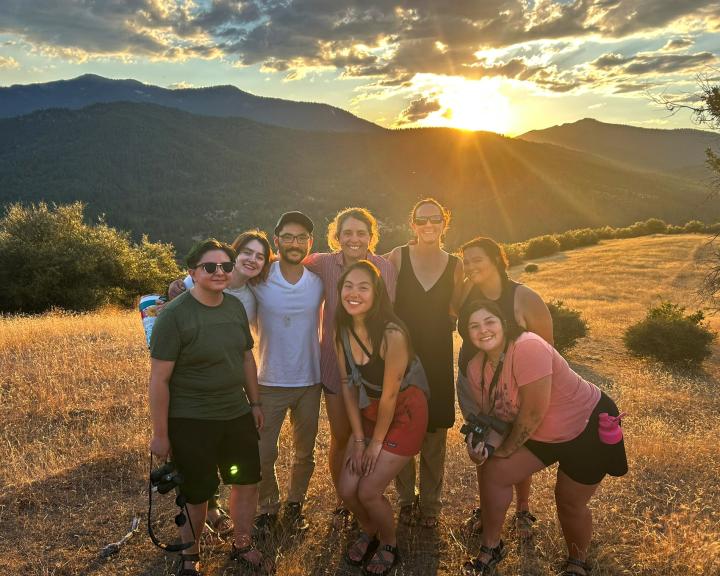
What students are saying
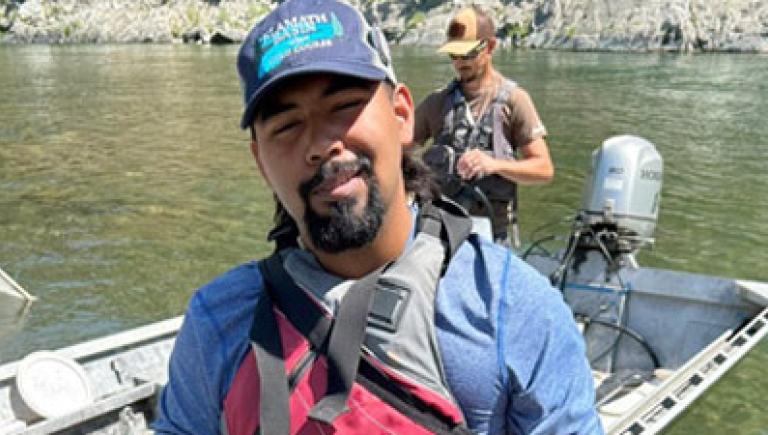
“I have been greatly enriched by this course, as a Native and a Student of Indigeneity I learn from people who have spent time with the land and from the land itself and this course has allowed me precious time and insight from both. I now truly feel grounded and knowledgeable about this very special part of the earth and am very grateful for having had this opportunity and experience- truly this will stay with me for the rest of my life and I am better for it.”
-- Rafael Gomez (Native American Studies major)
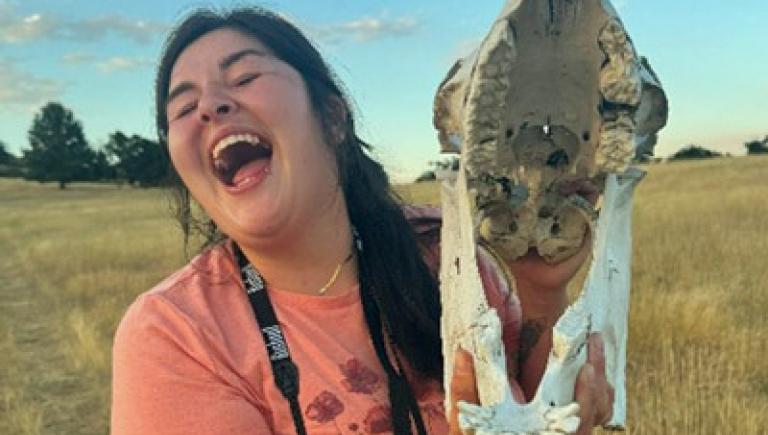
“I greatly appreciate the opportunity to take this course. Not only did I learn about the river that is my traditional territory, I got to meet many professionals within the field as well as future professionals. I am incredibly thankful for this opportunity and hope to expand my knowledge further in this direction moving forward thanks to this opportunity.”
-- Jasara Warren (Tribal Forestry major)
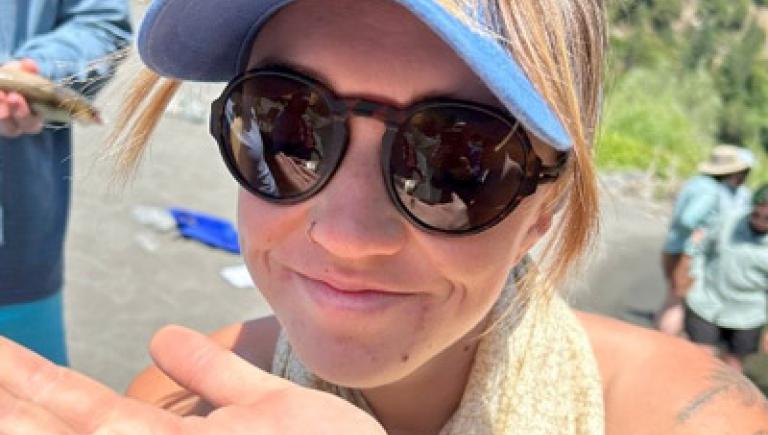
“This field course not only helped me understand various ecological niches and roles of species in the Klamath basin but also my own intended niche and professional role in biology and fisheries. I am so excited to have made the connections I did, both personally and professionally.”
-- Co Conway (Biology major)
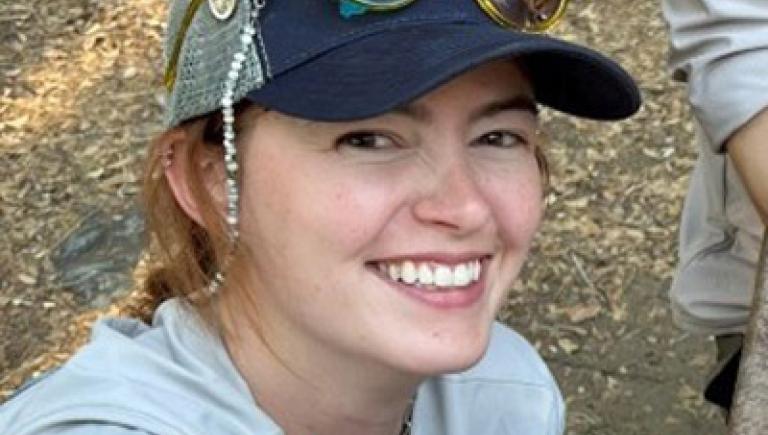
“The Klamath Basin Field Course was one of the most significant experiences I have had during my time in school. It was incredible to learn more about the world around me while connecting with local leaders who have a deep passion for restoration and community building.”
-- Lauren Hart (Environmental Systems Masters Program)

“This was truly a life-changing class that opened my eyes to the struggles that our rivers and their communities have been experiencing. This course gave me a greater appreciation for restoration, and I look forward to learning more about how I can impact my home.”
-- Garrett Hall (Geography and Geospatial Science & Technology major)

“The 2025 Klamath Basin Field Course was an amazingly immersive experience that helped me learn about my community and the important environmental history that has shaped this area into what it is today. As a graduate student, studying sustainability and business, this course has given me invaluable insight on how policy influences environmental justice, and how we can work together.”
-- Eva Sideris (Master's of Business Administration concentrating in Strategic Sustainability)
Alison O'Dowd, Faculty, Cal Poly Humboldt
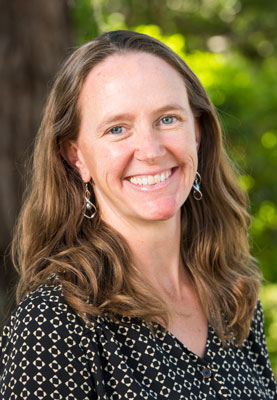
Alison O'Dowd (e-mail) is the co-director of the Humboldt River Institute and a professor in the Department of Environmental Science and Management at Cal Poly Humboldt.
Dr. O'Dowd's research interests are in aquatic ecology and restoration ecology of freshwater systems. Her research explores how biological stream communities (primarily benthic macroinvertebrates) respond to disturbance within a watershed.
Dr. O'Dowd has taught field courses in French Polynesia, Costa Rica, the Sierra Nevada mountains, and the Cascades in Oregon.