

Megan Milligan
Breadcrumb
Advisor
Matthew JohnsonMegan Milligan, 2014
Thesis:
After Humboldt, Megan went on to work as an ornithologist at Hastings Natural History Reservation and then on to earn a PhD at Montana State Unversity.
For her thesis at Humboldt, Megan studied avian predation in Kenyan coffee farms and examined how pest control is influenced by the local landscape and bird community. Her project aimed to answer the following questions: are birds providing pest control services? Does that service vary with distance to the nearest forest fragment or the farm's vegetation complexity? Megan's results help reveal what habitat characteristics optimize the provisioning of pest control services by birds and inform land managers about whether it is advantageous to encourage bird populations on coffee farms.
Xerónimo Castañeda
Breadcrumb
Advisor
Matthew JohnsonXerónimo Castañeda, 2018
Thesis:
After Humboldt, Xerónimo went on to work for California Audubon.
For his thesis, Xerónimo studied barn owl habitat use within a vineyard agroecosystem by quantifying the extent of time barn owls spend hunting within vineyards versus adjacent habitats. He also collected data on the owls’ efficiency in removing rodent pests from the landscape. Xerónimo compiled these data to better understand the potential for barn owls to provide regulating services to viticulturists in one of the world’s most well-known wine regions, Napa Valley.
Eric Wood
Breadcrumb
Advisor
Matthew JohnsonEric Wood, 2007
Thesis:
After Humboldt, Eric went on for a PhD at the University of Wisconsin and then on to be a professor at Cal State LA.
For his Humboldt thesis, Eric used state-of-the-art presence/absence occupancy modeling to examine habitat relationships of songbirds in blue oak woodlands. He tested the capacity for standardized vegetation data collected by the California Native Plant Society to predict bird distribution over a broad spatial extent.
Katherine Larson
Breadcrumb
Advisor
Matthew JohnsonKatherine Larson, 2024
Thesis:
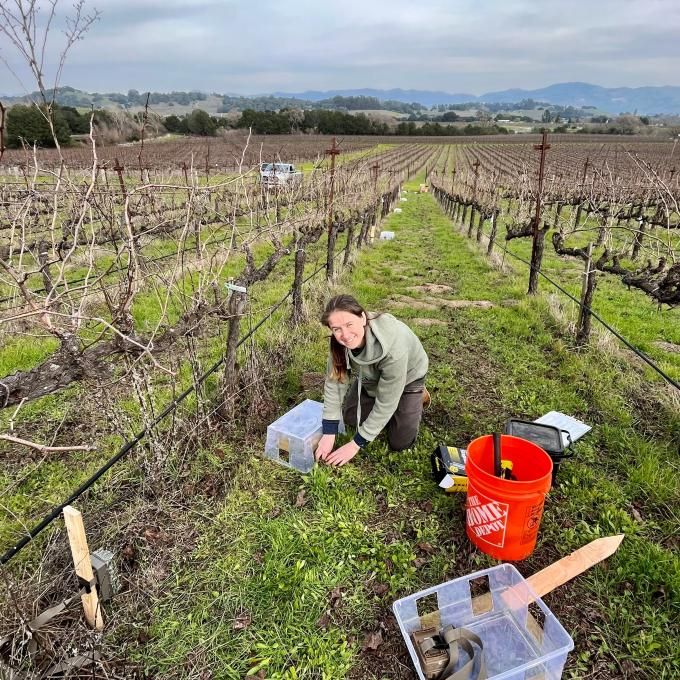
Katherine is investigating how predator-prey interactions affect ecosystem services on Napa Valley vineyards. More specifically, she using is monitoring blocks to determine if barn owls meaningfully reduce vole and mouse abundance, and she is using giving up density (GUD) trays to determine if barn owls affect vole and mouse foraging behavior. Additionally, she deploys baited camera sites to determine the effect of vegetation on vole and mouse abundance. This research may inform vineyard management decisions by demonstrating the effectiveness of barn owls as a pest management strategy and by revealing how vegetation affects this ecosystem service.
Laura Echávez
Breadcrumb
Advisor
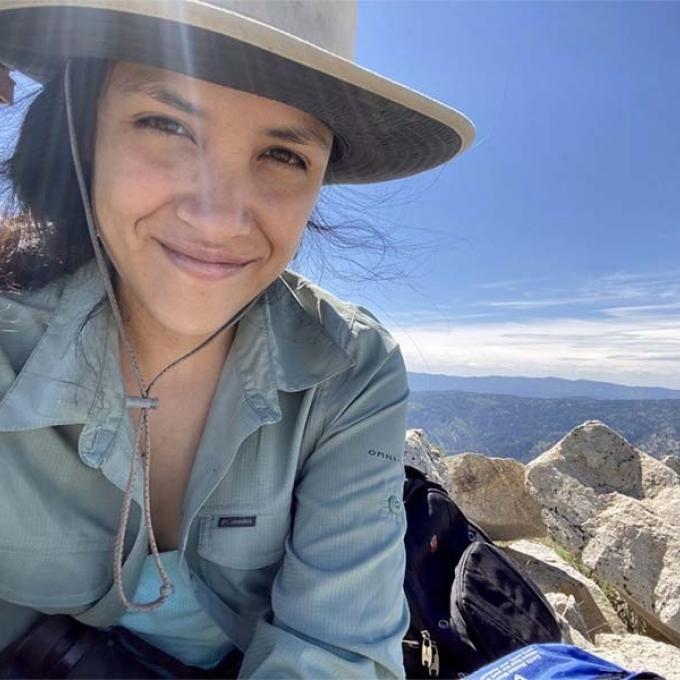
Matthew JohnsonLaura Echávez, 2023
Thesis:Polymorphism of barn owls in a managed ecosystem
From dark reddish to crisp white, and from heavily spotted to almost no spots at all, barn owls can exhibit a wide range of plumage coloration. In other regions, Barn owls have been shown to associate with different foraging areas based on their coloration, and this affects which rodents they hunt, but the effects and extent of color variation in managed winegrape vineyards ecosystems remain unknown. Laura’s research measured the extent of plumage variation and its relationships with habitats and the effects on predator-prey interactions in Napa Valley vineyards. Her research goal was to further our understanding of the effect of polymorphism on rodent pest control, which will hopefully assist farmers’ decisions regarding nest box placement relative to and the management of cultivated and uncultivated areas. After completing her MSc, Laura went to work for the Golden Gate Raptor Observatory.
Christian Cortez
Breadcrumb

Advisor
Matthew JohnsonChristian Cortez, 2025
Thesis:
Christian will be assessing several physiological conditions of barn owl nestlings from nest boxes to investigate the effects of nearby land cover on their health. These physiological conditions include feather growth bars, fault bars, heterophil-lymphocyte ratios, and corticosterone levels in feathers. Previous studies conducted in Napa Valley have demonstrated barn owl preference for uncultivated land cover in terms of hunting activity, prey availability, and nest box location. This study may further clarify how land composition in an agricultural setting can affect a species that provides an ecosystem service through the outcomes of habitat selection.
Megan Garfinkel
Breadcrumb
Advisor
Matthew JohnsonMegan Garfinkel, 2013
Thesis:
After Humboldt, Megan went on to earn a PhD at University of Illinois at Chicago.
For her Humboldt thesis, Megan studied songbird populations on organic row crop farms in order to answer the questions: do insectivorous songbirds provide a top-down effect on row crops by providing pest-removal services? Does that effect vary with population parameters such as songbird diversity and abundance? Megan's results provided information to organic farmers about whether it is economically advantageous to encourage bird populations on farms.
Wendy Cristina Willis
Breadcrumb
Advisor
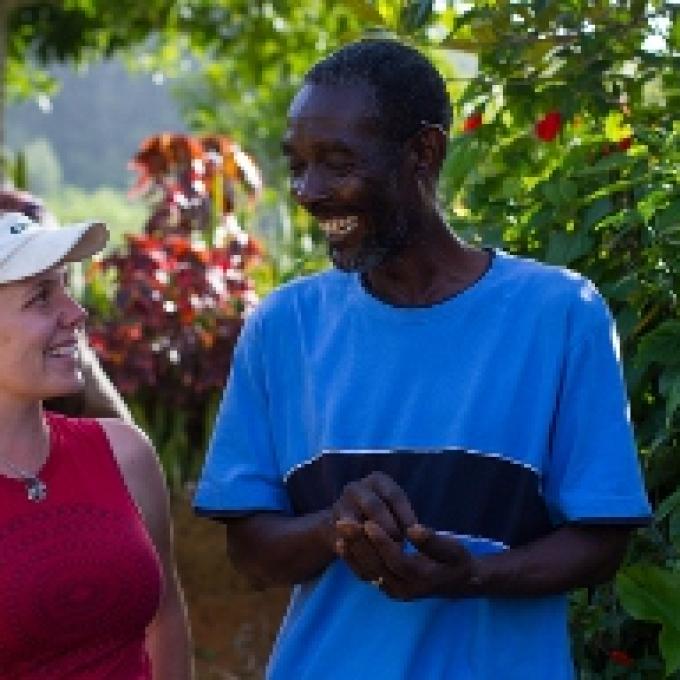
Matthew JohnsonWendy Cristina Willis, 2015
Thesis:
After Humboldt, Wendy went on to work for the American Bird Conservancy and then to be Director of Jocotoco USA, an Ecuadorian conservation NGO
For her thesis in Humboldt'sEnvironment & Community MA program, Wendy used an interdisciplinary approach to investigate how political, economic and ecological factors influence the motivations and constraints for the cultivation of shade trees by coffee farmers in the Jamaica’s Blue Mountains. Utilizing a political ecology framework, she conducted semi-structured interviews with a diverse array of coffee farmers, photo-documented the social landscape of coffee production in the Blue Mountains, and catalogued shade tree diversity for each plot visited. Results from the project can help shape policy, inform farmer extension services intended to advance shade coffee production in Jamaica and contribute to the growing literature on the social ecology of coffee production.
Jeanne Hammond
Breadcrumb
Advisor
Matthew JohnsonJeanne Hammond, 2008
Thesis:
After Humboldt, Jeanne continued to work for PRBO Conservation Science.
For her thesis, Jeanne’s conducted an experiment to determine whether an introduced predator, the black rat, limits Song Sparrow nesting productivity. Nesting success in mature riparian forest is very low due to predation, and a UC Davis study had documented that black rat abundance is high in these areas. After collaborators from UC Davis removed rats from one of her study sites, Jeanne documented how the birds respond there compared to a reference site. Information from this study on songbirds in riparian forest is useful to conservation ecologists working to restore endangered riparian habitat in the Central Valley.
Jaime Carlino
Breadcrumb
Advisor
Matthew JohnsonJaime Carlino, 2024
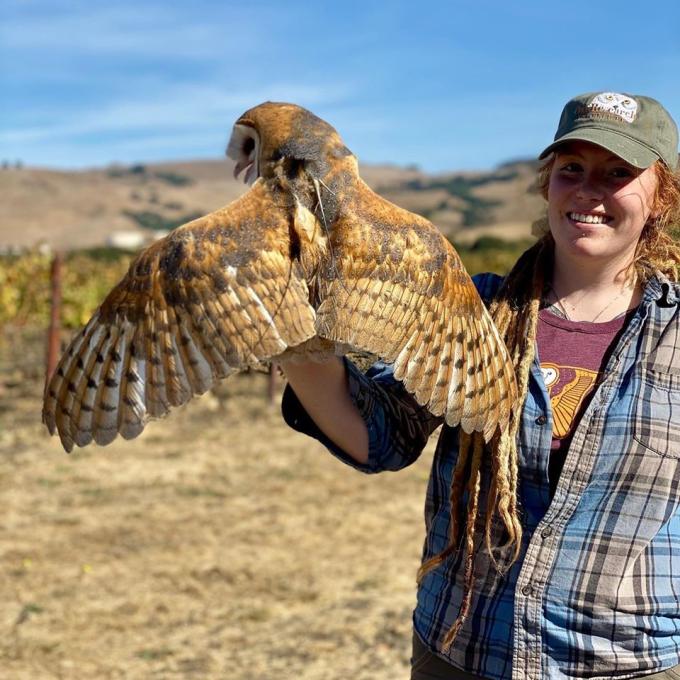
Thesis:Measuring barn owl breeding habitat quality and predicting double brooding
Jaime evaluated multiple measures of habitat quality in order to identify areas of high quality barn owl breeding habitat in Napa Valley and inform which measures can be reliably used in other areas. Her research also aimed to reveal potential mismatches between observed habitat preferences and fitness outcomes. This helps clarify if the owls selection for nest boxes and habitat is adaptive, and which habitats are best for the owls' reproduction. After completing her MSc, Jaime went on to work as GIS specialist for the Yurok Tribe.