
Samuel Gabriels
Breadcrumb

Advisor
Mary Ann CreadonSamuel Gabriels, 2015
Thesis:
Amanda Alexander
Breadcrumb
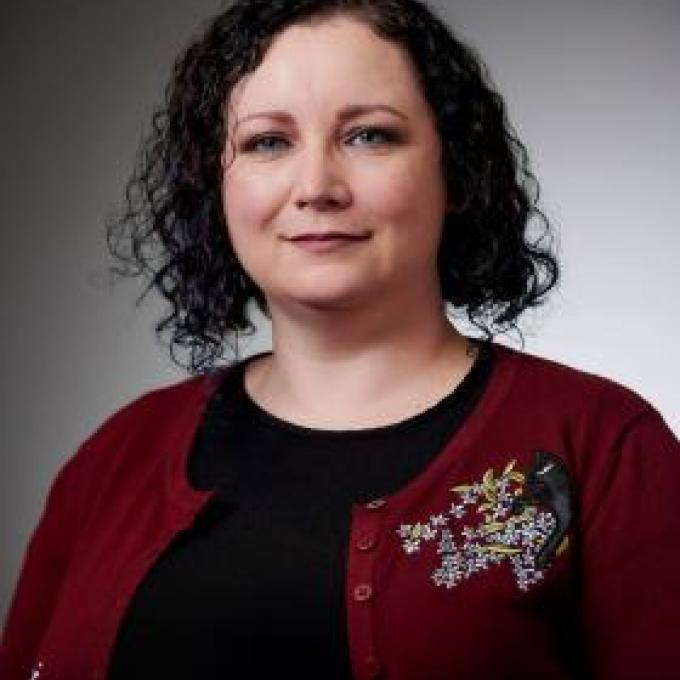
Advisor
Nikola HobbelAmanda Alexander, 2013
Thesis:
Read more about Amanda on her Alumni Profile listing.Stephanie G. Cowherd, San Carlos Apache"
Breadcrumb
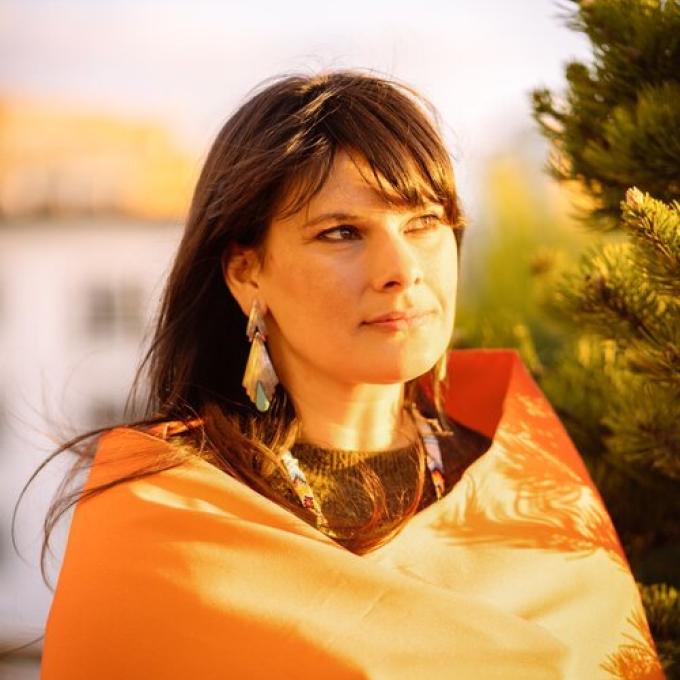
Advisor
Barbara Brinson CurielStephanie G. Cowherd, San Carlos Apache", 2014
Thesis:
I am Forests and Community Program Director at Ecotrust. I lead projects related to forestry and natural resource planning, education, and community outreach and engagement. My most recent work taps into my lived and professional experience in working alongside Tribes and Indigenous communities to apply Indigenous Knowledge System frameworks to forest and natural resource planning that centers the community’s values, needs, and goals. I enjoy working with communities to bring vibrant storytelling about forests, foods, and fire to life through a variety of mediums including videos and experiential field tours. My work grounds itself in authentic relationships and accountability between organizations, Tribes, and other BIPOC communities and organizations. I dream of cultivating spaces for healing in community with all our relations. I am at heart a writer, and you can find my work published in places such as Toyon, Osiyo, Journal of Forestry, Tlaa: A Collective of Indigenous Expression. I am working on a small chapbook of poetry named Salt. I utilize a variety of skills I learned through the MA program in my current role. In particular, the critical race and gender studies courses I took through the program have been extremely helpful the past two years. I’ve worked together alongside my work’s Equity Working Group to develop racial equity frameworks and lenses to evaluate projects, internal policies, and funding priorities. I also draw on the skills I learned as a student teacher to co-develop with university instructors an intergenerational mentorship program between Native undergraduate students and Native high school students. Together, we co-developed and delivered lesson plans and guided students and mentors through a series of forestry-related topics. On a day-to-day basis, I utilize my research skills to research requests for proposals that align with the values and goals of the communities we work with and our organization’s strategic plan. If an RFP seems in alignment and we believe we’d be competitive, as a Program Director I most often lead or co-lead writing and work collaboratively to write a competitive proposal with internal and external collaborators. Just like a writing assignment, the RFP has genres, audiences, context, languages, and prompts you need to take into consideration to be effective. Sometimes a literature review is involved as well, and I write these too. More recently, I have been using skills I acquired through conducting qualitative research, developing a methodology for collecting, analyzing, meaning making, and sharing out data and our findings. The last skill set I’ll share about is around storytelling. The skills I learned through creative writing courses enabled me to grow as a storyteller. I get to work with amazing digital, print, visual, and other creative artists to elevate authentic, engaging, and compelling stories of community partnerships and our work together. My last word of advice is that the program is what you make of it, push yourself, take care of yourself, build and hold yourself accountable to community, you got this!Melissa Wise
Breadcrumb
Advisor
Suzanne ScottMelissa Wise, 2019
Thesis:
Laura Exline
Breadcrumb
Advisor
Nikola HobbelLaura Exline, 2013
Thesis:
Chris Ramponi
Breadcrumb
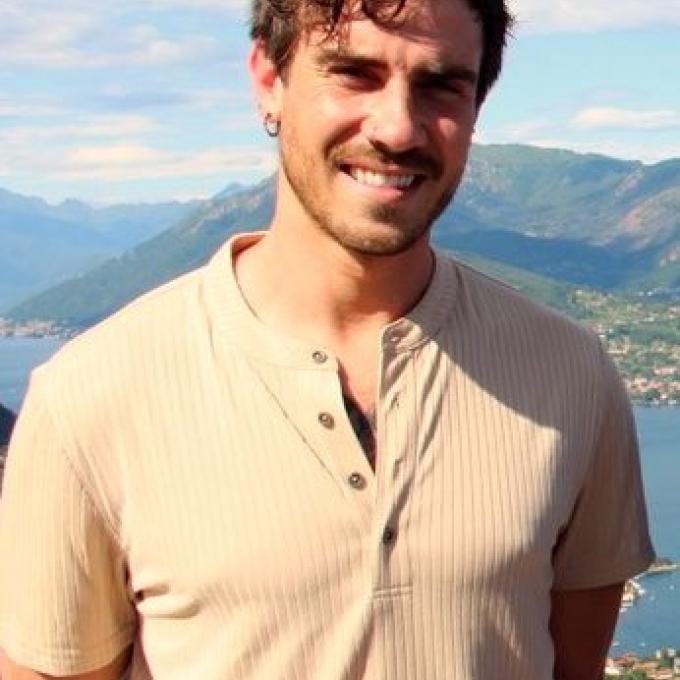
Advisor
Mary Ann CreadonChris Ramponi, 2020
Thesis:
During my time as a graduate student at HSU, I noticed a pattern in the specific ways that the topic of passionate love was approached in various Romantic texts. I began, then, to formulate a sort of taxonomy of passionate love by researching across time periods, disciplines, and genres. I drew connections between Greek myth, troubadour poetry, and Romanticism, as well as between philosophical considerations spanning third-century Neoplatonism and medieval Arabic philosophy to Idealism and Absurdism. I argued that passion is a form of transgression, one born from a fleeting experience of an ideal that cannot exist within the limitations of the temporal world. I took my findings and formulated my argument: that the pursuit of passionate love and the pursuit for sublime transcendence are one and the same, and that the realization of this ideal is incumbent on the manipulation of those aspects which seem most antithetical to its success: language and materialism. Concentrating on Madame Bovary, I argued that conceptualizing passion in this way reveals in Emma an uncompromising quest for transcendence that transforms her from a victim of (dis)illusion into a Romantic hero. It was thanks to the ethos of the English MA program—one that allows for academic exploration and self-discovery while maintaining high standards of academic rigor—that I was able to push beyond my limitations. The close, critical reading that forms the foundation of all literary study was seamlessly paired and ultimately enhanced by parallel focuses on rhetoric, theory, and cultural studies. These different elements unite to form a poly-perspectivism that continues to guide the way I interact with the world.Marcos Hernandez
Breadcrumb
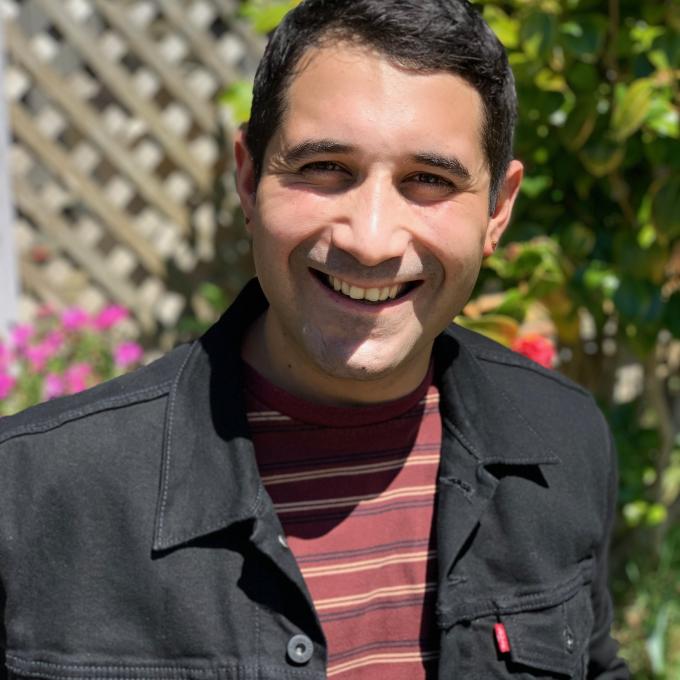
Advisor
Lisa TremainMarcos Hernandez, 2019
Thesis:
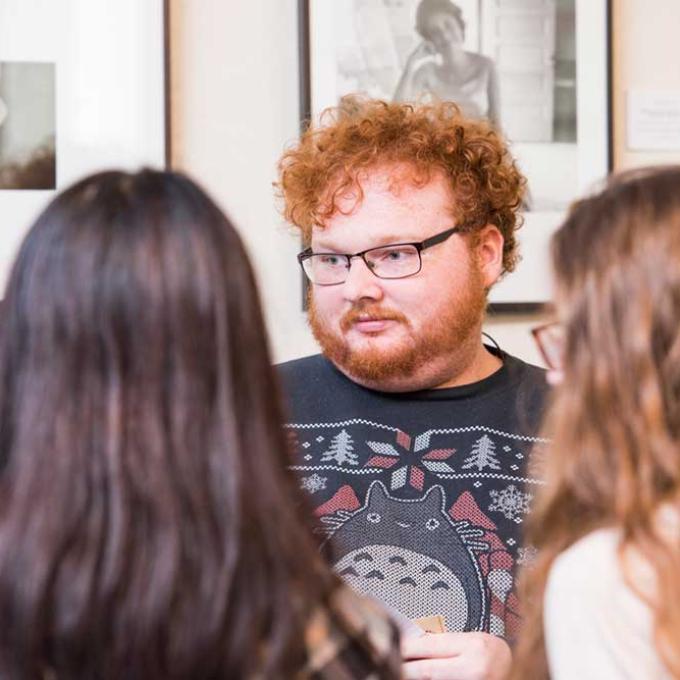
Currently, I teach editing and publishing practices as the Faculty Advisor for the student-run Toyon Multilingual Literary Magazine at HSU. Come Spring 2022, I will also begin teaching introductory English courses at College of the Redwoods. In addition to my current and upcoming teaching posts, I serve as the administrative support coordinator for Toyon and HSU’s chapter of the Sigma Tau Delta English Honor Society. I am the co-author of a chapter on editorial courses, diversity and equity education, and the publishing industry in the book From Practice to Print: Creative Writing Academics on the Publishing Trade (2021). The MA in English experience provided a strong foundation for my personal and professional development, equipping me with a broad set of skills, knowledges, and dispositions that has helped me become a more creative, informed, and reflective person. During my time in the program, I had the honor of working with dedicated faculty members who supported my interests in, among other things, editing and publishing practices, cultural criticism of popular media and literature, and transfer-based theories of writing development and pedagogy. Furthermore, the program’s focus on applied learning gave me several opportunities to put theory into practice. For instance, I taught first-year composition as a graduate teaching associate in 2017, during which I received individualized coaching and support from a trusted mentor. In 2018, HSU English paid for me to present research at a graduate conference at CSU Fullerton, where I presented an interpretive framework for reading contemporary true crime media. My master’s research connected my interests in publishing, writing for social change, and theories of writing development by providing a space for me to explore the possibilities for using real-world publishing projects to teach writing practices. What I have found most valuable and life-affirming about my experience in the MA in English program has been dispositional: it made me a much more reflective person. My professors regularly challenged me to step back and sort through my own beliefs, biases, and assumptions and to consider those of others when making judgments. In doing so, I developed a reflective orientation towards myself and the world, and I became much more tolerant and empathetic in my interactions with others as a result. These are important qualities to have as an educator, and I am thankful that the MA in English promoted practices that helped me attain them.Cole Shepard
Breadcrumb
Advisor
Janet WinstonCole Shepard, 2023
Thesis:
I am currently in the MA in English program. Humboldt State University was also where I got my bachelor’s degree—the wonderful faculty here did not make my decision to come back for my Master’s very difficult. The program has been a blast so far, and the faculty have been very accommodating with my less-than-typical English department project. Along the way, I have seen nothing but support, everyone in the department I talk about my project with providing me with new resources and new insights. I’ve been researching and writing about postcapitalism and its surrounding conversations. I’m interested in seeing how people envision a future without capitalism and how they expect us to get there, and I’m casting a wide net for answers. This has led me all around the academic world from queer and Indigenous scholars to sociologists and anthropologists to philosophers and politicians. Every field has a vested interest in re-examining our relationship to capitalism, and my goal is to trace where those conversations are going. When not knee-deep in homework, I am pursuing miscellaneous creative endeavors, like writing, drawing, or music production.Emily Bushta
Breadcrumb
Allison Iafrate
Breadcrumb