

Breadcrumb
Belize Archaeology Field School
SUMMER 2027 DATES: May 20 - June 17, 2027
- A Pre-Application will open by the end of October, 2026. This is for applicants to indicate their interest and receive an initial response about likelihood of acceptance. A pre-application is not required, but it is highly recommended.
- A formal application through Cal Poly Humboldt Study Abroad will be available by the end of 2026.
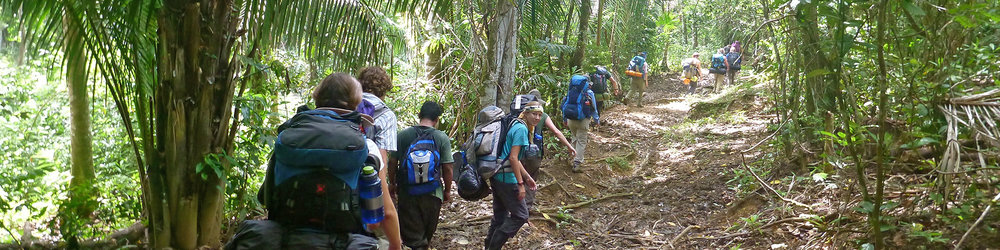
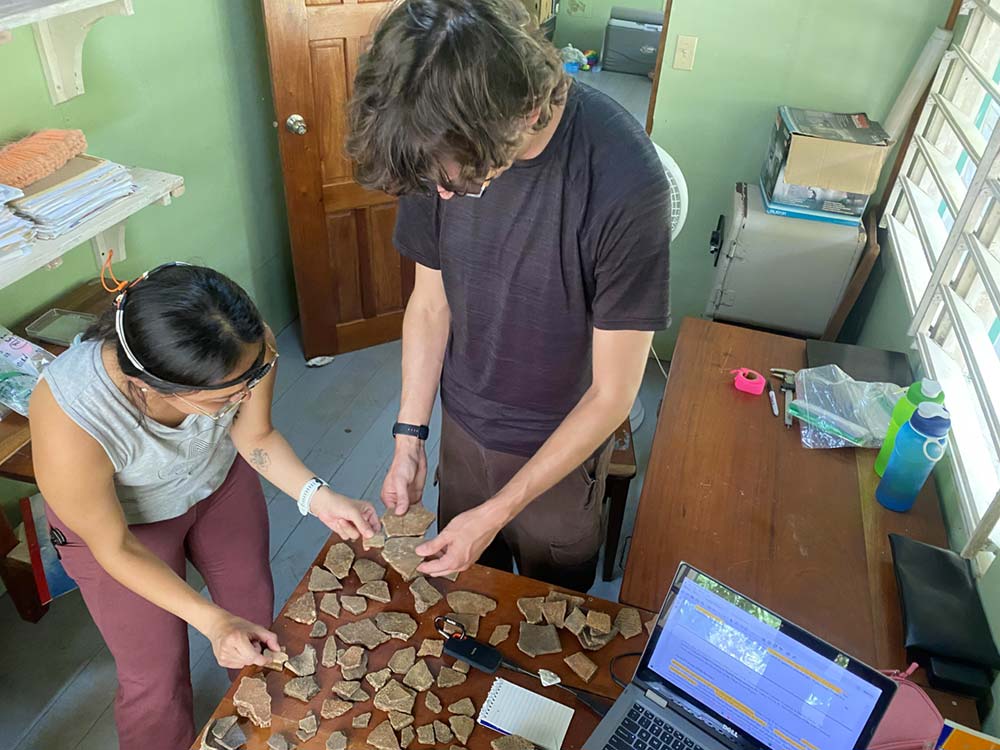
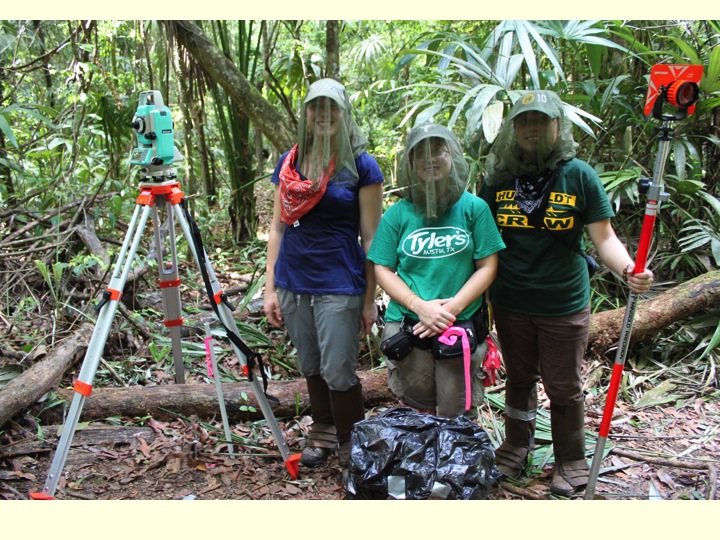
The Humboldt Belize Archaeology Field School involves field survey, excavation at several Maya sites, and laboratory experience working directly with excavated Maya artifacts.
Thematically the field school focuses on two themes centered around the broader topic of ancient Maya resilience. The first theme aims to enhance our understanding of rural (hinterland) settlements within the broader political sphere, while the second aims to highlight how investments in landscape infrastructure helped shape settlement patterns, social structures, and long-term sustainability amidst a backdrop of a variable hydroclimate.
Students with the field school attend field school meetings, lectures, and participate in field investigations (field survey and excavations) laboratory analyses. Students also learn about Maya culture history and describe their experiences by documenting their activities in field journals and final papers.
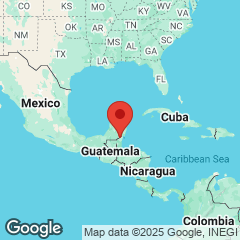
Belize is a Central American country on the Caribbean coast, bordered by Mexico and Guatemala, with English as its official language and a British parliamentary system. Renowned for its biodiversity, Belize features rain forests, mountains, and the world's second-largest barrier reef system, alongside ancient Maya ruins. Economically, it is an upper-middle-income country dependent on tourism and agriculture, though it faces challenges like poverty and vulnerability to natural disasters.
Orange Walk is the fourth largest town in Belize, with a population of about 13,400. It is the capital of the Orange Walk District. Orange Walk Town is located on the left bank of the New River, 53 miles north of Belize City and 30 miles south of the town of Corozal.
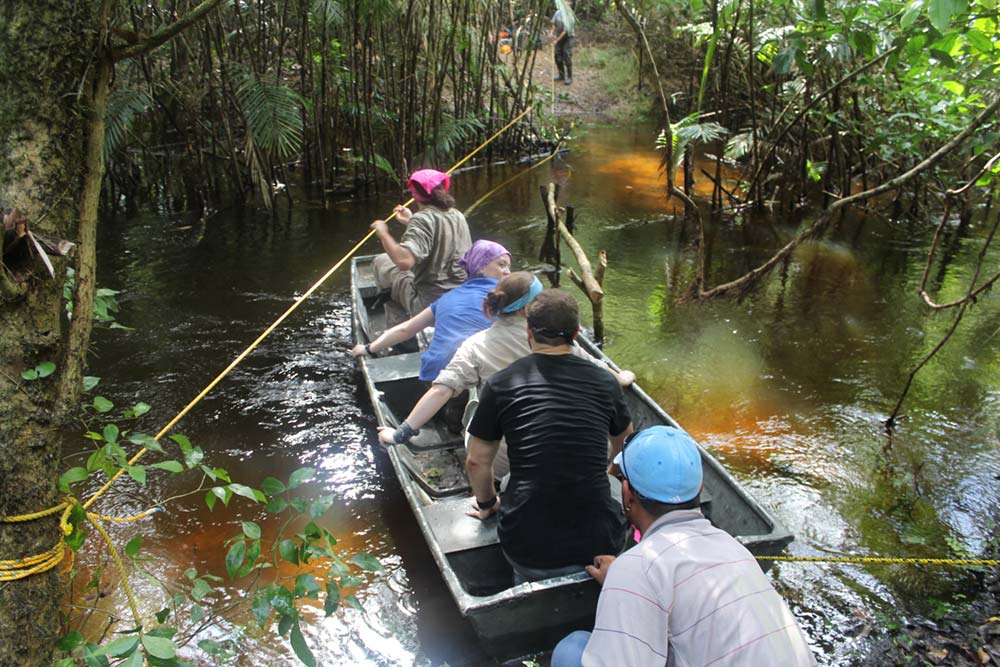
The project area of the Program for Belize Archaeology Project (PfBAP) is in northwestern Belize on land owned by the Program for Belize, a Belizean controlled non-profit organization. The Cal Poly Humboldt field school works under a permit issued from the Institute of Archaeology to Dr. Rissa Trachman, Director of the Program for Belize Archaeology Project (PfBAP). PfBAP research focuses on the Rio Bravo Conservation and Management Area, a nature reserve of more than 250,000 acres. The research area is home to a great variety of neotropical wildlife, including many birds and monkeys.
*You do not need to be a student at Cal Poly Humboldt to attend the field school*
What You'll Learn
Field work requires physical labor, great sense of humor, and a good attitude. You will learn about Belizean cultures, Maya archaeology, and cultural sensitivity, and more. You will attend field school meetings, lectures, to spend many hours in the field taking part in field survey and/or excavations. You also will reflect upon and write about your experiences in a field journal and papers.
The instructors and teaching assistant will teach you how to carry out survey, interpret LiDAR data, excavation, and laboratory techniques. You will be asked to put into practice everything you are learning.
This program has two major interrelated themes. The first theme will be an examination of Belizean cultures via an anthropological viewpoint. Cultural anthropology is one of the four main areas of study within the discipline of anthropology. You will study modern Belizean life ways, the sociocultural history of the country, verbal traditions, and the impact of tourism and development, among other things. You will also become well-versed in cultural sensitivity and intercultural communication.
The second theme — archaeology — includes practical training in field techniques and classes relating to archaeology and settlement studies. Archaeology is the study of ancient cultures through the analysis of material cultural remains. This field school will serve as an introduction to the basic methods and techniques used in material cultural analysis, and provide you an excellent opportunity for hands-on learning. You will make observations of archaeological finds and learn associated field techniques.
When you finish this program, you should be able to:
- Demonstrate a working knowledge of archaeological methods for field and laboratory research, including survey, excavation, stratigraphic interpretation, dating, classification, and typology.
- Explain how archaeologists make inferences about human behavior and practice by recognizing patterns in the distribution, form, and context of material remains.
- Explain how archaeological records are created and transformed.
- Discuss the major transformations in human prehistory, the sites that are important to their understanding, and the theories archaeologists have proposed to explain them.
- Develop a sense of stewardship over the irreplaceable resources of the archaeological record.
- Understand and reflect upon many cultural practices and the history of the people of Belize;
- Appreciate the difficulties and joys of living and working in "foreign" cultures and the wisdom such experiences can produce.
While taking part in the program, you will earn credit for:
- ANTH 485, 1 unit, Belize Field Program Preparation
- ANTH 357, 5 Units, Field Archaeology
Dates for the next session
- Summer 2027 dates: May 20 - June 17, 2027
Budget
- There are three main associated costs: program fee, tuition, and travel to and from Belize. All costs are given in US dollars.
- Program fee: $3,000 (preliminary). Covers in-program costs between pick-up and drop-off at the arrival airport. This includes travel to the site and back, lodging at the site, laundry, some sightseeing trips as a group, and meals during the program, and international health insurance through the CSU. Students are responsible for additional costs for any choice travel, outings, and snacks, etc... before/during/after the program.
- Tuition: $300 per unit: Most undergraduate students take the full 6 units. With instructor permission for students with extensive prior experience, it may be possible to attend for fewer units. Graduate students may attend for 2 units (ANTH 680) with instructor permission.
- Travel to and from Belize: Cost varies. Students are responsible for their own travel. Flights are generally least expensive if purchased in advance and if flying from a major airport. Students are advised to not purchase airfare until their acceptance to the program is verified; however, keep in mind that fares are lower with early purchase. Students are advised to purchase flight insurance; the program shall not reimburse students for airfare if for any reason the student does not attend the program or if incorrect flights are purchased prior to confirming arrival information with faculty.
- Looking for scholarships? Check out:
- https://www.archaeological.org/grant/waldbaum-scholarship/
- Anthropology Department Travel Funds
Application Information
- Applications for Summer 2027 are expected to open in late 2026 and will be linked here. Once open, the application deadline is Feb 1, 2027. However, early application is recommended - seats may be filled as applications are received.
- A Pre-Application will open by the end of October, 2026. This is for applicants to indicate their interest and receive an initial response about likelihood of acceptance. A pre-application is not required, but it is highly recommended.
- A formal application through Cal Poly Humboldt Study Abroad will be available by the end of 2026.
- No prior experience is required.
Byron Smith, Ph.D.
Program Director
Byron.Smith@humboldt.edu
Spencer Mitchell, Ph.D.
Program Faculty
Spencer.Mitchell@humboldt.edu