

Breadcrumb
Biological Anthropology
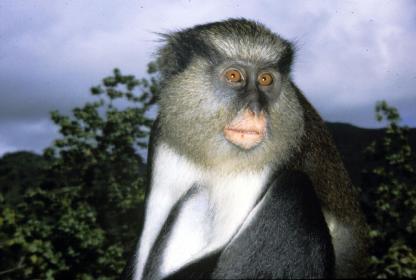
Biological anthropology investigates human and nonhuman primate biology and evolution by studying biology (especially the skeleton), evolutionary theory, inheritance, the fossil record, and living primates. It looks at interrelationships between behavior, ecology, and biology.
Biological anthropologists study human biology and evolution and work in very diverse fields. One field, primatology, studies nonhuman primates (including lemurs, monkeys, and apes) to learn about their behavior and evolution, to place human evolution in context, and to aid conservation efforts. Paleoanthropologists study the fossil record of humans and other bipedal primates (“hominins”) like Neanderthals and “Lucy” to understand how humans evolved. Forensic anthropologists apply their knowledge of anatomy to help analyze human skeletal remains and work in medical and legal fields. Forensic anthropologists also work internationally in human rights cases, helping to give justice to the victims and closure to their families. Evolutionary medicine seeks to answer questions about why we get the diseases we get, what health issues are more common in certain areas, and what health, nutritional, medical strategies are used in different cultures.
Courses in Biological Anthropology
- ANTH 300: Method & Theory in Biological Anthropology
- ANTH 305: Human Evolutionary Health
- ANTH 331: Paleoanthropology
- ANTH 332: Forensic Anthropology
- ANTH 333: Primate Evolution & Adaptation
- ANTH 334: Anthropology, Ecology & Conservation
- ANTH 336: Comparative Osteology
- ANTH 339: Special Topics in Biological Anthropology
- ANTH 637: Applied Biological Anthropology
- See the catalog for course descriptions
Medieval Bioarchaeology Program in Poland
The Medieval Bioarchaeology Field Program in Żelewo, Poland is a summer field school run jointly by faculty from Cal Poly Humboldt, the University of Szczecin in Poland, and other institutions in Poland. The field school takes place at a medieval mortuary that is being disturbed by looting, agriculture, and geological processes. At the field school, students work with faculty to excavate the mortuary, learning about the inhabitants (whose history was largely lost during and post WWII), and prepare remains for eventual reburial in collaboration with the local community.
Biological Anthropology Research Lab
The Biological Anthropology Research Lab is dedicated to providing training and research opportunities in evolutionary and applied biological anthropology. Current focus areas include comparative anatomy, bioacoustics and communication, primate conservation, evolutionary medicine & nutrition, bioarchaeology, and forensic anthropology.