


Breadcrumb
Alumni Spotlight
Michael Lopez-Torres
Year Graduated: 2014
Life science research professional
Job description
After graduating from Cal Poly Humboldt I had the privilege of being awarded an intern position for the California Institute for Regenerative Medicine through Cal Poly Humboldt. As an intern, I worked in a lab that studied the stem cells that make our bones and cartilage. After completing my intern year, I was offered a research position in my lab and spent the following four years conducting skeletal stem cell research. During my time in the lab, our team identified and characterized the stem cell responsible for making all our bones and cartilage. Subsequently, we spent our time investigating degenerative diseases that affect bones through the lens of our newly discovered skeletal stem cell. Currently, I'm a first-year medical student at UC Davis where I continue doing research with an interest in orthopedics.
Why did you choose this program?
I always had an interest in biology. I was fascinated by how genes encode proteins and how proteins essentially conduct everything that goes on in our cells. I chose Humboldt specifically because I recognized that the small class sizes would allow me to form a tight-knit community with my peers and professors.
How did this program prepare you for your job?
While at Cal Poly Humboldt, I conducted basic lab research. The fundamentals I learned at Humboldt, both in class and in the laboratory setting, I still use today.
What did you enjoy most about the program?
What I enjoyed most about the program was the flexibility. At Humboldt, I was able to decide which science classes I wanted to enroll in as long as they fulfilled my major's requirements. I majored in microbiology and although bacteriology is a big part of the major, I also had the opportunity to branch out and take classes in stem cell biology.
What would you say to prospective students who are thinking about applying to this program?
Explore your options and find what you're passionate about. Biology is very broad and there are many fields you can go into with a degree in biology. If you feel you may have an interest in research, reach out to your professors and ask about research opportunities. Humboldt is a relatively small school which allows students to create strong connections with their professors. As a result, there are opportunities for undergraduates to get significant hands on research experience.
Casiana Gonzalez
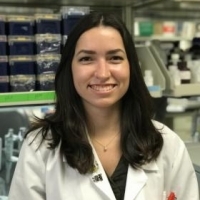
Year Graduated: 2018
Graduate Student Researcher
University of California, Davis
Job description
Following graduation from Humboldt, I completed the Humboldt CIRM Bridges 2.0 Post Baccalaureate program and was then hired to work as a Junior Specialist at UC Davis. I am now preparing to begin my Ph.D. in the Molecular, Cellular, and Integrative Physiology program at UC Davis, Fall 2021.
Why did you choose this program?
I chose Humboldt as it was a relatively small school, with great coursework and faculty for a biology major. The intimate size of Humboldt allowed me to create connections with the faculty, as well as provided many opportunities for hands-on laboratory and research experience.
How did this program prepare you for your job?
This program helped me prepare for my current position as my first-hand experience in research made me an excellent candidate in job applications. I gained experience working with CRISPR in the Cell Biology course and I learned how to culture stem cells in the Stem Cell course, both skills that I continue to utilize daily. Additionally, Humboldt's CIRM Bridges program provided me with valuable networking opportunities that have helped my career development during my training.
What did you enjoy most about the program?
One aspect that I really enjoyed was the wide variety of opportunities that Humboldt has to offer. Since I was interested in research, I applied to the Moonstone Crossing scholarship provided at Humboldt. This allowed me to work in the lab of Dr. Amy Sprowles over the summer and continued into my research course units for the remainder of my time at Humboldt. Opportunities like these allowed me to supplement my coursework and stand out as a student in my applications for both career and graduate school.
What would you say to prospective students who are thinking about applying to this program?
I initially struggled with my studies at Humboldt. However, the intimate nature of Humboldt enabled me to connect with the faculty and instructors and provided me with alternate routes to be successful. The experiences gained because of this have allowed me to stand out in applications, despite a non-competitive GPA. My advice to prospective students would be to have open and honest conversations about your experiences with advisors or faculty you feel comfortable with. They are there to help you be as successful as you can be.
Carsten Charlesworth
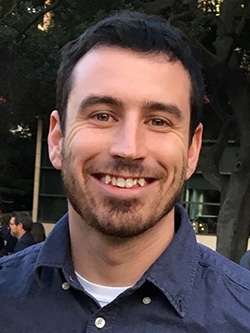
“My interest in biology was spurred from having grown up in Australia and spending much of my time outside fascinated by the unique flora and fauna that Australia has to offer. In 2008 my family moved to Tulare, in the Central Valley of California where I completed my last year of high school. After High School I decided to go to Cal Poly Humboldt because of its reputation for having strong biology programs as well as for the natural beauty of the area. Although I initially was interested in pursuing a career in zoology, in trying to understand animals I found myself studying biology at smaller and smaller levels, until the point that I find myself a molecular biologist by the end of my undergraduate career. Spurred by the opportunity to complete a paid internship at a world class research institution in an area of research I was interested in (Stem Cell Biology), I applied to the Humboldt CIRM bridges program, which I was lucky enough to be accepted into. With a keen interest in the developing field of genome editing and the recent advent of the CRISPR-Cas9 system I chose to intern in the lab of a pioneer in the genome editing field, Dr Matthew Porteus at Stanford, who focuses in genome editing hematopoietic stem cells to treat diseases such as sickle cell disease. In August of 2018 I left Dr Porteus’s lab to begin a PhD in Stanford’s Stem Cell and Regenerative Medicine program, where I am currently a second-year graduate student in the lab of Dr Hiro Nakauchi, working on the development of human organs in interspecies human animal chimeras. The success that I’ve had and my acceptance into Stanford’s world class PhD program are a direct result of the opportunity that the CIRM Bridges internship provided me and the excellent training and instruction that I received from the Cal Poly Humboldt Biology Program. As a student that attended a State school the program provided me experiences and opportunities, I never anticipated I would have. I can’t imagine where I would be without it.”
Elisebeth Torretti
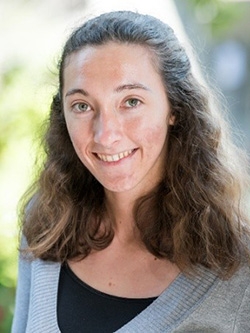
“While looking for opportunities at Humboldt, I stumbled upon the CIRM Bridges program. It was perfect- a paid internship at high profile labs where I could expand my research skills for an entire year... the best fit (was) Jeanne Loring's Lab at the Scripps Research Institute in La Jolla, CA. Dr. Loring is one of the premiere stem cell researchers in the world... (The lab’s) main focus is to develop a cure for Parkinson's disease. (They) take skin cells known as fibroblasts and revert them into stem cells. These cells, called induced pluripotent stem cells (iPSCs) can then be differentiated into dopaminergic neurons and transplanted into the patient…. My (similar) project focused on a different disease; adenylate-cyclase 5 (ADCY5) related dyskinesia. During my time at Dr. Loring's lab I learned incredibly valuable research skills such as sterile antibiotic-free cell culture, neuronal/cardiac differentiations, RT-qPCR, ICC, and many others…I was able to work also (with) of the San Diego's Frozen Zoo… a repository of samples from animal(s) that died on Zoo property…. These…include viable fibroblasts, and the (Zoo’s) team hopes to save the Northern White Rhino from extinction by generating stem cells from fibroblasts and then …to create viable sperm and eggs, and eventually hopefully a baby white rhino.... I started looking into jobs in the area… (and) received several job offers. I don't think that would be possible in a competitive area like San Diego without my experience gained through the CIRM Bridges program. I … chose to go to a mid-sized biotech company focusing on oncology research. I regularly take care of over sixteen different cell lines, develop/tune differentiation protocols for our lab’s needs, and run drug screens on model cell types. In my free time I enjoy playing video games, gardening, going to the beach, and exploring the plethora of craft breweries here in San Diego.”
Brendan Kelly
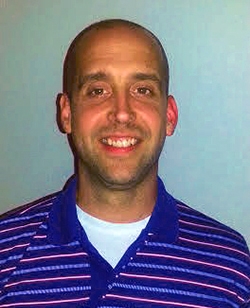
“After completing my CIRM internship in Dr. Marius Wernig’s lab (in Stanford), I began working at a startup company called I Peace. I helped launch this company with Dr. Koji Tanabe, whom I met while working in my host lab. I am now at Cardiff University in Wales, working on a PhD. My research involves using patient iPSC-derived neurons to investigate endolysosomal dysregulation Huntington’s disease. All of this stems from the CIRM Bridges program. I am profoundly grateful for the foundation it gave me, as it was the opportunity that opened the door to my research career."
Samantha Shelton
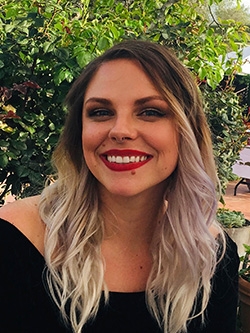
“After my CIRM internship in John Rubenstein’s Lab of Neural Development I joined the Graduate Program for Neuroscience at Boston University. My PhD work aims to discover types of stem cells in the brain and how the structure of the brain develops early in life. During this time, I have focused on changes in brain development after Zika virus infection to better understand how microcephaly (meaning small skulls and brains, often a symptom of Zika-DR) is caused. By understanding how stem cell populations in the brain are targeted by Zika virus, we hope to learn possible ways to impede infection and development treatments for those infected by Zika virus.
“CIRM provided invaluable hands-on training in cell culture and stem cell techniques that have shaped my future in science. My experience in the Rubenstein lab taught me amazing techniques such as stem cell transplantation, but also what goes into creating a harmonious and productive laboratory environment. My internship projects led to my first co-first author publication. There is no doubt that CIRM not only made me a more competitive candidate for a doctoral degree but also provided me with tools to progress towards my ultimate goal of understanding and treating neurological diseases with stem cell technologies.”
Du Cheng
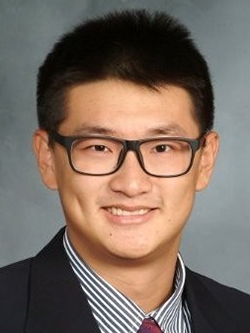
“Both my academic and business tracks started in the CIRM-funded…fellowship (at Stanford) where I invented the technology (the LabCam Microscope adapter) that I formed my company on…(iDU Optics LLC). The instructor of the class, Dr. Amy Sprowles…encouraged me to carry on the idea. Later, I was able to get in the MD-PhD program because of the invaluable research experiences CIRM’s research program provided me. CIRM initiated the momentum to get me where I am today. Looking back, the CIRM Bridges Program is an instrumental jump-starter on my early career... I would not remotely be where I am without it.…”
Cody Kime
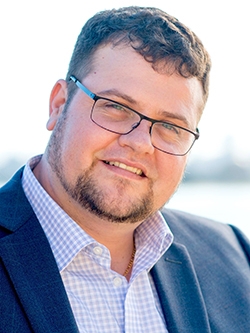
“Securing a CIRM grant helped me to take a position among the most competitive labs in the new field of cell reprogramming, working in the Nobel Prize winning Shinya Yamanaka Lab at the Gladstone Institutes. I then explored my own reprogramming interests, moving to the Kyoto University of Medicine, Doctor of Medical Sciences Program in Japan, and building a reprogramming team in the Masayo Takahashi Lab at RIKEN. My studies explore inducing cells to their highest total potential using less intrusive means and hacking the cell program. My systems are designed to inform my hypotheses toward a true お好みの細胞 (okonomi no cybo) technology, meaning ‘cells as you wish’ in Japanese, that could rapidly change any cell into another desired cell type or tissue.”
Sara Mills
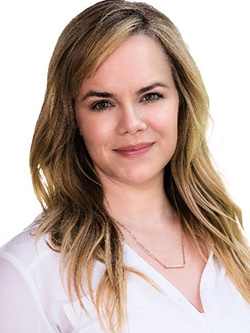
“The CIRM Bridges program was the key early influencer which aided in my hiring of my first industry position at ViaCyte, Inc. Also, a strongly CIRM funded institution, I was ultimately responsible for the process development of the VC-01™ fill, finish processes and cGMP documentation development. Most recently, with over two years at the boutique consulting firm of Dark Horse Consulting, Inc., I have been focusing on aseptic and cGMP manufacturing process development, risk analysis, CMC and regulatory filings, facility design and project management to advise growing cell and gene therapy companies, worldwide.”
Humberto Contreras-Trujillo
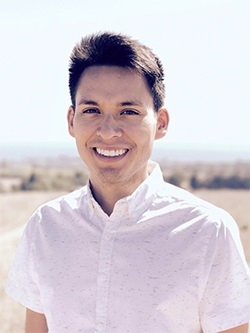
“The CIRM Bridges fellowship was instrumental and opened many doors for me. I had the privilege of carrying out my fellowship in the Weissman Lab at Stanford University. Following the fellowship, I stayed on as a research assistant helping with proof-of-concept studies that showed the effectiveness of anti-CD47 antibody therapy in anti-tumor response in various cancers. I left Stanford (August 2014) to pursue a PhD at USC, and was awarded a three-year F31 predoctoral research fellowship by the NIH National Cancer Institute. During my PhD training, I have been utilizing genetic barcodes to track patient derived leukemia cell clones in xenograft mouse models. I have been particularly focused on understanding how the clonal competition is altered during chemotherapy response. I would not be where I am now, without the early support from CIRM. The fellowship gave me early exposure to ground breaking technologies such as CRISPR gene editing that excited me into pursuing a career in the immunotherapy industry. I hope to use the skills and expertise I have acquired to develop personalized medicine for cancer patients.”
Kelly Roelf
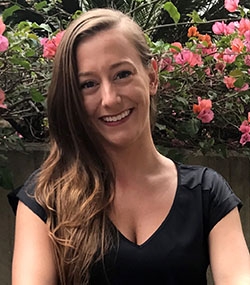
“I’ve always loved the name of this program because it is exactly that – a bridge. I grew up in a small Midwest town before making the trek to Northern California to pursue my undergraduate degree at Cal Poly Humboldt. I began as a business major, but quickly discovered this wasn’t for me. I knew that I needed to find a new direction and while I was searching for some inspiration I stumbled upon Drs Jacob Varkey and Amy Sprowles and learned of the bridges program, which at the time was in its infancy. I was hooked immediately and a year later I had been accepted into the program and was moving to begin my work in the Kuo lab at Stanford University, where I was researching the intestinal stem cell niche.
After the completion of my internship I was asked to stay on for an additional year to complete the work that would later be published in Nature and Cell Stem Cell. During this time I applied and was accepted into medical school at the David Geffen School of Medicine at UCLA. There, my understanding of cellular biology and experience in the lab allowed me to more completely understand the mechanisms underlying the diseases that I was learning to treat. I am now a second year resident at Boston Children’s Hospital and I owe a large part of that to the CIRM Bridges program.
The CIRM bridges program made me the scientist that I am, which ultimately shaped the physician that I am today. It was through the program that I found not one, but two incredible mentors that supported me, encouraged me and helped guide me through the various steps that ultimately led me to where I am now. I learned to think critically, ask a question, search the literature, revise the question and search again. I cannot tell you how valuable this has been – I am not deterred by the unknown, it excites me! And, as we move towards more “personalized medicine” I have found myself looking for new ways to integrate translational research into my career as a pediatrician.”