

Breadcrumb
Facilities
The department's facilities include laboratories for thermodynamics, hydraulics, water qualityand a rooftop solar energy lab. Among other equipment, these labs include instruments for testing solar photovoltaic and solar water heating system components, a hydraulic flume, a sediment transport flume, and a range of instruments related to water quality testing.
The ERE Department also has four student computer labs with over 50 workstations. The computers, which are available 24/7, are configured to dual-boot in either Windows XP or SUSE Linux. In addition to the standard software for office productivity, image processing, and web development, the labs have specialized software for engineering mathematics (Mathematica, Matlab, Scilab), computer programming (Fortran, C, Visual Basic), computer automated design (CAD), hydraulic design and analysis, rainfall/runoff simulation models, groundwater modeling, hydrologic time series analysis, and solar energy system design.
Schatz Energy Research Center
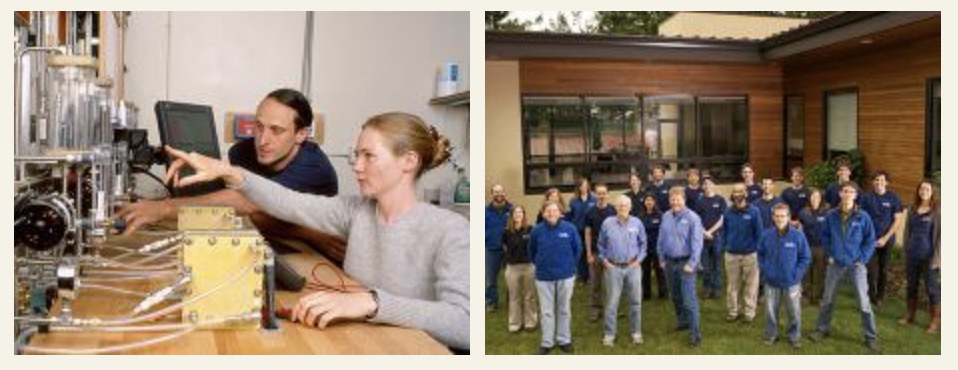
The Schatz Energy Research Center is a leader in applied research and development for clean and climate-resilient energy systems. Founded in 1989, the Schatz Center’s US-based programs include microgrid development, offshore wind research, clean transportation design, and analysis of the climate impacts of forest, agricultural, and transportation practices. The Center’s international program works to increase energy access for low income, off-grid communities, by supporting the deployment of durable, quality-assured solar solutions.
The Schatz Center team includes ~40 professional staff and faculty, and typically provides paid research opportunities for 10-15 undergraduate and graduate students each year. Graduate student fellowship opportunities with the Schatz Center are available through the Environmental Systems masters program (applications due Feb 1 annually).
The Schatz Center is housed in two buildings immediately west of the Behavioral and Social Sciences Building (BSS). The Center’s onsite workshop and laboratories support activities such as microgrid systems design, emissions analyses, and solar product testing. The Center has developed three fully operational microgrids – including one for the local airport – and is in the process of developing a campus-wide microgrid for Cal Poly Humboldt, which will provide power during local outages and serve as a learning laboratory for students and visitors. Learn more at schatzcenter.org
Solar Energy Laboratory
Located on the roof of the engineering building, this teaching laboratory includes a collection of photovoltaic modules, a flat-plate solar hot water collector, and all the necessary equipment for students to monitor their performance.
Thermodynamics Laboratory
This facility is available for all laboratories associated with energy courses. The lab includes a fully instrumented refrigeration system that is used extensively in Thermodynamics I (ENGR 331) and a bomb-calorimeter that is used in Thermodynamics II (ENGR 471).
Hydraulics Laboratory
The Hydraulics Laboratory (SD 1) is equipped with experimental apparatus for the basic study of fluid hydraulics in pipe systems and open channels. All ERE students use the laboratory during Fluid Mechanics to learn the fundamentals of fluid hydraulics.
Transport Flume
A large, tilting flume capable of both water and sediment transport is located in the fenced area at the entrance to Science D. This flume is used for upper division course experiments and research into the formation and stability of stream channels, erosion rates and design of engineered structures in or adjacent to natural systems.
Water Quality Laboratory
Water quality classes frequently take instruments into the field to quantify water quality parameters in such as salinity, turbidity, pH, dissolve oxygen, and temperature. In addition, coliform, biological oxygen demand, nitrogen, phosphorous, and other trace ion concentrations can be quantified in water samples brought to the water quality lab.
Arcata Marsh and Wildlife Sanctuary

The Arcata Marsh and Wildlife Sanctuary was constructed in 1981. The City of Arcata incorporated wastewater treatment to the system in 1986. The Arcata Marsh is an example of a community's involvement in environmental politics, innovative uses of land, and applications of appropriate technology in a small urban community. The marsh has multiple uses including recreation, wildlife habitat, education, and wastewater treatment. Faculty and students from the ERE program were centrally involved in the original design and development of the Marsh's constructed wetland water treatment system, and they continue to play a key role through projects and research geared towards the continued optimization of the system.
The Campus Center for Appropriate Technology (CCAT)
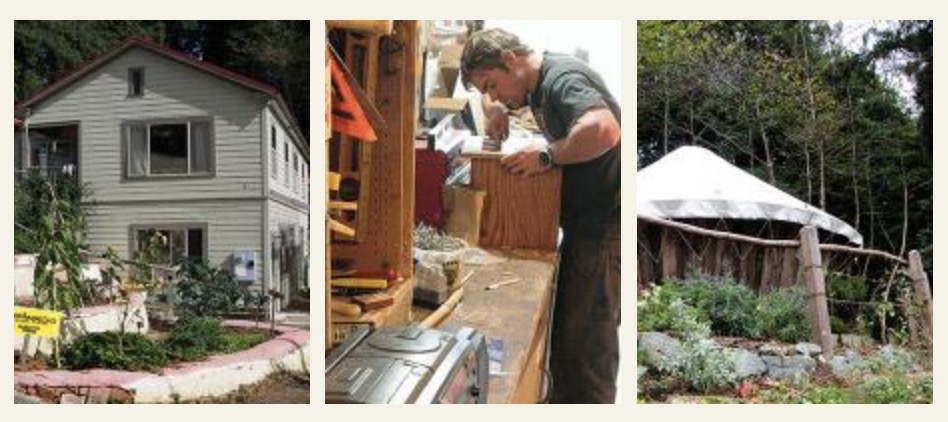
The Campus Center for Appropriate Technology (CCAT) is a live-in demonstration home and educational center for appropriate technology and resource conservation on the Humboldt campus. Motivated by an ethic of "education by example", CCAT offers tours, workshops, and opportunities for hands-on involvement to university students and the general public. CCAT works with fifteen Humboldt classes a year to incorporate new appropriate technologies into this living laboratory in sustainability. The work done by CCAT has resulted in the following achievements: CCAT uses a fraction of the energy consumed by the average U.S. house, produces almost zero waste, and serves as a national model for appropriate technology.