



Breadcrumb
Department of Environmental Studies
Understanding the environment—from science to society, policy to culture.
Environmental Studies provides students with tools for understanding the complex relationships between the environment and human and social systems.
Our department cultivates critical analysis of environmental problems using approaches from a variety of disciplines, helps students discern environmental messages and communicate them effectively, and enables them to act as informed citizens and professionals.
Degree Programs
Environmental Studies, B.A.
This interdisciplinary program gives students the opportunity to explore the relationship between social and ecological systems, and how each student will become a uniquely-trained “change-maker” in those systems.
Choose from five career-based emphases:
- Appropriate Technology
- Community Organizing
- Ecology and Conservation Science
- Geospatial Analysis
- Media Production
Environment & Community, M.A.
Environment & Community is a two-year master’s degree that focuses on the diverse relationships between environment and community using interdisciplinary perspectives.
For Humboldt students, we offer a Blended Degree Pathway where you can earn a bachelor’s and a master’s degree in five (instead of six) years, or, for transfer students, a BA and MA in three years instead of four.
Critical Agriculture Studies & Agroecology, B.A.
This hands-on B.A. program explores how agriculture is shaped by histories of power, and cultivates the knowledge and skills needed to imagine just ecological futures. Farm and field learning experiences are built into coursework, and students can choose from four emphasis areas:
- Arts, Environmental Justice & Politics
- Food, Wellbeing & Culture
- Ecologies & Practice
- Leadership & Sustainable Economies
Minors & Certificates
Decolonizing Sustainability Speaker Series
Presented by the Department of Native Studies and the Environment & Community Graduate Program, this annual series highlights and unpacks intersections of settler colonialism, white supremacy, and systems of power/privilege/oppression within the discourse and rhetoric of contemporary sustainability, environmental, and climate change movements.

Applied Knowledge
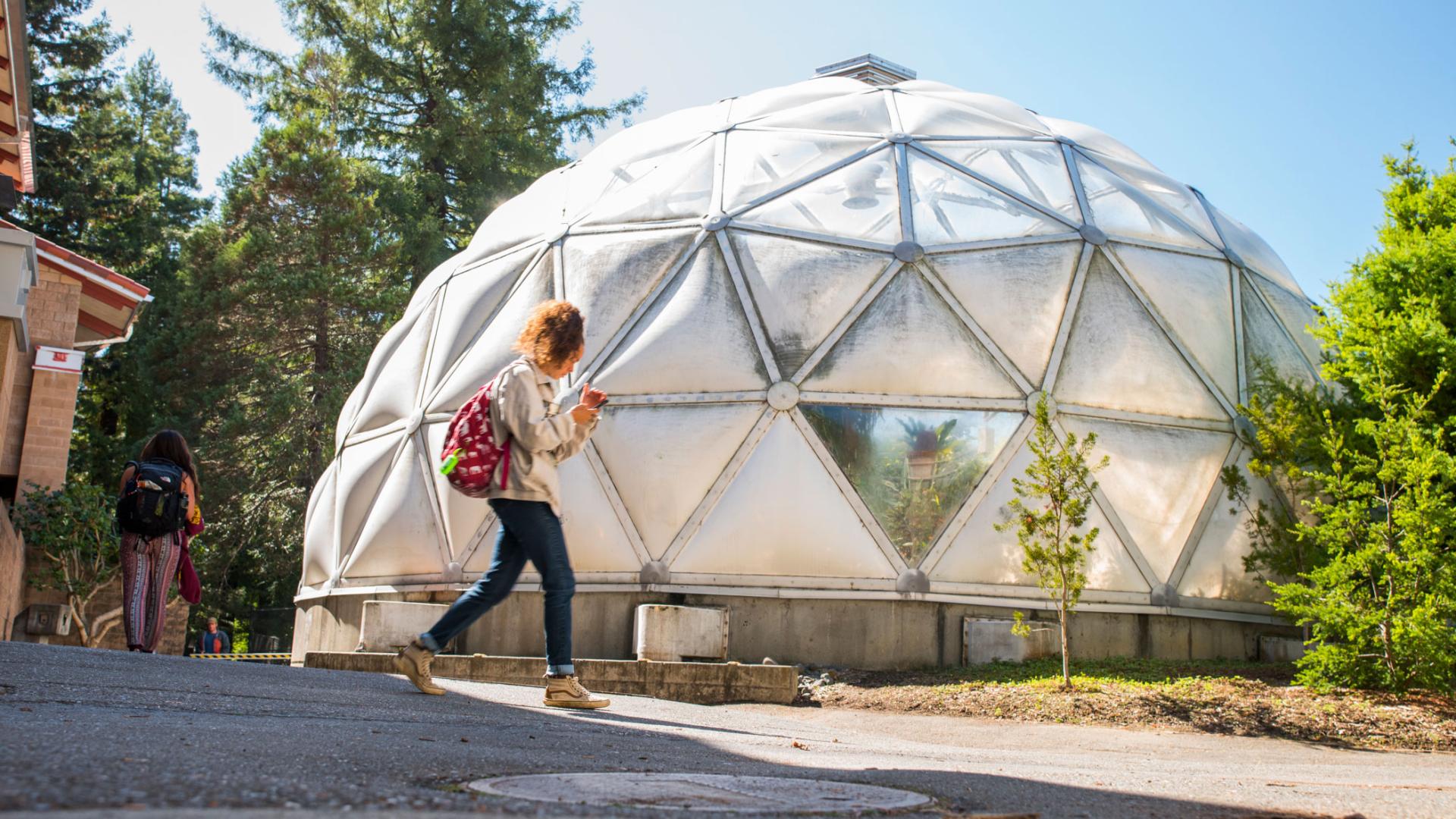
Students have the opportunity to teach classes through Humboldt’s eco-demonstration home or Campus Center for Appropriate Technology. They can also get involved with the Dendroecology Lab, where scientists are researching the effects of climate change on tree growth.

Interdisciplinary Research
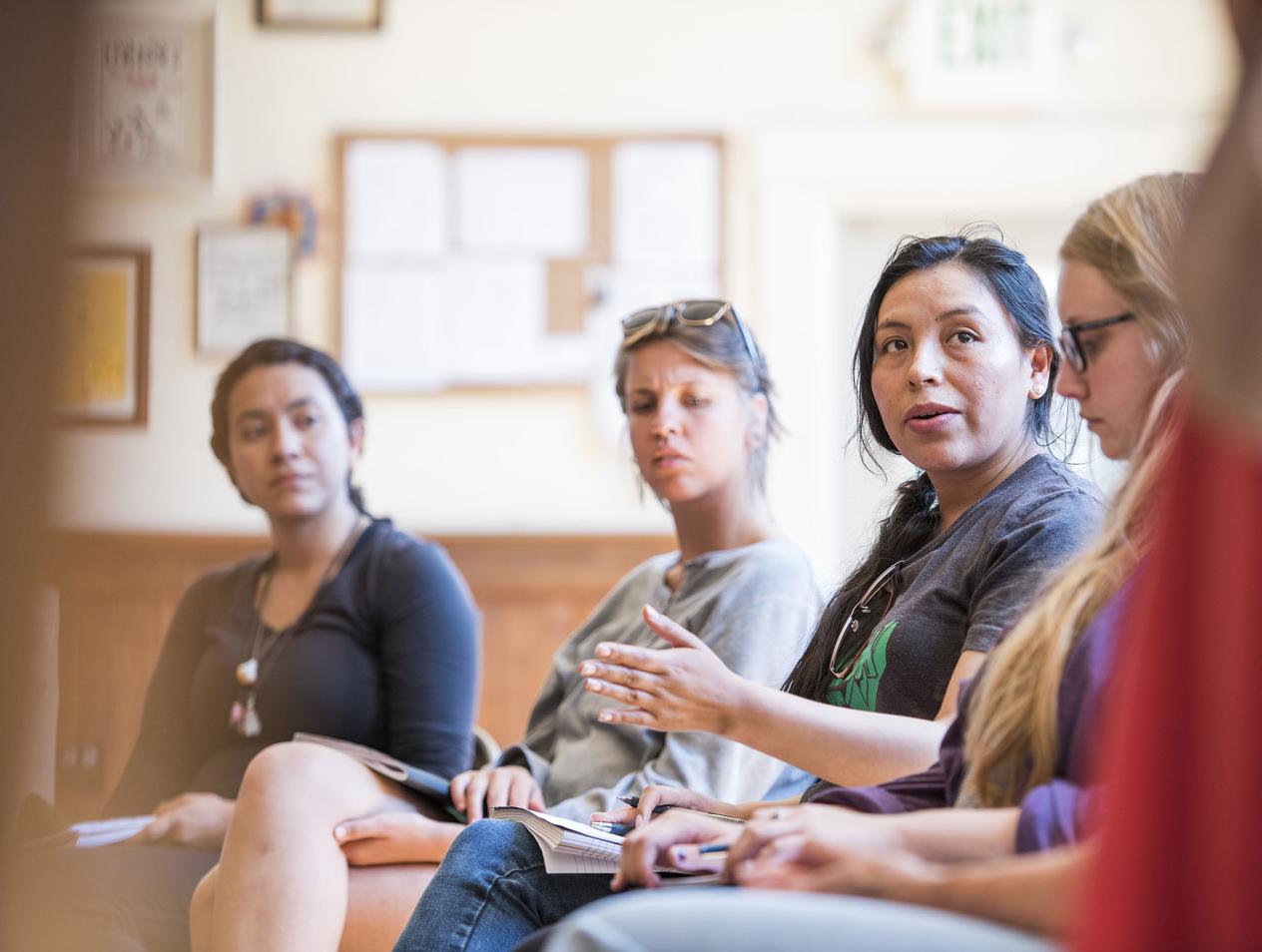
Our Environment & Community M.A. students have a broad array of interdisciplinary interests, connected by a common commitment to work towards sustainable and just environment and community relationships.

Place-Based Learning Community: People & Planet
As an ENST first-year student, you’ll participate in hands-on activities with your peers before classes even start and in some cases, have the opportunity to live in the same residence halls with your peers. ENST students will join four other departments for People & Planet, which focuses on learning how sustainability is local and global, while addressing specific case studies in fields like agriculture, clean energy, and climate justice.
Career Options
From conservation services, to local food sustainability programs, working with autistic children, directing student finances at a California college, and building a self-sustaining home on wheels, our bachelor’s and master’s graduates are pursuing a wide variety of careers.