

Breadcrumb
Michael G. Scott Award Recipients
The Michael G. Scott Award is given annually to the outstanding graduating senior in the Department of Fisheries Biology at Cal Poly Humboldt. The outstanding senior is selected on the basis of Humboldt GPA and on contributions made to the fisheries profession. The award carries with it a financial gift ($1000), the student name and award recognition are announced during graduation ceremonies, and the student's name is added to a brass plaque that hangs prominently on the second floor of the Fisheries and Wildlife Building.
Some words about Michael Scott as told by his father, Cuthbert Scott:
“Michael was enamored with wild and all living things beginning as a toddler. His greatest interests as he grew up had to do with wildlife. As he grew older these interests focused on fishing. He served 2 or 3 years in Vietnam in support of combat units. After Humboldt, he was one of the helicopter borne firefighters (smokejumpers) and ended up with the U.S. Forest Service as a ranger and fish biologist in Alaska. He spent a lot (probably most) of time in the field and most of his projects had to do with improvement of fish habitat in the Misty Fjords and Tongass NF areas. And, as for many other Humboldt Fisheries Biology students, he loved to fish!”
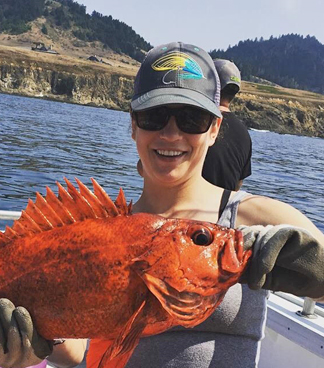
Ashley Kay
Received: 2018
It is with much gratitude that I receive the Michael G. Scott Award. I largely owe my drive to succeed in the Fisheries program to all of the incredibly supportive, passionate, and knowledgeable professors and faculty. Being located in such a beautiful landscape and surrounded by so many opportunities to receive diverse hands-on experiences in natural settings has been instrumental to deepening my love for this field. I am so appreciative for the time spent outdoors during lab sessions and the wide variety of fisheries techniques that I was able to learn and utilize outside of a classroom setting. I will always remember how my professors so strongly wanted their students to succeed and would do anything within their power to provide the help and resources to make this happen.
While I received my degree with a Freshwater emphasis, I have developed a very solid appreciation for the marine side of the field and for this I almost entirely have Dr. Tim Mulligan to thank. His Ecology of Marine Fishes class combined with his palpable excitement and passion for the subject sparked a similar excitement in me that I did not previously realize existed. This, combined with the opportunities and connections to secure ever-valuable internships, led to me acquiring a position as a Fisheries Observer with Alaskan Observers. I am fortunate to have been stationed here in Humboldt so I can continue to immerse myself in the setting that helped cultivate my appreciation of the marine realm. At some point in the future I hope to have the opportunity to be involved with work on the rivers again, but for now I am going to savor the amazing experience of being at sea!
My sincerest thanks go out to the amazing staff at Humboldt and all of my hardworking, supportive peers.
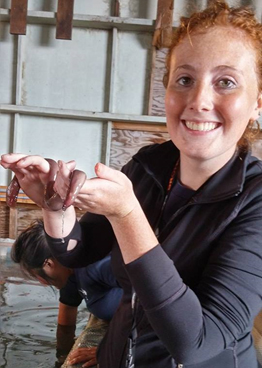
Kaitlyn O’Brien
Received: 2017
I am honored to have received the Michael G. Scott award. I am truly thankful to all the excellent professors, faculty, and fellow students of the Cal Poly Humboldt Fisheries Department. The sense of community in this department made my college experience more enjoyable and made California less frightening for a Colorado native.
While I have many wonderful memories of my time at Humboldt, two major attributes of this program have shaped me as a student and a hopeful fisheries scientist. One was the diversity of classes offered in the marine fisheries program. As a freshman, I was determined to work only on the biology and ecology of fishes, but a multitude of courses, particularly Dr. Andre Buchheister’s Fisheries Population Dynamics course, helped me realize the importance of understanding and analyzing the bigger picture. The classes here helped me discover passions that would have been unknown without the aid of the distinguished fisheries faculty. The second experience that shaped my time here was my work outside the classroom on the Marine Protect Areas of northern California. Thanks to Dr. Timothy Mulligan and a multitude of amazing graduate students I assisted on two MPA projects and gained valuable field experience. Not only did this time working on the MPA help solidify my love of field work, but it also furthered my understanding of statistical data analysis and prompted my first conference presentation at the American Fisheries Society Conference in the spring of 2017.
For my immediate future, I am happy to announce that I will be continuing my education at the Virginia Institute of Marine Science and fulfilling my childhood dream of working with sharks as I will be assessing data limited chondrichthian stocks along the Atlantic coast. I hope to one day work for a federal organization, such as the National Marine Fisheries Services, on the protection and monitoring of valuable commercial and recreational species. I could not be more appreciative to the Humboldt Fisheries Department for the experiences and knowledge bestowed on me in my four years here. I truly do not know where I would be without this great community!
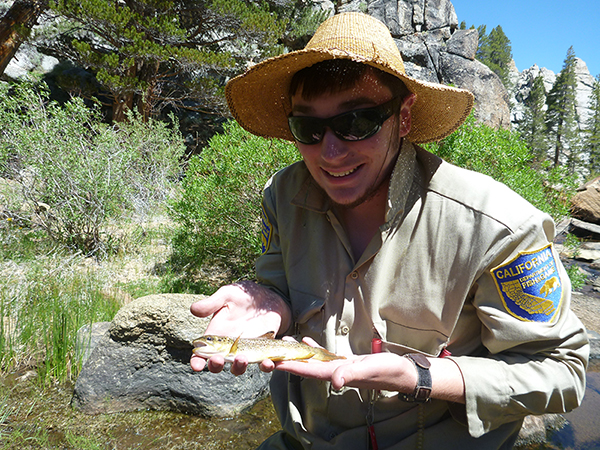
Martin Anderson
Received: 2016
It is an honor to receive the Michael G. Scott Award. I want to express warm thanks to the professors, students and staff of the Cal Poly Humboldt Fisheries program for an excellent undergraduate education. I went to Humboldt with the intention of earning a degree dedicated to the study of fish. I received what I sought and so much more. The advice from professors, fellowship with fisheries students, field experience and career resources make up what I consider to be the most valued aspect of the Fisheries Biology program at Humboldt which is the successful integration of ideas and actions and people. I learned about the concepts and theories of fisheries biology in the classroom with the insights of my professors and peers. These ideas were put into action through the many hands on labs that called for interpretation of the data my classmates and I had worked together on collecting ourselves. Much of what I learned and did with my peers in one class applied to many of my other classes and fisheries career options, creating an interlocking structure of ideas, actions and people that forms a solid undergraduate education.
Thanks to the supportive environment created by the Humboldt Fisheries Biology program, I have sought and held two fisheries internships and a fisheries technician position during my summers as an undergraduate. Right after graduation, I am swimming off for a promising future with the California Heritage and Wild Trout Program, starting out as a scientific aide for them this summer. Graduate studies are still a distinct possibility. Cutthroat trout would likely be the subject of interest in my search for a research assistantship. It is also likely that I will apply to the California Conservation Corps Watershed Stewards project before entering graduate school. In the long term, I would like to continue working with the lesser known species of salmonids as a fisheries biologist for either a government agency or private organization.
Finally I want to thank Michael G. Scott’s family for their appreciation of fisheries students and making distinguished guest speakers available to students heading into the fisheries field to carry on Michael’s work and legacy.
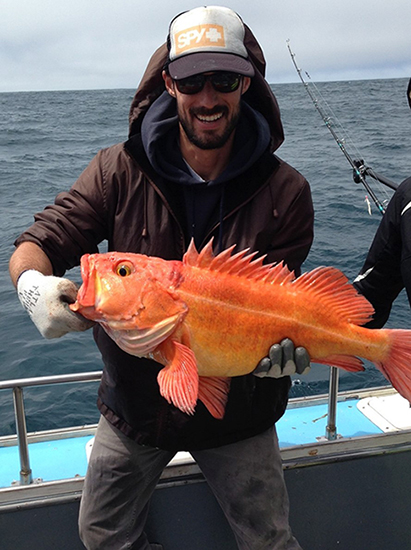
Chad Martel
Received: 2016
My time at Cal Poly Humboldt has included some of the most educational and enjoyable experiences of my life. The ability to work and learn outdoors with fish, has been nothing short of awesome. After thinking about the experience as a whole, what I have come to value most about my time at Humboldt boils down to two things. One, time on the water. This is why I chose the Fishery program at Humboldt, and it is the reason most other student I know came here as well. Being outside, in the mud, the sand, and the water, looking for and at fish. I was lucky enough to secure a position as a tech on number of projects that took me to places in California that I would have never seen or fished on my own. I am thankful to all who made that amazing experience possible; Dr. Tim Mulligan especially, but all of the graduate students, undergrads, and many others, who made it happen and made it fun. The second, and equally valuable aspect of my time here, was the time spent in the classroom. Being engaged in what you are learning makes it easier to learn, and the faculty here work hard to make that happen. I owe all of the professors a huge thank you.
My immediate plan for after graduation is a summer in Alaska, commercial salmon fishing on another Humboldt alumni’s 38’ gill netter. Afterwards it is applying to graduate schools and continuing my education, hopefully for the foreseeable future. Again, thank you to all those in the Department of Fisheries Biology here at Cal Poly Humboldt.

Angela Shaver
Received: 2015
I would like to think of myself like a wave barraged barnacle, strong. My nature is flexible like a macroalgae blade. My mind I should hope, is as fecund with ideas as a Mola mola is with eggs. I wish to thank my instructors for providing me with a solid foundation in Fisheries Biology. Their commitment to providing truly comprehensive and engaging classes has instilled in me a deep understanding of aquatic ecosystems and how we may pursue sustainable management.
I am grateful for Humboldt’s applied learning environment, as I believe it is essential for this field of science. Of course, it is also incredibly fascinating in itself, to participate in activities such as: endangered species monitoring, limnological surveys, rearing of aquatic organisms, and so much more! I also quite enjoyed my time as a Habitat Restoration Crew Member for the Humboldt Fish Action Council in partnership with the Humboldt Natural Resources Club.
I believe that the statement that best characterizes Fisheries Biology, also applies to my after-graduation voyage to success. That is, “It’s complicated”. My will is as indomitable as that of a returning salmon; and it seems that, like a salmon I cannot keep myself restricted to just freshwater science or marine science. I wish to gain more experience in Marine Biology and work at sea.
I am currently seeking a position as a Fisheries Observer. My main duty will be collecting and recording fish catches and biological samples for the National Marine Fisheries Service aboard commercial fishing vessels. I have also applied for fisheries and marine mammal technician positions. I enjoy the idea of working off the coast of Alaska, even with or to some extent because of the challenges it will present. I would also like to travel to New Zealand and Australia; as I am captivated by the mind-boggling biodiversity of fishes and aquatic arthropods.
Christopher Borg
Received: 2014
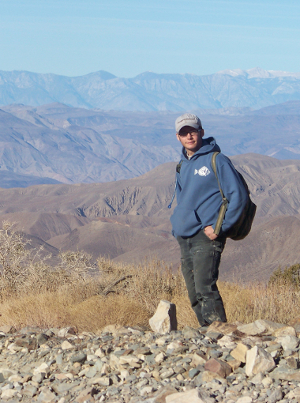
I am honored to have received the Michael G. Scott award and I am thankful for many individuals from the Humboldt campus, including: faculty, staff, and students alike.
The Fisheries program was challenging and provided me with many wonderful hands on experiences. Originally I thought I would use the knowledge I gained to start up my own fisheries consulting firm. However after working as a fisheries technician for the California Department of Fish and Wildlife and a private consulting firm, I found that I needed something more that the work was not providing me. So the following summer I had the opportunity to volunteer for the Urban Farming Guys in Kansas City, Missouri. Here I became introduced to aquaponics and social justice issues pertaining to food. From this experience I found that I needed more of a human element in my work. Now I am interested in finding a way to combine my fisheries experience with social activism in order to strengthen local food systems.
Currently on the plate I am looking to become a master gardener and find a suitable college to study sustainable food systems.
Nate Cooley
Received: 2012
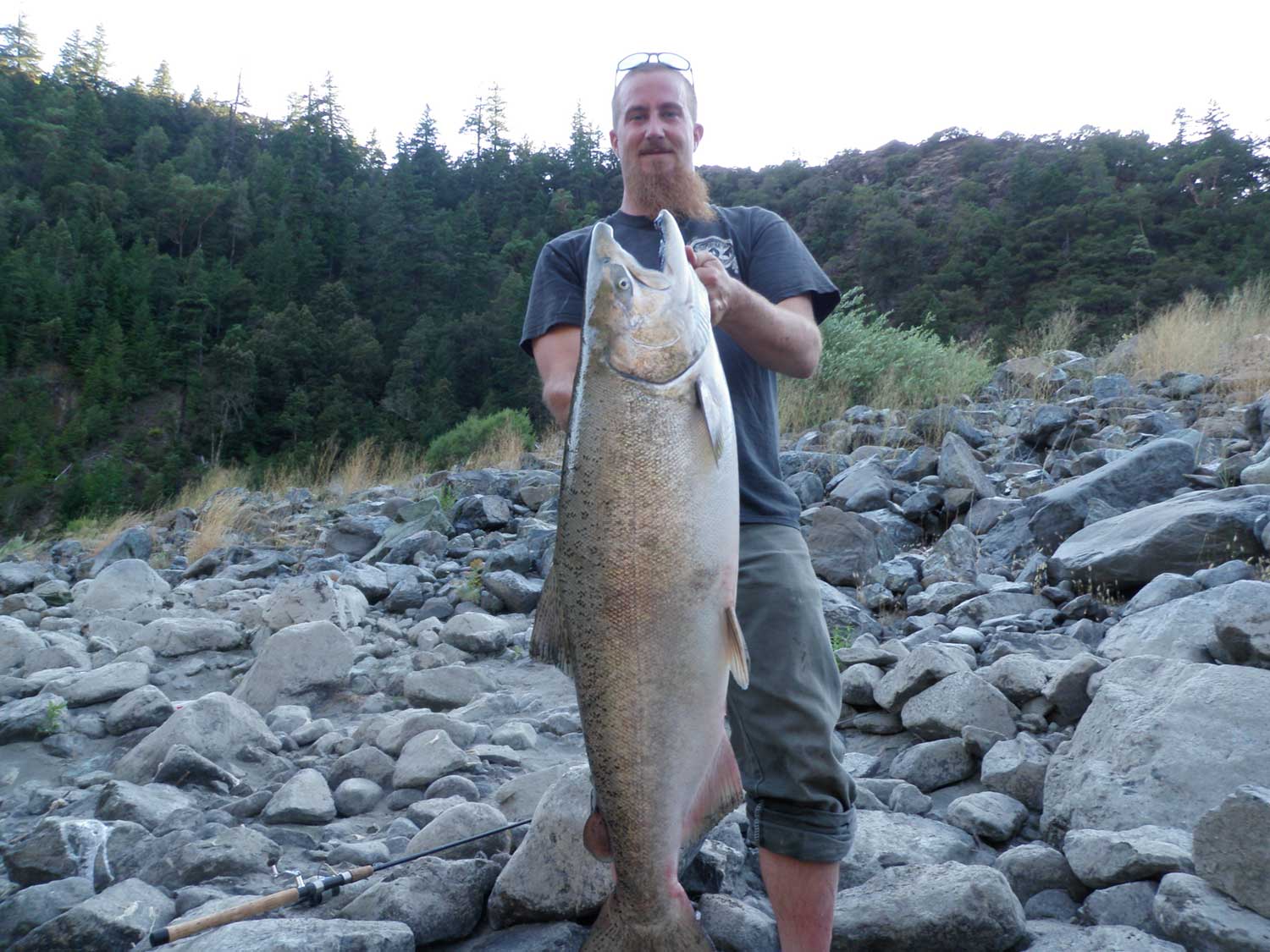
During my three years at Cal Poly Humboldt, I had the privilege of being employed by the California Cooperative Fish and Wildlife Research Unit (USGS, CDFG, and Humboldt). I worked in Redwood National Park on Prairie, Lost Man, and Redwood Creeks. In the winter, we trapped adult salmonids and conducted spawning/carcass surveys. The summers were filled with electrofishing, habitat mapping, snorkel surveys, and down-stream migrant trapping. I also had the opportunity to work in the Humboldt Fish Genetics Lab, the Humboldt Fish Collection, and for several graduate students. As a father and husband, I had to overcome many challenges to succeed in my studies. I worked two or three jobs at a time, on weekends and holidays, and in between classes. Yet I still made the time to explore all of Humboldt County with my family (and to do some fishing!).
I completed classes in December 2011, and two days later I started my new job in my home town, Fort Bragg, CA. Now I am employed by the Pacific States Marine Fisheries Commission (with CDFG) operating a DIDSON sonar camera on Pudding Creek. I never thought my training in the U.S. Navy as a submarine sonar technician (’96-’00) would prepare me for a career in fisheries biology, but I found a way! I also operate PIT tag antennas on Caspar Creek and assist with down-stream migrant trapping on three streams, as well as spawning surveys on most coastal Mendocino County streams.
I would like to thank Humboldt, my professors, and my classmates for giving me the skill set and perspective that will be required as I continue in the effort to protect and rebuild our Pacific salmon and steelhead populations, for my children and for future generations.
Sam Matulich
Received: 2011
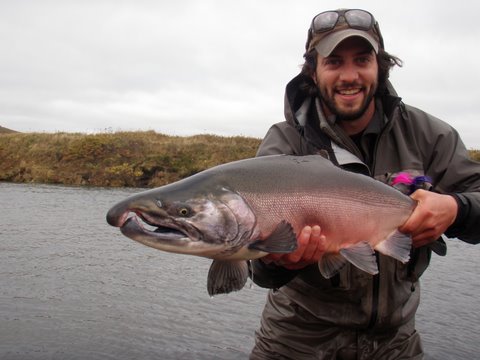
I would like to say that I am truly honored to be a recipient of the Michael G. Scott award. It was a complete surprise to be given the award upon graduating (May 2011). After completing my fisheries biology degree at Cal Poly Humboldt, I headed north to the Alaskan peninsula where I worked as a sport fishing guide. When the season ended in Alaska I moved to Seattle where I am now currently looking to further my studies and experiences in fisheries.
As for now one of my first fisheries opportunities has come from an artist (Zack Babat); he has asked me to write a creative/scientific description for his fish paintings. These short descriptions will include the common and scientific names, native range(s), and other interesting life history facts. I am looking forward to this work, as it should be a fun and exciting way to use my knowledge of fishes.
D. Allan Martin
Received: 2010
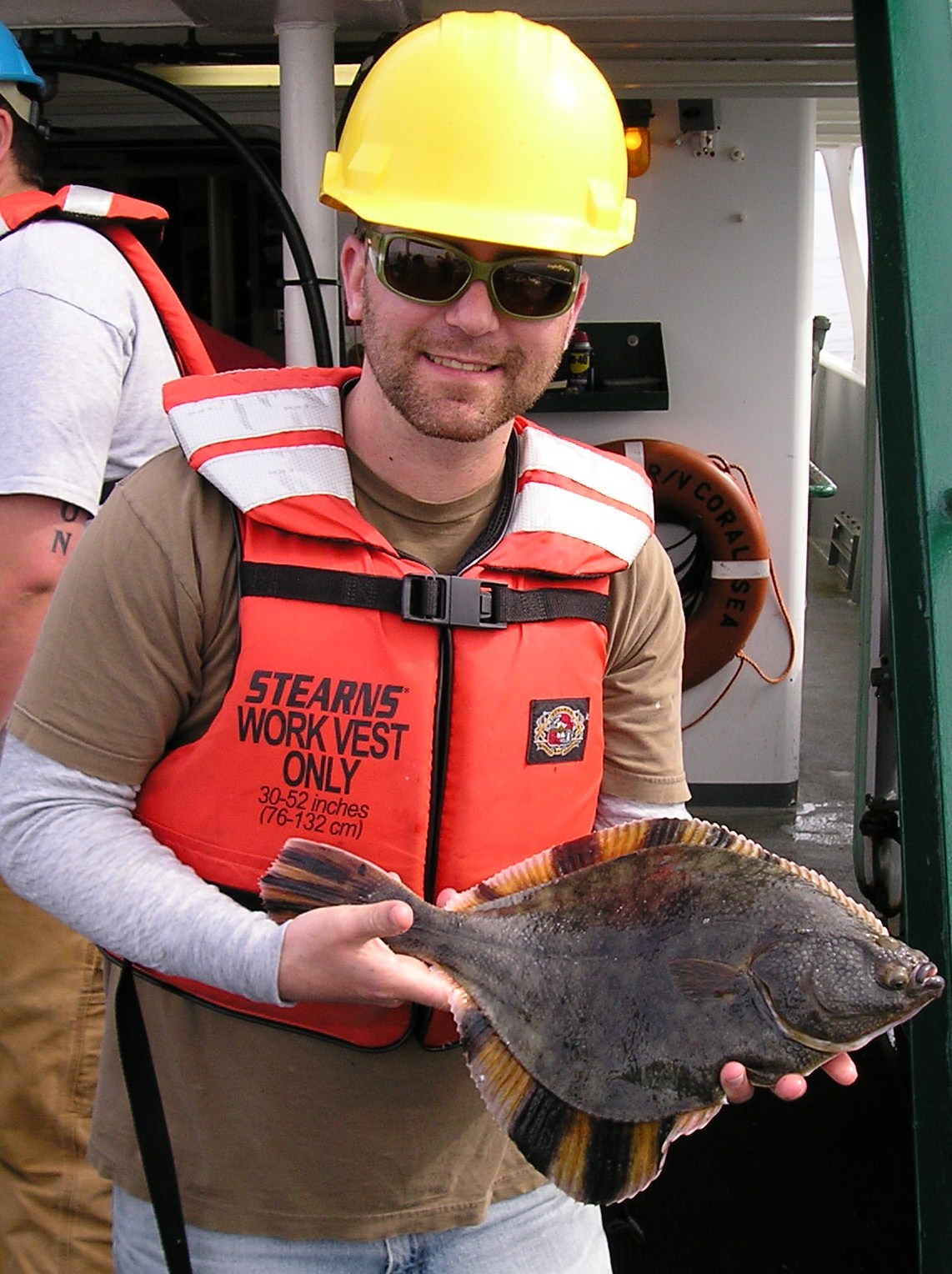
Upon graduation from Humboldt I began working for Pacific States Marine Fisheries Commission as a Biologist in the Smolt Monitoring Program. This entails determining the species, run, rear type and condition of out-migrating salmonid smolts on the Snake River. My observations, along with numerous recorded metrics, provide biological assistance to the Army Corp of Engineer’s Smolt Transportation Program.
Sean Larson
Received: 2010
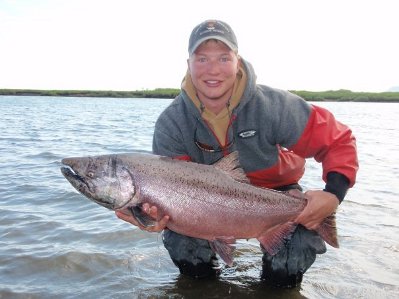
After completing my fisheries biology degree at Humboldt, I went on to receive a Master’s in Fisheries Science at the University of Alaska Fairbanks School of Fisheries and Ocean Sciences in Juneau, Alaska. For my thesis, I investigated the impacts of the expanding sea otter population on commercially important sea cucumbers in southeast Alaska. After spending a year commercial fishing, I decided it was time to get serious and I moved to Anchorage. I currently work for the Alaska Dept. of Fish & Game as a research biologist for Chinook and chum salmon on the Yukon River.
I will always appreciate the great staff and resources that the fisheries program at Humboldt provided. Thanks, fish folks at Humboldt, for an awesome four years and for giving me the skills necessary to be a productive fish biologist.