

Breadcrumb
Michael G. Scott Award Recipients
The Michael G. Scott Award is given annually to the outstanding graduating senior in the Department of Fisheries Biology at Cal Poly Humboldt. The outstanding senior is selected on the basis of Humboldt GPA and on contributions made to the fisheries profession. The award carries with it a financial gift ($1000), the student name and award recognition are announced during graduation ceremonies, and the student's name is added to a brass plaque that hangs prominently on the second floor of the Fisheries and Wildlife Building.
Some words about Michael Scott as told by his father, Cuthbert Scott:
“Michael was enamored with wild and all living things beginning as a toddler. His greatest interests as he grew up had to do with wildlife. As he grew older these interests focused on fishing. He served 2 or 3 years in Vietnam in support of combat units. After Humboldt, he was one of the helicopter borne firefighters (smokejumpers) and ended up with the U.S. Forest Service as a ranger and fish biologist in Alaska. He spent a lot (probably most) of time in the field and most of his projects had to do with improvement of fish habitat in the Misty Fjords and Tongass NF areas. And, as for many other Humboldt Fisheries Biology students, he loved to fish!”
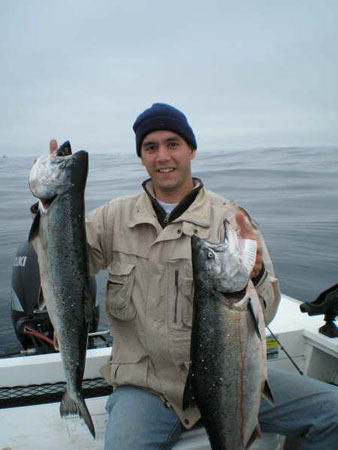
Michael Hellmair
Received: 2009
During my time at Humboldt I was able to gain priceless experiences in many techniques used in the field of fisheries science and was fortunate to be able to work in the fisheries genetics laboratory under Dr. Kinziger, completing a genetic fingerprinting project (of Chinook salmon) concurrently with my undergraduate course work. I have since had the opportunity to present the findings from this investigation at several scientific meetings, which has allowed me to meet and get to know many influential people in the field of fisheries biology. After I completed my undergraduate education at Humboldt in Fall of 2008, I was fortunate enough to be accepted into the Natural Resources graduate program (Fisheries Option) and am now working on a project focusing on the age and growth of the federally endangered tidewater goby.
I always have enjoyed – and continue to enjoy- working with the outstanding faculty at the Humboldt fisheries biology department and look forward to taking additional classes throughout my time as a graduate student.
Alex J. Godinez
Received: 2008
In late 2009 I decided to go back to school to get my Master’s degree. In 2010 I was accepted to University of Alaska, Fairbanks’ School of Fisheries and Ocean Sciences in a new NSF-funded program called SELMR (Sustainable Ecosystem-based management of Living Marine Resources). My thesis project is on seascape genetics of Aleutian Island and Bering Sea slope blackspotted rockfish using microsatellites markers and geographic and oceanographic data to determine population structure and to identify the seascape features that may be shaping it.

Allison K. Thorsell
Received: 2008
2008 - Allison K. Thorsell
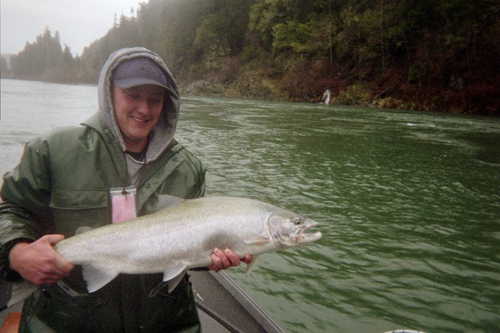
Jesse Nolan
Received: 2007
After graduation in May, I worked a seasonal fisheries job for the Oregon Department of Fish and Wildlife. Since then I have taken some time off to travel and fish. Last month I returned from a fishing trip to Barra de Navidad, Mexico where I caught my first Dorado. I will be living in this area until my long-time girlfriend Joanne graduates from Humboldt's engineering program this Fall. Upon her graduation we will be looking to relocate to an area where I can find employment in a hatchery salmonid setting.
Andrea Collins
Received: 2007
2007 - Andrea Collins
Debora Herndon
Received: 2006
After graduating in 2006 I started working for Nevada Department of Wildlife as a Conservation Aide in Boulder City. I assisted in netting surveys, data collection, data analysis, and assisted in the rearing of razorback suckers at the Lake Mead Hatchery. At the end of my seasonal position, I obtained a term position as a biologist with Nevada Department of Wildlife in Boulder City.
My current position as a biologist involves two different projects: The Lake Mead Razorback Sucker Augmentation Program and the Lake Mohave Habitat Enhancement Project. These two projects are quite different from one another allowing for a variety of duties. For the razorback sucker project I continue to work with the razorback sucker, an endangered native fish of the Colorado River system. This work includes collecting wild larvae, rearing the larvae at the Lake Mead Hatchery and transferring sub-adult fish to grow-out ponds to continue their growth until they reach a size suitable for repatriation to Lake Mead.
While the razorback sucker project is mostly concerned with fish culture, the Lake Mohave Habitat Enhancement Project is designed to improve fishing opportunities in key areas on Lake Mohave and includes construction and placement of habitat structures, SCUBA diving to assess the effectiveness of the structures, and assisting in lake-wide surveys to assess the fishery. So far, the habitat project has been successful, as dive surveys have found the habitat to be effective at attracting largemouth bass, bluegill, and channel catfish.
I have been enjoying my fisheries job with Nevada Department of Wildlife. I find it very rewarding to know that I am contributing to the continued existence of the endangered razorback sucker and that I am helping to improve fishing on Lake Mohave with the placement of artificial habitat that will remain in the lake for years to come.
Brian Poxon
Received: 2005
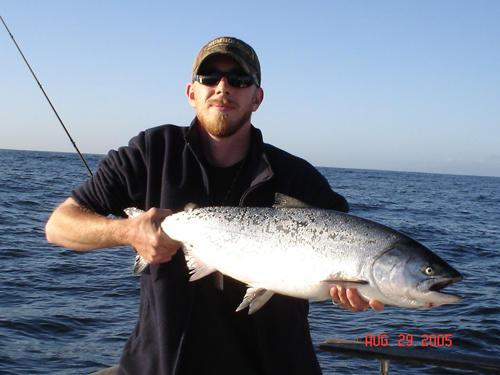
I completed my undergraduate education with a B.S. in Fisheries Biology in May 2005. Since June 2004, I've been working as a research technician at the California Cooperative Fisheries Research Unit. Working for the Fish Coop has enabled me to gain experience with fisheries research techniques including direct observation (snorkel surveys), depletion-removal electrofishing, habitat surveys, and mark-recapture. In addition, I've also been able to conduct research in some of the area's most magnificent terrain. Despite suggestions that I should enter graduate school immediately, I have decided to remain in the area for a few years and continue getting experience with the planning, field-work, and analysis stages of small stream fisheries investigation. I am taking the GRE in Fall of 2005 and will be applying to graduate programs with the intention of beginning my graduate education in 2 years. Ultimately, I would like to be in a position to monitor wild trout populations in the Sierra Nevada range and to protect their native streams from the effects of ever-increasing human population. With the education I received from Humboldt and a deep-seated love for all things wild, the sky is the limit.
Carl Anderson
Received: 2004
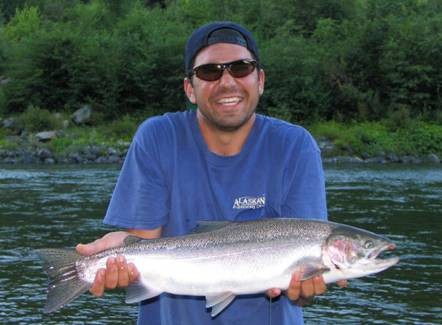
I was the co-recipient of the Michael G. Scott award in May, 2004. After receiving the award in May, I left for an internship with NOAA/NMFS Fisheries in Alaska four days after graduation. I worked for Humboldt Alumni, Mitch Lorenz at the Auke Bay Laboratory. Over the summer I worked on three different projects. I was a part of NMFS 2004 Sablefish Longline Survey between Dutch Harbor and Kodiak. I also helped assist a fellow college with his sleeper shark tagging project. The last bit of work dealt with Essential Fish Habitat (EFH) in Southeast Alaska 's estuaries.
As for now, I am back in school finishing my undergraduate degree in Fisheries Biology with a minor in Scientific Scuba Diving. I will be done with school in the fall and am presently looking for a job in the fisheries field. I plan on going to Alaska again next summer to work as a commercial fisherman, fishing for Dungeness Crab and Halibut.
Mariah Talbot
Received: 2004
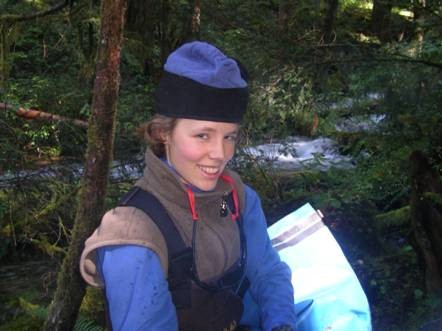
Immediately after graduating in May of 2004 I started working for Stillwater Sciences, an environmental resource consulting firm with offices in Arcata, Berkley , Davis , Olympia , and Seattle . While working for Stillwater Sciences I have mainly been involved with the Carmen-Smith Hydroelectric Relicensing project on the Upper McKenzie River in Oregon . Studies that I have helped conduct within this project include description of fish distributions, fish population dynamics, and habitat criteria modeling. The skills involved with these studies include direct observation (snorkeling) surveys, spawning surveys, habitat mapping, and reviewing literature, not to mention many office related skills.
My future plans include moving to Bozeman, Montana and finding a fisheries related job to occupy my time for a few years before going back to school for a Masters degree in fisheries or a related aquatic science. But first I am traveling to New Zealand in late November 2004 for three months to backpack, relax, and make fish related contacts for possible future employment.
Jennifer Aspittle
Received: 2003
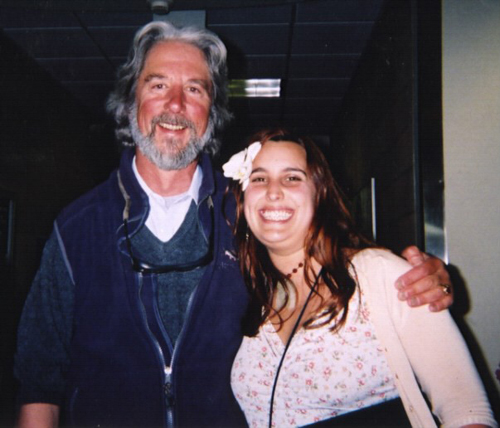
After a ten year career in floral design and management and the partial completion of an undergraduate degree at SFSU, I felt the need to take a new career and lifestyle path. My journey led me to the Humboldt Fisheries Department where, influenced by my newfound love of trout fishing, I opted to concentrate freshwater fisheries. Though I had virtually no prior knowledge of natural resource management issues, least of all fisheries, I rapidly became immersed in this fishy culture.
Personal incentives and inspirations derived from the teachings of the diverse and well-respected faculty guided me to become involved in local and regional salmonid issues. Currently I serve as a Director for the Salmonid Restoration Federation where I help to promote restoration, stewardship, and recovery of California native salmon, steelhead, and trout populations through education, collaboration, and advocacy.
My voyage has most recently delivered me to Stillwater Sciences where I have had the fortune to remain in Humboldt County to work as an aquatic ecologist. This consulting position has allowed me to expand my focus to projects within the Pacific Northwest, most of which focus on improving salmonid and native fish habitat quality through a wide range of means. The subjects studied and techniques learned from my time spent at Humboldt have afforded me the array of skills needed to understand the diversity of topics encountered with these various projects, and to implement and execute plans to address the issues that evolve in the process.