


Breadcrumb
Life Through Time - Visual Timeline
This exhibit was researched, written and designed by Richard Paselk, Curator Emeritus.
A Timeline of the Eons’s, Era’s, & Periods
The development of life over the last 3,700 million years of the Earth's history is one of the great stories told by modern science. During most of this time living things left only traces to indicate their existence. Then, about 544 million years ago, during what is referred to as the Cambrian explosion, animals learned how to make hard, mineralized body parts. Suddenly rocks resulting from sand and mud deposits become laden with fossil remains, and our picture of ancient life grows enormously in scope and detail.
Scroll for Timeline
|
|
|
Archean and Proterozoic Eons
Precambrian - 4,570 to 542.0 Million years ago
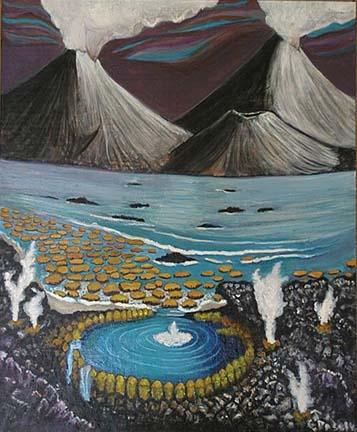
Precambrian
4,570 to 542.0 Million years ago
The Precambrian encompasses nearly 90% of Earth's history, and almost a third of the history of the Universe. It begins with the formation of the Earth from the dust and gas of the solar nebula, includes the origin and early evolution of life, the beginning of plate tectonics, and the development of an oxygen atmosphere. It ends with one of Earth's great extinction events, making way for the development of modern plants and animals.
Read more:
Precambrian Descriptions and Visuals
Museum case index:
Case #1 - Precambrian
Phanerozoic Eon
Phanerozoic Eon (542.0 Million years ago to present)
|
|
|
Paleozoic Era
542.0 to 251.0 Million years ago
Cambrian Period
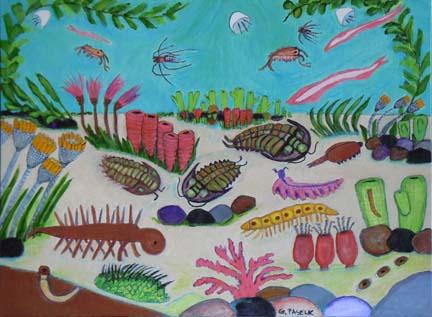
© G. Paselk, 2011
542.0 to 488.3 Million years ago
Sudden appearance of fossil remains referred to as the Cambrian explosion. Marine animals with skeletons make their first appearance in shallow seas.
Read more:
Cambrian Description and Visuals
Museum Case Index:
Case #2 - Cambrian
Ordovician Period
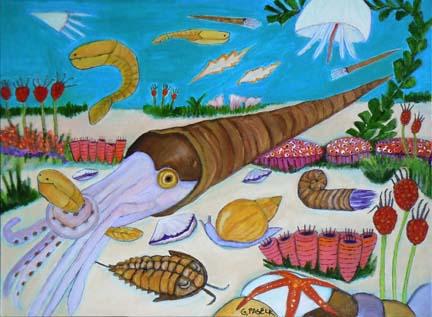
© G. Paselk
488.3 to 443.7 Million years ago
More complex shelled animals lived in seas during this period, which ended in a mass extinction.
Read more:
Ordovician Description and Visuals
Museum Case Index:
Case #3 - Ordovician
Silurian Period
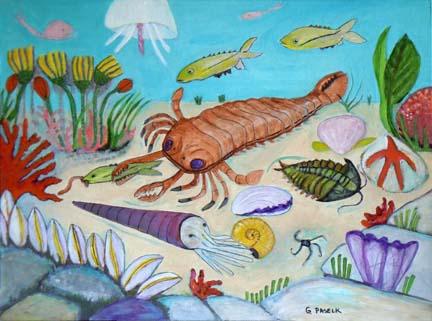
© G. Paselk
443.7 to 416.0 Million years ago
A warm climate and high sea level gave rise to large reefs, while on land simple land plants emerged.
Read more:
Silurian Description and Visuals
Museum Case Index:
Case #4 - Silurian
Devonian Period
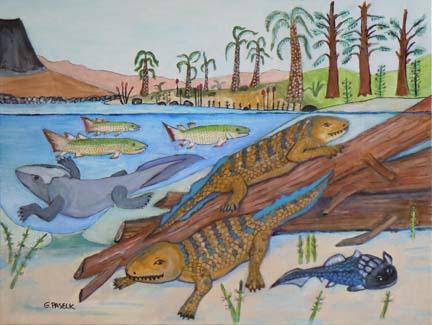
© G. Paselk
416.0 to 359.2 Million years ago
New predators such as sharks, bony fishes and ammonoids ruled the oceans. On land, scorpions, spiders, wingless insects and the first amphibians were starting to thrive.
Read more:
Devonian Description and Visuals
Museum Case Index:
Case #4 - Devonian
Devonian Audio Tour:
Submerge yourself in the aquatic adventures of the Devonian
|
|
|
Carboniferous Period
359.2 to 299.0 Million years ago
Mississippian Subperiod
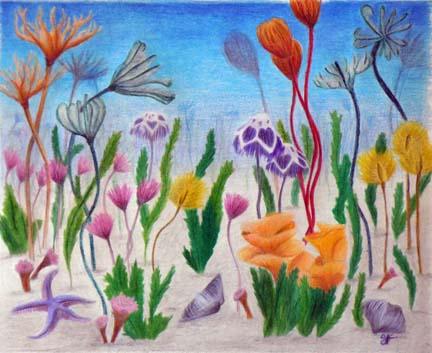
Sarah Hamblin
359.2 to 318.1 Million years ago
During this period, sea lilies dominated the limestone seas and reptiles began to appear along with ferns.
Read more:
Mississippian Description and Visuals
Museum Case Index:
Case #6 - Mississippian Subperiod
Pennsylvanian Subperiod
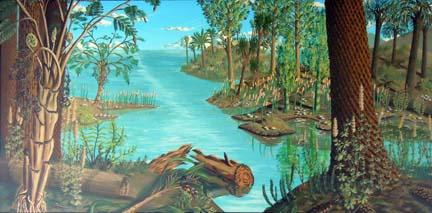
Treena Joi
318.1 to 299.0 Million years ago
Coal swamp forests thrived during this period. A dragonfly ancestor lived then with a 29-inch wing inch.
Read more:
Pennsylvanian Description and Visuals
Museum Case Index:
Case #7 - Pennsylvanian Subperiod
© G. Paselk
Permian Period
299.0 to 251.0 Million years ago
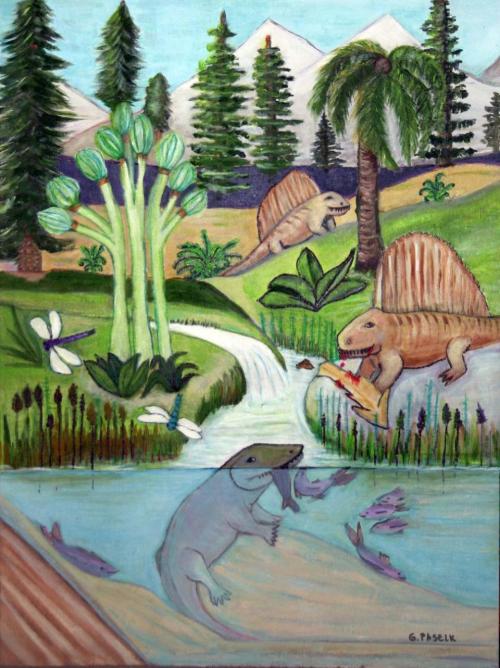
Reptiles started to thrive in water and on land and conifer forests appear in this period. The Permian ended with greatest mass extinction event known in Earth's history.
Read more:
Permian Description and Visuals
Museum Case Index:
Case #8 - Permian
|
|
|
Mesozoic Era
251.0 to 65.5 Million years ago
Triassic Period
© G. Paselk
251.0 to 199.6 Million years ago
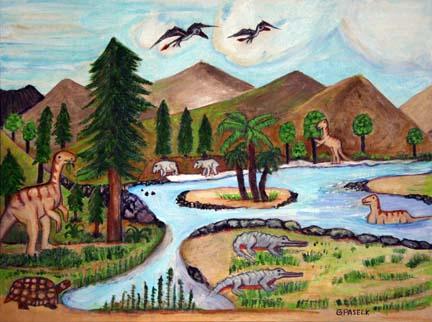
The Permian extinction event was so severe that entirely new fauna and flora appear in the Triassic. Mammals and dinosaurs started to appear in this period.
Read more:
Triassic Description and Visuals
Museum Case Index:
Case #9 - Triassic Subperiod
Jurassic Period
Gary Bloomfield
199.6 to 145.5 Million years ago
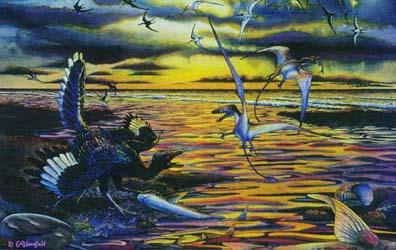
Ammonites and dinosaurs made a huge comeback after near extinction at the end of the Triassic. The first bird fossils and flying pterosaurs showed up in the fossil record.
Read more:
Jurassic Description and Visuals
Museum Case Index:
Case #10 - Jurassic Subperiod
Cretaceous Period
G. Paselk
145.5 to 65.5 Million years ago
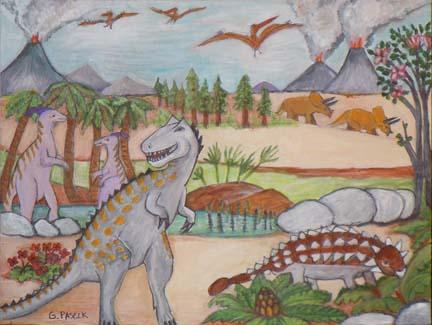
The first flowering plants appeared at the end of the Mesozoic era, along with the extinction of dinosaurs, pterosaurs, mesosaurs and ammonoids, to name a few.
Read more:
Cretaceous Description and Visuals
Museum Case Index:
Case #11 - Cretaceous Subperiod
|
|
|
Cenozoic Era
65.5 Million years ago to present
Paleogene Period
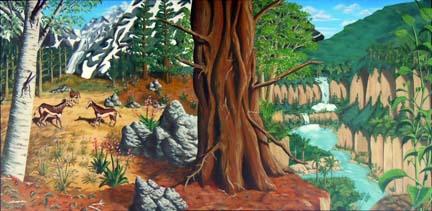
Treena Joi
65.5 to 23.03 Million years ago
Primitive mammals and birds began to flourish. The Paleogene includes what used to be the first part of the Tertiary.
The Paleogene has three divisions:
Paleocene Epoch (65.5 to 55.8 Million years ago)
Eocene Epoch (55.8 to 33.9 Million years ago)
Oligocene Epoch (33.9 to 23.03 Million years ago)
Read more:
Paleogene Description and Visuals
Museum Case Index:
Case #12 - Paleogene Subperiod
Neogene Period
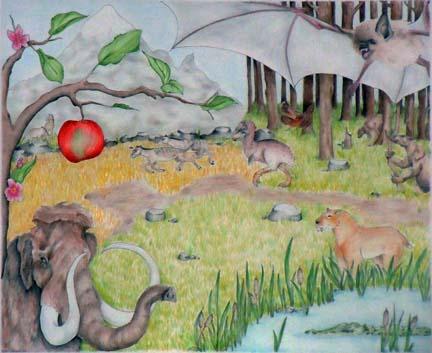
Kellan Korcheck and M. Royce
23.03 Million years ago to present
Mammals evolved in oceans and on land. The Neogene case now includes Geologic time up to the present, covering what used to be the later Tertiary and the Quaternary, but is now the Neogene and the Quaterary.
The Neogene has two divisions:
Miocene Epoch (23.03 to 5.332 Million years ago)
Pliocene epoch (5.332 to 2.580 Million years ago)
and the Quaternary also has two divisions:
Pleistocene Epoch (11.700 yrs ago to 2.58 Million years ago)
Holocene Epoch (11.5 thousand years ago to present)
Read more:
Neogene Description and Visuals
Museum Case Index:
Case #13 - Neogene Subperiod
Neogene Audio Tour:
Listen to a detailed account of changing continents and the animals that inhabited them.
Note: If you have trouble hearing the audio tour try downloading first than playing. The audio goes with the image of the case below.
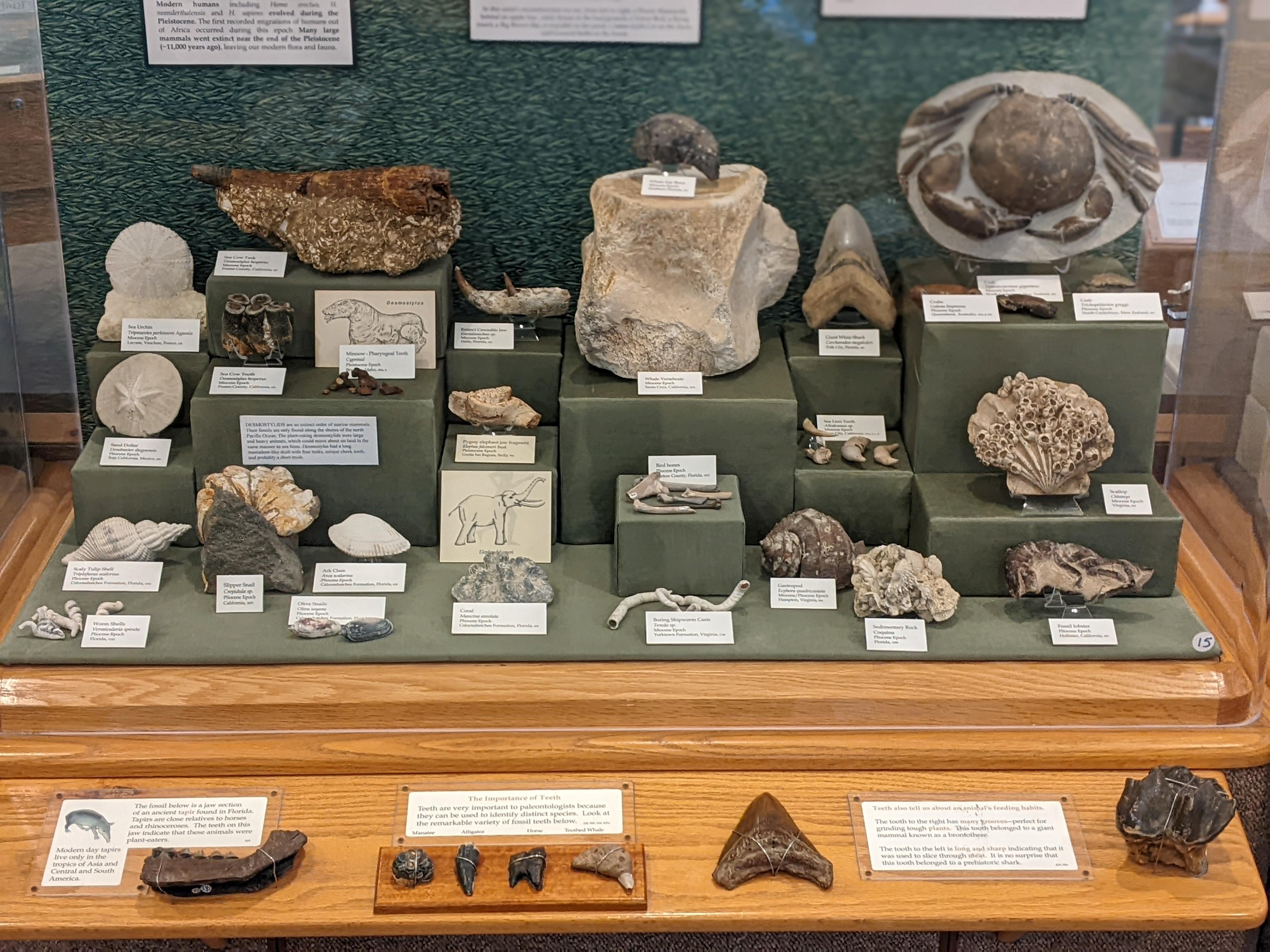
Prehistoric Mammals of the Cenozoic
65.5 Million years ago to present
Six cases highlight major mammal groups found in North America over the entire Cenozoic.
Carnivores
Diversify and Conquer
Museum Case Index:
Case #14 - Carnivores
Herbivores
Grass Roots Movement
Museum Case Index:
Case #16 - Herbivores
Giants
What's the Big Idea?
Museum Case Index:
Case #18 - Giants
Horses
Museum Case Index:
Case #15 - Horses
Proboscideans
Unforgettable Faces
Museum Case Index:
Case #17 - Proboscideans
Pleistocene Extinctions
Close Encounters with Mankind
Museum Case Index:
Case #19 - Pleistocene