



Breadcrumb
Department of Critical Race, Gender & Sexuality Studies
The Critical Race, Gender & Sexuality Studies (CRGS) department encourages students to explore how race, gender, sexuality, class, and other identities shape our lives and society. Rooted in activism and social justice, CRGS blends Ethnic Studies, Women’s Studies, and Queer Studies in a dynamic, interdisciplinary department.
You'll gain tools to challenge inequality, think critically, and lead with purpose. Whether you're planning a career in education, law, health, social work, or community organizing—or aiming for grad school—CRGS prepares you to create meaningful impact in your community and beyond.
Bachelors Degree
Critical Race, Gender and Sexuality Studies B.A.
This interdisciplinary program analyzes how notions of race, gender, sexuality, nation, class, physical ability, and other aspects of social location materially influence people’s lives. You will take a common core of classes and choose an emphasis from the following:
- Ethnic Studies
- Multicultural Queer Studies
- Women’s Studies
Certificates
Pull up and celebrate with us at the 13th Annual Cal Poly Humboldt Hip-Hop Conference: You Must Learn! (2026)

Born from Afro-descendant communities in the U.S., Hip-Hop has traveled the globe—shaping culture, sparking movements, and speaking truth across borders. It’s more than music—it’s art, resistance, joy, and a whole vibe.
This conference is all about building community, sharing knowledge, and showing love to spaces that uplift and celebrate Black culture, creativity, and collective power. Come through for connection, inspiration, and that healing energy we all need right now—where love, joy, and art do what they do best.
Lineup:
Thursday, April 30 | Goodwin Forum | 5:30–7:00 PM
Keynote: Dr. Clarissa Francis, AKA The Real Hot Girl Doc
Author of Black Women’s Bodily Autonomy, Sexual Freedom, and Pleasure: Explorations of the Hot Girl Movement
Friday, May 1 | Siemens Hall (SH 108) | 5:00–8:00 PM
Hip-Hop Presentations
Friday, May 1 | D Street Community Center (1301 D St, Arcata) | 8:00-10:00 PM
Hip-Hop Celebration — Performances + Food + Good Energy
All events are FREE — just bring yourself and your people!
Check out the 10th Annual Hip-Hop Conference video here!
ASALH’s Statement on the Evisceration of the Voting Rights Act of 1965
The Association for the Study of African American Life and History (ASALH) strongly condemns the recent Supreme Court of the United States (SCOTUS) decision in the Louisiana v. Callais case. As the premier Black heritage and learned society, ASALH knows this is yet another marker in the ongoing fight to secure and protect our vote—a struggle against both disempowerment and disenfranchisement that we have been engaged in since the early 1800s. The Voting Rights Act, which has long been situated as “one of the most consequential, efficacious, and amply justified exercises of federal legislative power in our Nation’s history,” outlawed literacy tests and provided for the appointment of federal examiners (with the power to register qualified citizens to vote) in those jurisdictions that were "covered" according to a formula provided in the statute. Section 5 required designated areas to get federal approval before changing voting practices, and Section 2 mirrored the 15th Amendment (1870), banning the denial of voting rights based on race or color. Although the 24th Amendment (1964) ended poll taxes in national elections, the Voting Rights Act gave the Attorney General the authority to challenge their use in state and local elections, with the goal of ending Jim Crow's discriminatory hold on Southern politics. In yesterday’s 6-3 conservative-majority decision, the Court voted to eviscerate Section 2 of the Voting Rights Act of 1965, effectively rendering the Act obsolete, with Justice Alito writing the majority opinion. As expected, Justices Elena Kagan, Ketanji Brown Jackson, and Sonia Sotomayor dissented, with Justice Kagan writing for the minority. In a scathing 48-page opinion that will be studied and discussed for years to come, she wrote that the ruling “demolishes the foundational right Congress granted of racial equality in electoral opportunity.” She went on to note that the Voting Rights Act “ushered in awe-inspiring change, bringing this Nation closer to fulfilling the ideals of democracy and racial equality. And it has been repeatedly, and overwhelmingly, reauthorized by the people’s representatives in Congress. Only they have the right to say it is no longer needed—not the Members of this Court.” The work to dismantle the Voting Rights Act started in 1966 with South Carolina v. Katzenbach. In an 8-1 decision, SCOTUS upheld the constitutionality of the VRA. The opponents were more successful in 2013, when the Supreme Court in Shelby County v. Holder ruled that the Section 4(b) coverage formula was unconstitutional, effectively rendering Section 5 inoperable. In 2021, in Brnovich v. Democratic National Committee, SCOTUS weakened Section 2 of the VRA, which prohibited nationwide voting practices that discriminate on the basis of race. And two years ago, in 2024, in Alexander v. South Carolina State Conference of the NAACP, SCOTUS reversed a finding of racial gerrymandering in SC, establishing a high burden of proof for challengers. The Right then turned their attention to taking away the final pillar holding up the Voting Rights Act, the section that dealt with redistricting. This was a 60-year fight to dismantle, disintegrate, and decimate the Act that was put in place to protect our voting rights. ASALH recognizes that this is yet another pivotal moment in our struggle, and without organization and action, our rights will continue to erode. This is not a time for silence, not a moment for resting or for being still; this is a moment to act. Former ASALH president Dr. Daryl Michael Scott recently wrote that we have been disempowered, not disenfranchised. And Dr. Martin Luther King, Jr. once said, "Change does not roll in on the wheels of inevitability but comes through continuous struggle." ASALH will continue to organize. We will continue to resist. We will continue to stand. And we will continue to push back so that we can eventually push forward. This is a long arc, but we will continue to bend it toward justice.
Karsonya Wise Whitehead |
Place-Based Learning Community: Creando Raíces
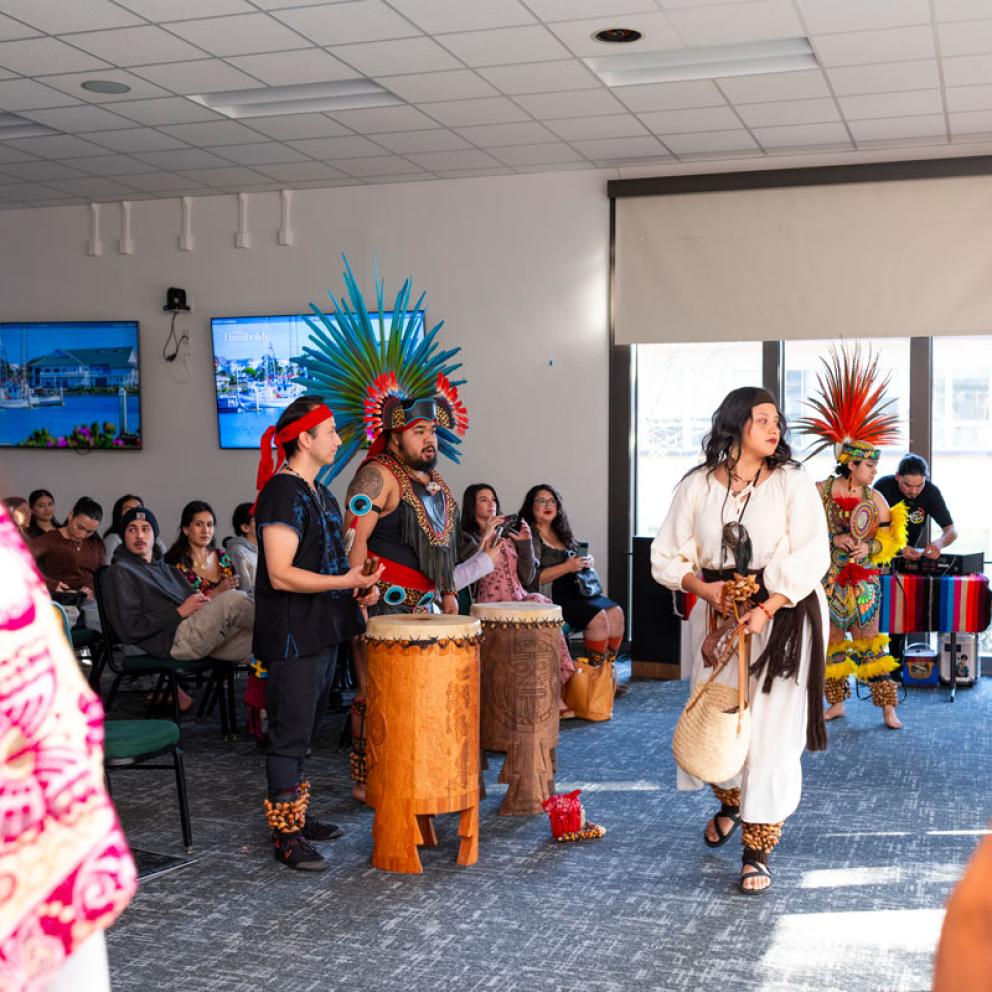
As a CRGS freshman, you’ll participate in hands-on activities with your peers before classes even start and in some cases, have the opportunity to live in the same residence halls with your peers. CRGS students will join three other departments for Creando Raíces, which focuses on community organizing and ethnic studies, deepening an appreciation and awareness of justice and liberation.
Experiential Learning
Along with hands-on scholarly research and activism, you will engage in innovative theoretical and empirical work. Your collaborative work will advance and enrich current knowledge and critical dialogue about culture, politics, and public policy on local, global and transnational levels.
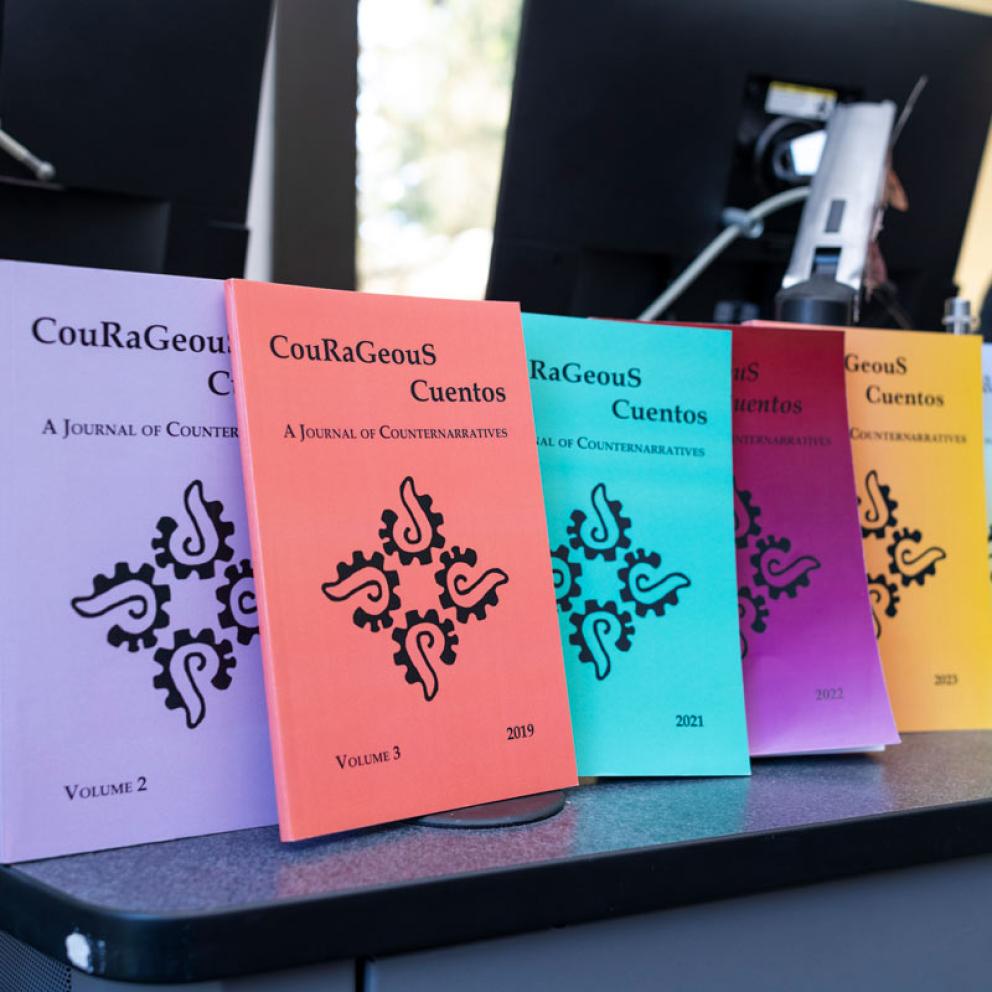
CouRaGeous Cuentos
A Journal of Counternarratives
Our student-run journal includes creative writing and essays, and is published annually online and in print.
An Intersectional Approach
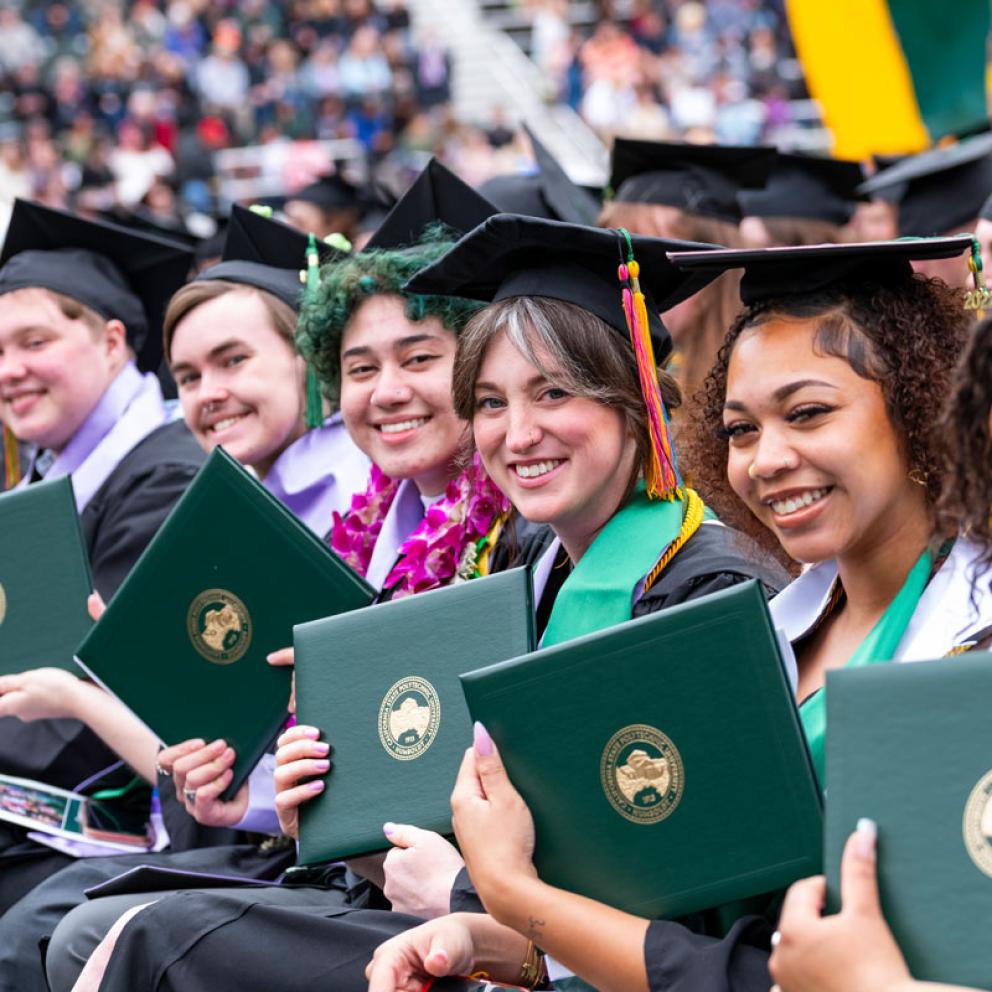
We draw on intersectional lenses that will enable you to:
- See connections and opportunities between fields
- Understand multiple perspectives
- Excel in a variety of work environments
- Model cultural competencies
- Be engaged citizens who aim for transformative change
Career Options
Our curriculum foregrounds dialogue and active learning. You will gain strong communication and leadership skills throughout this program.
Graduates will be prepared to enter fields like politics and government, law, business, social services, activism, community organizing, as well as graduate school.
Here are a few examples of possible career fields.
- Education
- Community Organizing
- Social Work
- Government & Public Policy
- Social Services
- Violence Prevention
- Counseling
- Law
- Health Care
- Journalism
- Marketing and Business
- Broadcast and Social Media
- Human Resource
- Non-profit Organizations
Featured Alumni
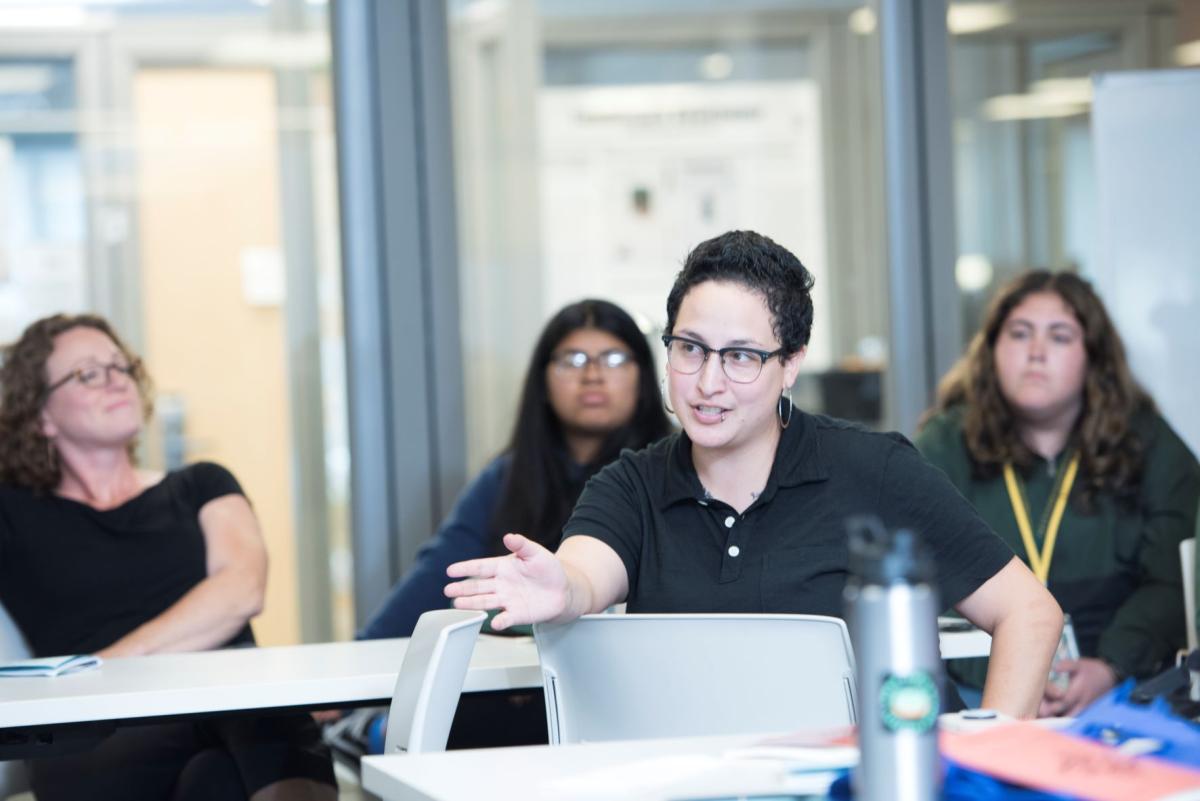
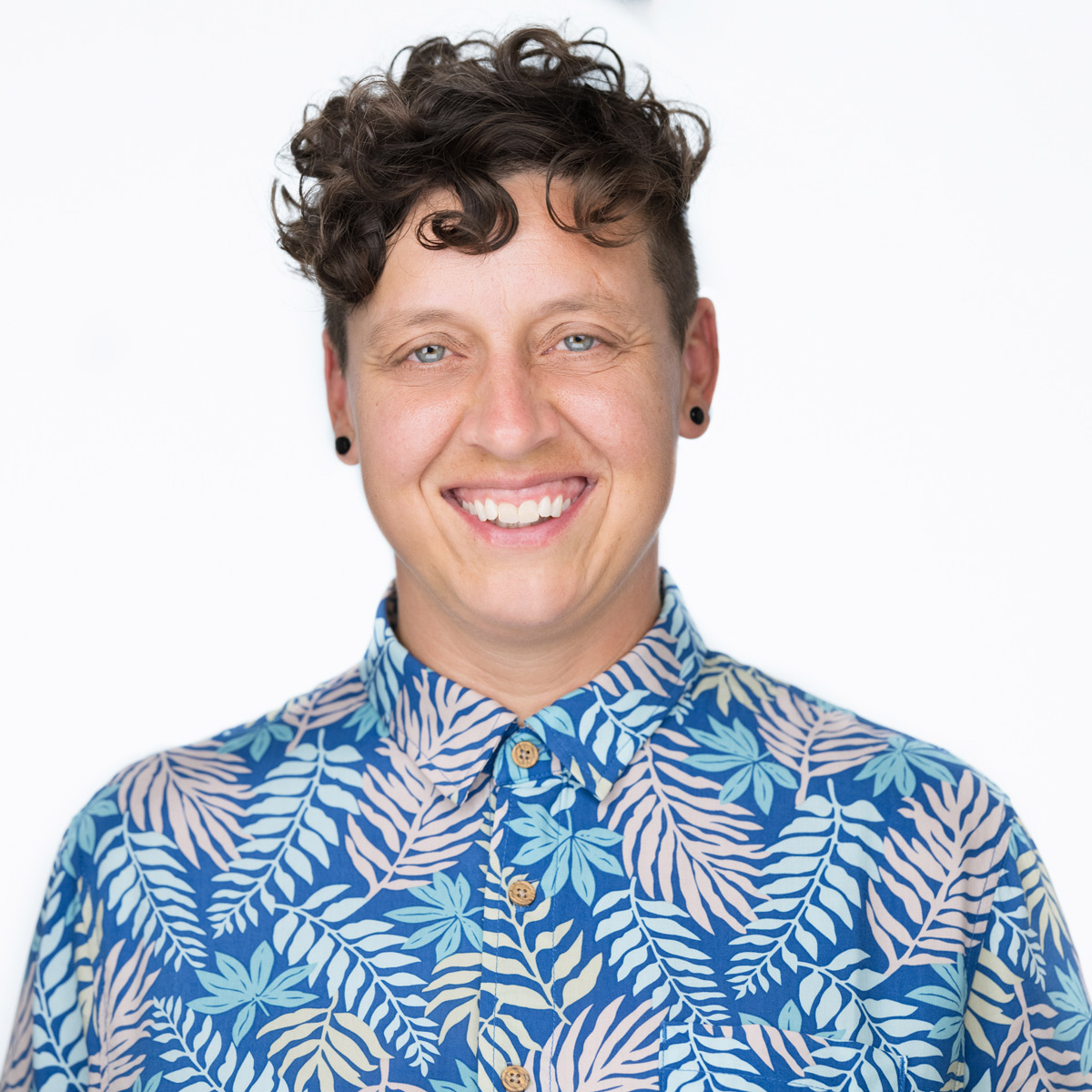
Paul Michael L. Atienza
Critical Race, Gender & Sexuality Studies
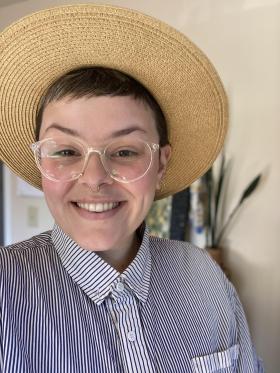
Dr. Paul Michael L. Atienza was elected to the executive board of the Association for Asian American Studies (AAAS) as the Northern California/Nevada region representative. Founded in 1979, AAAS is the primary research and teaching hub for Asian American Studies, an interdisciplinary field born out of the 1960s movements for racial justice, third world liberation, and student activism. Dr. Atienza will serve a three-year term starting April 2026.
Paul Michael Atienza
Critical Race, Gender & Sexuality Studies
Dr. Paul Michael L. Atienza joined the closing summit of the NSF-funded Knowledge of AIDS (KOA) Research Community Network (RCN). KOA-RCN seeks to form a scholarly community for social scientific, humanistic, and socio-technical researchers, artists, and community advocates of HIV/AIDS broadly situated within the field of Science and Technology Studies (STS). The final meeting in late March focused on forms of civic engagement that emerged and continues to actively respond for HIV/AIDS advocacy and resources. KOA-RCN seeks to develop multiple outputs in the coming years that include a robust online community and support for ongoing research collaborations.
Stephanie Murillo and Mónica Elivier Sánchez González
Critical Race, Gender & Sexuality Studies
Stephanie Murillo was selected from a group of undergraduate students to participate in the Summer Research Immersion Program at the University of Guanajuato in summer of 2025. The program provided academic training, professional development, and mentorship in scientific and social research while simultaneously adapting cultural immersion. The objectives of this program were to advance research skills by conducting an eight-week project, produce scholarly work, engage in international collaboration, develop cultural and social insight, and integrate research into career goals. This published work is the result of Stephanie Murillo's time abroad and we are happy to share her published work with the University.
Captive Bodies: Overmedication as Structural Violence Against Women by Stephanie Murillo