

Breadcrumb
Training & Instruction
Building the next generation of ornithologists
The Humboldt Ornithology Collective provides opportunities to learn about birds at every stage—from introductory university courses to advanced field training and professional development. Whether you're taking your first ornithology class, learning to band birds, or attending a seminar by a leading researcher, HOC is committed to developing the knowledge, skills, and community needed for careers in bird conservation, research, and management.
University Courses
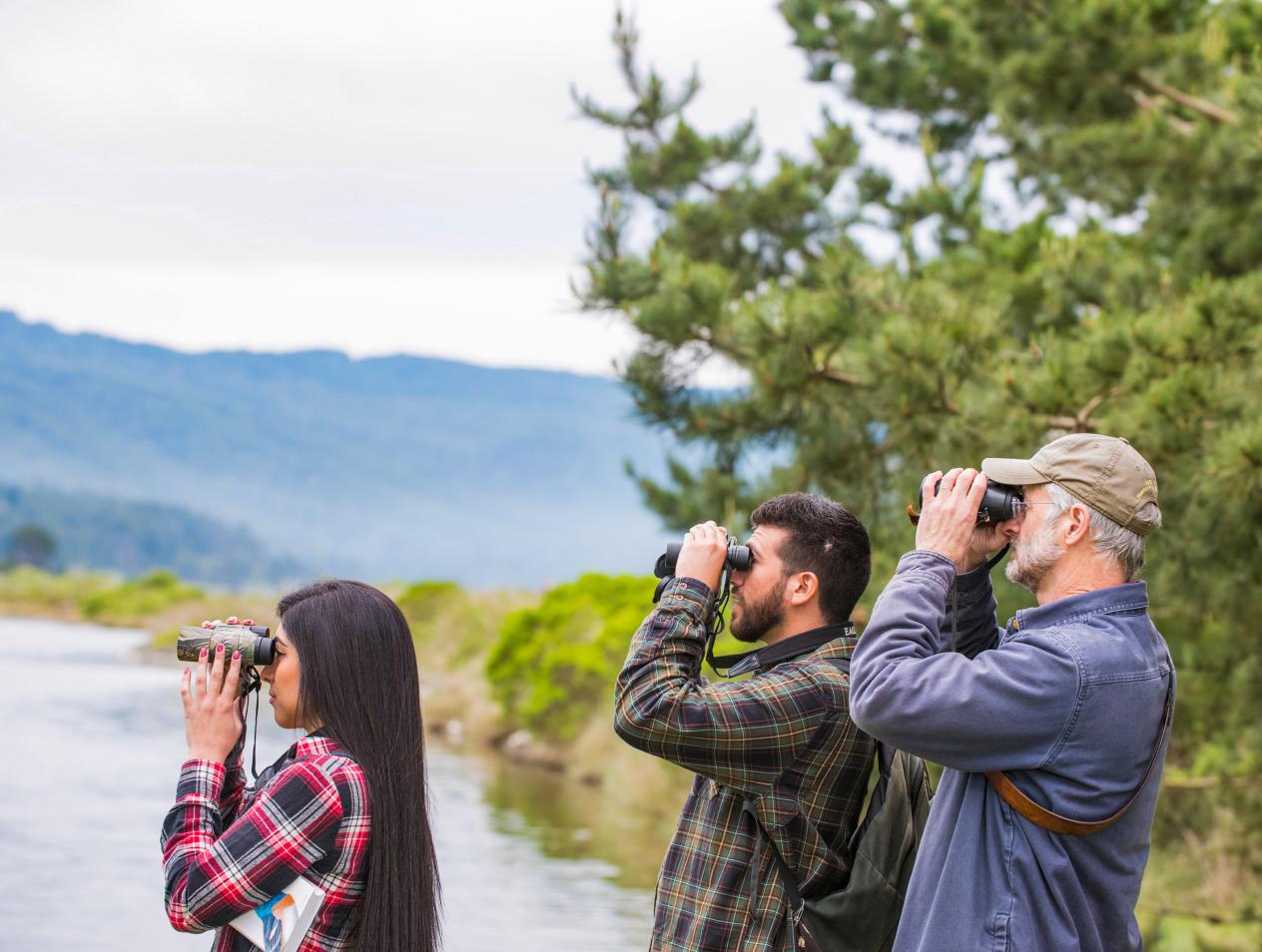
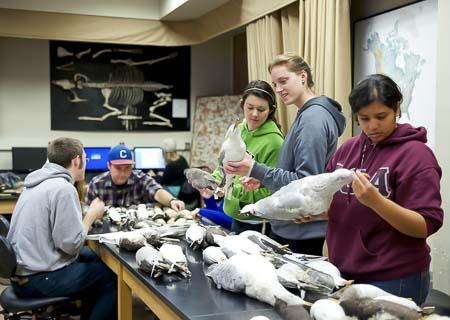
Cal Poly Humboldt has one of the strongest portfolios of ornithology courses in the western United States. Students benefit from a curriculum that combines classroom instruction with extensive field experiences in one of North America's richest birding regions. Many courses include field trips, museum collections, and hands-on training in bird identification, ecology, conservation, and management.
Examples of bird-focused courses include:
- Ornithology (WLDF 365) – The department's flagship course covering bird identification, ecology, evolution, behavior, and field techniques.
- Waterfowl Management (WLDF 420) – Ecology and conservation of ducks, geese, swans, and other wetland birds.
- Songbird Ecology & Conservation (WLDF 424) – Ecology and songbirds (Passerines) and related species.
- Management of Nongame Wildlife (WLDF 423) – Rotating topics that often focus on shorebirds, seabirds, raptors, or other avian groups.
- Advanced Topics in Ornithology (WLDF 565) – Graduate-level seminars examining current questions in avian ecology and evolution.
Most students who pursue ornithology at Humboldt choose to major in Wildlife, with its curriculum focused on applied vertebrate ecology, including highly relevant courses in ecology, conservation, and wildlife biology. Cal Poly Humboldt also has a separate Zoology program, which has a broader emphasis on all animal life (invertebrate and vertebrate) and focuses a bit more on evolution and physiology than on ecology and conservation.
Internships & Field Training
The best way to learn ornithology is by doing it.
HOC internships provide immersive, hands-on experience working alongside professional biologists and experienced mentors. Students and early-career ornithologists gain practical skills while contributing to meaningful conservation and research projects.
Current opportunities include:
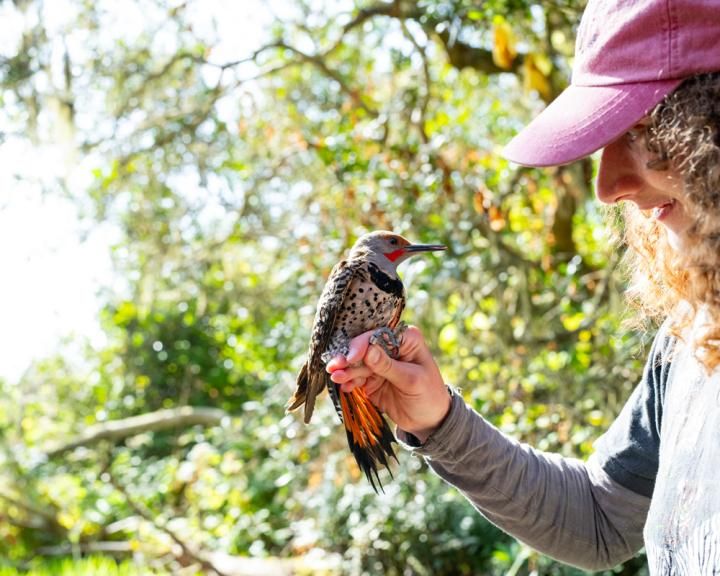
- Bird Banding Internships at the Wright Refuge Bird Banding Station and the Humboldt Bay Bird Observatory (HBBO), where interns receive training in bird capture, banding, ageing, sexing, molt, data collection, and ethical handling techniques.
- Research Internships assisting with projects on breeding ecology, conservation, behavior, and avian monitoring.
- Volunteer Opportunities that introduce newcomers to field biology while supporting long-term bird monitoring programs.
These experiences help students develop technical skills, build professional networks, and prepare for graduate school or careers in wildlife biology.