


Breadcrumb
Carbon Sequestration & Offsets
When it comes to climate action, Cal Poly Humboldt prioritizes strategies to replace sources of greenhouse gas emissions, reduce existing emissions, and avoid new emissions. However, these actions alone may not be sufficient to zero out hard-to-abate emissions from activities like air and ground transport. Investment in carbon sequestration and voluntary offset programs - in particular those that support the academic mission, contribute to community resilience, support local projects, and otherwise produce social and environmental co-benefits - provides important opportunities to help us achieve our reduction targets.
Learn More about our Carbon Sequestration & Offset Programs
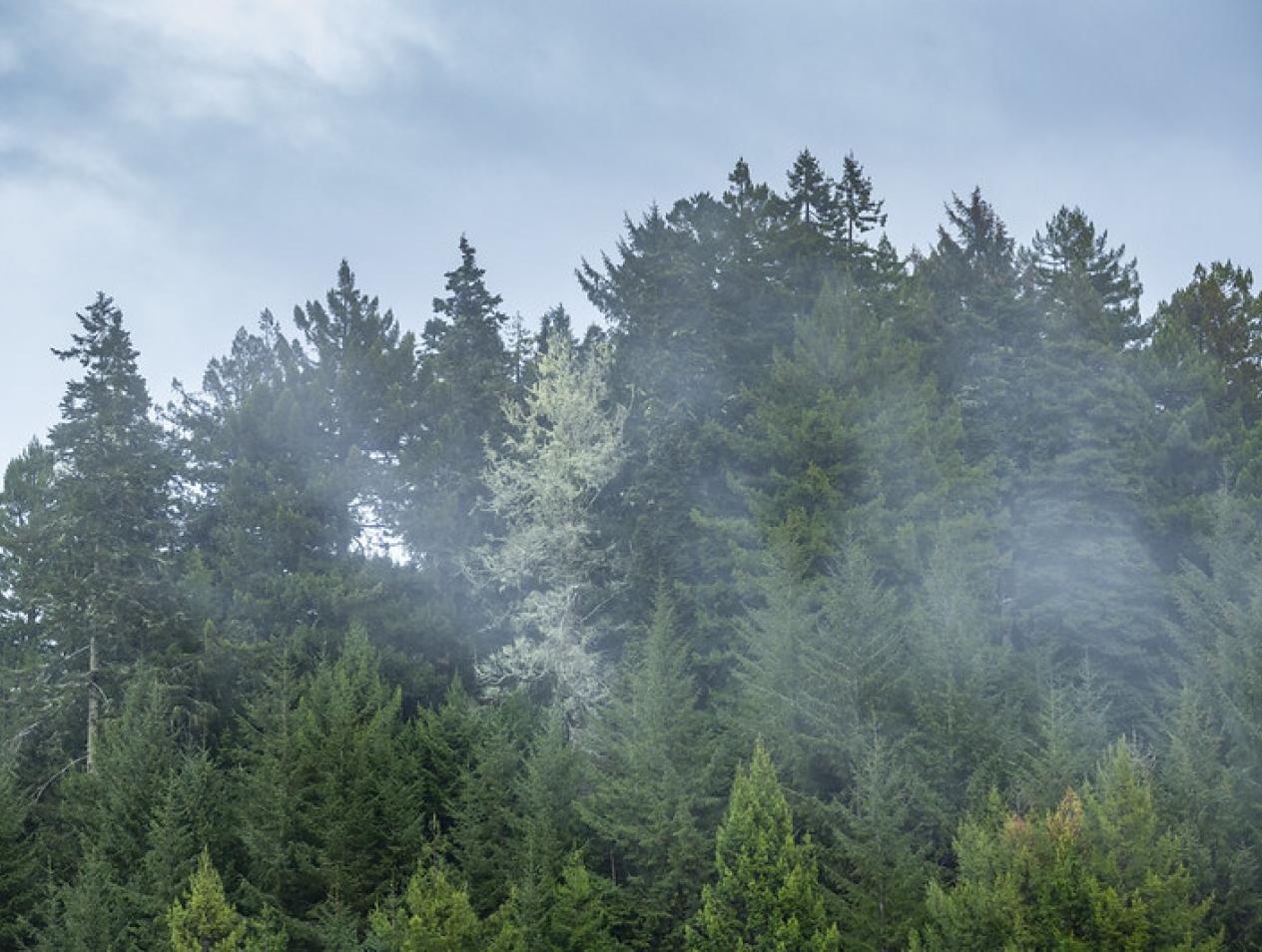
Carbon sequestration is the process by which trees, grasses and other plants remove carbon dioxide from the atmosphere to be stored as organic carbon in forest biomass and soils. Forests managed for carbon sequestration offer a method for offsetting emissions stemming from institutional activities. The L.W. Schatz Demonstration Tree Farm (385 acres), the Jacoby Forest (880 acres), the Bello Forest (400 acres) and other campus properties may offer such an opportunity.
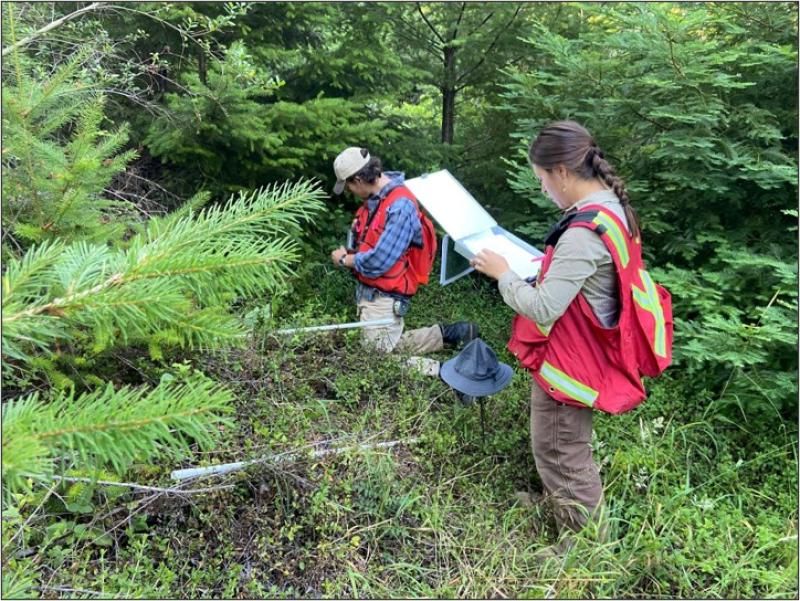
With seed funding from a Campus As A Living Lab grant, the Office of Sustainability and the Department of Forestry, Fire, and Range Management launched the Forest Carbon Project in AY 2021-22. This multi-year project aims to do several things: 1) Train and pay undergraduate students to conduct data collection and analysis (occurs over summer break); 2) Determine how much carbon is stored in the forest; 3) Estimate the annual carbon sequestration rate; and 4) Calculate the potential offset to greenhouse gas emissions from campus operations.
Forest May Hold Key to a Climate Resilient Future (2022) >>>
University Forest Carbon Inventory >>>
Carbon offsets - also known as carbon credits - are certificates representing the removal of one metric ton of carbon dioxide equivalent, which can be bought and sold to transfer climate benefits between entities while in turn helping fund reforestation and other GHG reduction projects.
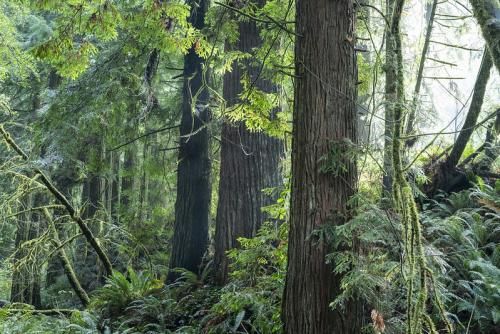
Locally, the Arcata Community Forest has a forest carbon offset program, independently verified through the Climate Action Reserve. The City of Arcata sustainably manages the 2,350 acres of predominantly redwood forest in ways that increase carbon sequestration, including extended harvest rotations, adding forest acreage, and protecting reserves from development.
Co-benefits from purchasing the offsets directly from the Arcata Community Forest (ACF) include strengthening the town-gown partnership; supporting a forest that supports the academics, research, health and recreation of our students, and utilizing a carbon offset project that is local, verified and transparent.
University Takes Big Step Toward Carbon Neutrality with Support from the Arcata Community Forest >>>
City of Arcata Forest Carbon Offset Program >>>
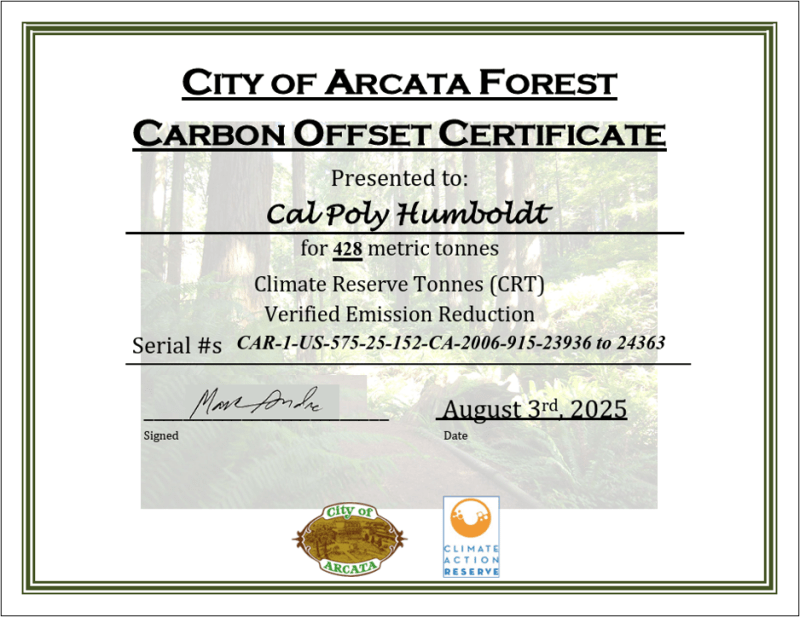
Purchased offsets go towards the abatement of university financed air and ground transport emissions, approximately 3% of the university's carbon footprint. To see how Cal Poly Humboldt applies carbon credits towards its emissions inventory, click on the SIMAP Public Reporting link below:
Cal Poly Humboldt Greenhouse Gas Inventory Public Reporting >>>
Cal Poly Humboldt discloses its carbon offset purchases, per California AB 1305.
Want to reduce your carbon footprint? Taking steps like driving alone and flying less, adding energy upgrades and water conservation measures at home, and replacing beef and dairy with lower carbon foods are the best places to start.
But there may be unavoidable greenhouse gas emissions from some of our activities, and in that case offsetting those hard-to-abate emissions is a pragmatic and instant way to take ownership of your personal contribution to the climate crisis.
Steps for Offsetting Emissions from your Commute and other Activities
Step 1: Use the Commuter Cost & Carbon Calculator to estimate emissions from your commute. Or try this Carbon Footprint Calculator for other activities.
Step 2: Fill out and turn in the Arcata Community Forest Carbon Offsets Purchase Form along with payment. One carbon credit will offset one tonne of carbon dioxide equivalent. The City of Arcata will send you a certificate of verification.
There are many organizations that sell or broker carbon credits, but by purchasing offsets from the Arcata Community Forest, you are also supporting a local resource that offers research and recreational opportunities for our campus community!