


Breadcrumb
Humans of the Redwoods - Tania Chavez
Tania from Mendocino on Motherhood, Immigration, and Reliable Behavioral Healthcare
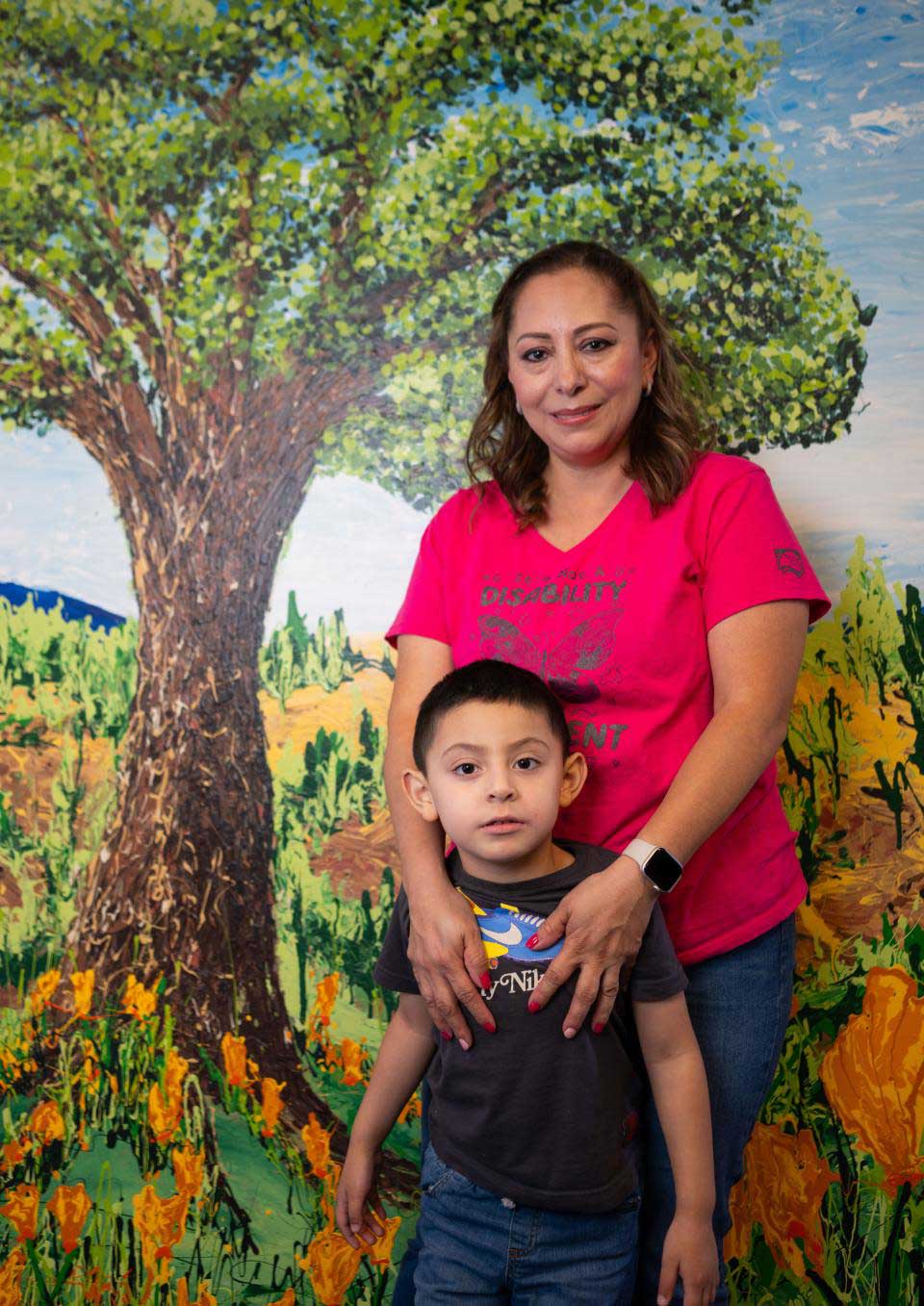
As a monolingual Spanish-speaking immigrant, Tania Chavez has had an extra level of difficulty navigating Mendocino’s workforce. Now that she’s raising an autistic son, her language barriers and the local lack of services have her considering moving. Tania envisions a future with more clinics which would provide more jobs in care services, resulting in “happier children, happier teachers and happier parents.”
A Safer Place to Live
Mendocino’s natural beauty and slow-paced way of life has long attracted folks. For Tania Chavez, it reminds her of her hometown in Mexico. “It looks very similar to where I come from. I like the tranquility, not living in a bigger city, not so much danger. I don't know, I like it, I don't see myself anywhere else.” Chavez moved to Ukiah 24 years ago from Mexico after being invited up by her aunt, in hopes of finding more opportunities and a safer place to live. She was able to get documented and start working, but over the years she’s noticed the few jobs that were available to monolingual Spanish speakers are disappearing.

“There are hardly any speech therapists in Ukiah.”
Navigating Limited Resources
She currently takes care of her 4-year-old autistic son full-time while her husband works to support them. Navigating the scarce resources for her son and communicating with the school has been continuously difficult as a monolingual Spanish speaker. While her son currently has the services he needs, they are at threat. “There are hardly any speech therapists in Ukiah… On Wednesday I met two mothers with 14-year-old boys who say that they have been without services since the boys were three years old. Children who do not know how to write, who do not know how to read, now 14 years old, due to the lack of therapists. There is one [speech therapist] who accepted my child. But she is already retired. And I'm afraid that any moment she'll tell me no more. And what am I going to do then?”
Waiting For Care
There’s also a need for behavioral therapists, says Tania. “My coordinator told me that they can no longer put people on the waiting list because they can't… Some have been on the waiting list for more than a year. And I just got our family on the waiting list in case the therapist I see now no longer wants to do it. It is a big concern. I felt so bad for the mothers when they told me about it… I felt bad for them because fortunately my son does have [resources]. I don’t know for how long, but for now he has occupational therapy, behavioral therapy, and speech therapy. He needs it very much.” Chavez thinks of moving somewhere like Sacramento, which has more reliable and consistent services for her son.


“My son had a great teacher. I want to get more involved in his education, but there’s no interpreter.”
Language Barriers
As a monolingual Spanish speaker, Tania has encountered numerous barriers in the education system to engaging in her son’s school community. “Yesterday, I had a meeting [at the school] because I want to get involved in his education, in everything that I can do to help my son, but there was no interpreter. This is the 3rd or 4th time I met with them without an interpreter there. I feel like I can no longer appear there. These are barriers that I have to cross."
Tania told them she would be bringing an interpreter for the next meeting. “I need to know how we can help, and what we can change. I'm trying to be in everything here. There are children who were not given sufficient attention, and now that they are eight, nine, ten years old, when they are very difficult all you get is a call, ‘Come get your child. He's having a bad day, take him away.”’
“I am for a change. I am here because I want to learn. And if changes can be made for the Hispanic people, they have to be done. It was difficult, but my son had a good teacher. The people who worked with him did a good job. He had a great year. I went home relieved, but I hear other mothers say ‘I'm scared, I'm afraid of what's coming.’”

Happier children, teachers, and parents
Chavez’ story is not uncommon. The weight of motherhood is heavy, and she hopes for a future in Ukiah that can ease that burden. “There are mothers who have their children at home, in wheelchairs, in bed, daughters that didn’t have access to those therapies. The mothers are frustrated, they think maybe their life could have been different, different from those children if they would have had that support.”
She envisions a future where immigrants in Mendocino have access to more Spanish speaking services like translators and interpreters, and for more therapeutic services for special needs children so mothers can rest easy knowing their kids are getting reliable care. “I wish we would have more clinics which would provide more jobs in care services, resulting in happier children, happier teachers and happier parents.”

Humans of the Redwoods
Read more Humans of the Redwoods stories.