






Breadcrumb
Research Services
Community-Based Research Rooted in Rural Realities
Our research services center community voice, local knowledge, and culturally relevant methods. At CCRP, we understand that rural communities are not a footnote in California's research landscape — they have distinct histories, strengths, and challenges that demand tailored approaches. Rather than applying urban research frameworks to rural settings, we design inquiry that reflects the realities of geographic isolation, resource scarcity, Tribal sovereignty, and the deep community bonds that define rural and remote life.
The result is research that is rigorous and academically grounded, but also accessible, locally relevant, and built to inform real change. We don't just deliver findings — we build the relationships and capacity that help communities use research as a tool for long-term self-determination.
Research Services: Our Approach
We use a Community-Based Participatory Research (CBPR) framework, ensuring community members participate meaningfully in shaping research questions, designing inquiry, interpreting findings, and using results to drive change.
Our Methods Include:
- Qualitative and quantitative community data collection
- Surveys, interviews, and focus groups
- Longitudinal studies and trend analysis
- Community-engaged design sessions
- Accessible reporting tailored for community use
Featured Research Projects
The projects below offer a glimpse into the range and depth of CCRP's research work — from regional economic planning to health equity and child well-being.

Humboldt County Child Care Needs Assessment
Conducted by the California Center for Rural Policy and funded by North Edge, the Humboldt County Child Care Needs Assessment documents a growing crisis: licensed providers meet only 41% of local need, families with two children spend an average of 43% of their income on care, and 75% of parents report missing work due to childcare challenges — costing local employers an estimated $1,150 per working parent annually. The report calls for coordinated action across providers, employers, and policymakers to expand flexible childcare options, strengthen the provider workforce, and build solutions that work for families and the broader local economy.
Regional Economic Development Strategies
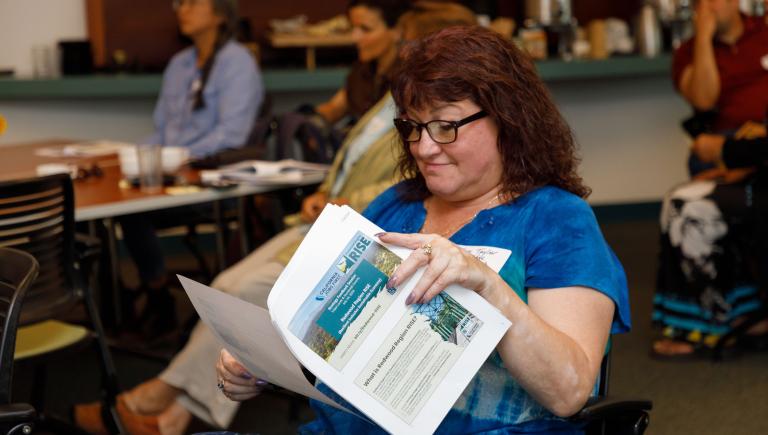
Crafted in collaboration with the Redwood Region RISE Collaborative and research led by CCRP, the Regional Roadmap documents a stark reality: families in the region earn rural wages but shoulder coastal costs of living, spending 97% of their monthly income on basic expenses. With per capita output at just 47% of the statewide average and poverty rates significantly higher than the rest of California, the two-part Roadmap sets strategies across four priority sectors — Arts, Culture, and Tourism; Health and Caregiving; Renewable and Resilient Energy; and Working Lands and Blue Economy — charting a path toward stable, thriving-wage jobs for a chronically disinvested region.

California's Rural North: Health Equity Landscape Scan
Conducted by the California Center for Rural Policy in partnership with the California Department of Public Health, California's Rural North: Health Equity Landscape Scan documents health equity efforts across the 11 most rural counties in California — covering 21.6% of the state's land area but just 2% of its population. In 2022, nine of the eleven counties fell within the lowest quartile of statewide health outcome rankings, with behavioral health, geographic isolation, and socioeconomic disadvantage as key drivers of disparity. The scan charts a path forward through stronger data infrastructure, community trust-building, and a more resilient rural public health workforce.
More Ways We Support Rural Communities
When to Partner With Us
Organizations come to CCRP when they need more than data — they need research that reflects community realities and can hold up in policy rooms, funding applications, and strategic planning processes.
We're a strong fit when you want to:
- Understand local needs through community-driven data
- Develop assessments that inform planning and decision-making
- Strengthen policy advocacy with evidence
- Document issues that disproportionately impact rural or Tribal communities
