



Breadcrumb
Tribal Energy Sovereignty Projects
Clean Power, Workforce Development, and Community Resilience
Across the Redwood Region, Tribal communities are leading the way toward energy independence — not just as an environmental goal, but as an expression of sovereignty, economic self-determination, and community resilience. Three Catalyst projects demonstrate how clean energy investment, paired with workforce development and cultural grounding, can address unemployment, reduce energy costs, and create lasting opportunities for Tribal youth and adults.
BLBS GRID Workforce Training Program
Led by Building Lives By Building Structure (BLBS) | Collaborator: GRID Alternatives North Coast
In the Hoopa community — where the population is predominantly Native American and unemployment reaches 28% — pathways into stable, well-paying careers have been hard to come by. The BLBS GRID Workforce Training Program tackles this directly, combining affordable housing construction with renewable energy integration to train Native American youth ages 16–24 in construction and solar installation.
Dive Deeper
Solar-Powered Modular Housing and Workforce Training in Hoopa
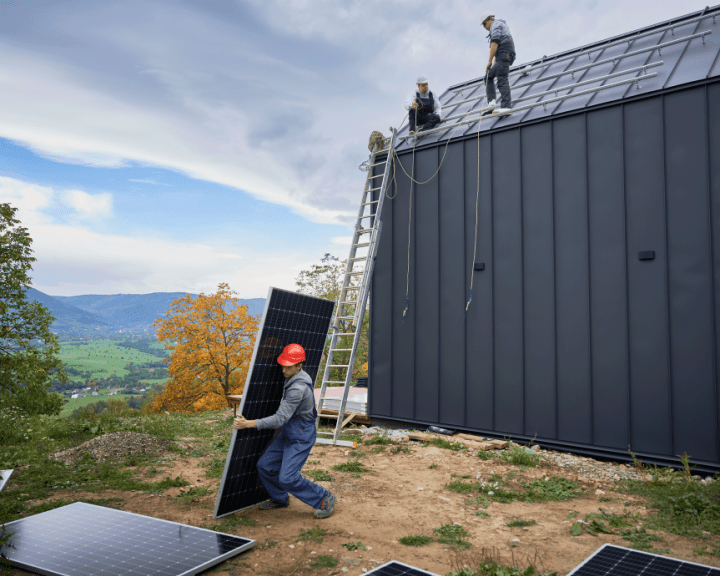
Working from the Hoopa Modular Plant, the program trains participants to build tiny homes equipped with solar power and battery storage — addressing housing shortages and clean energy needs simultaneously. Completed homes are sold at market value to sustain the program, creating a self-reinforcing model for long-term impact. The initiative builds on BLBS's track record of training approximately 150 individuals since 2020 and GRID Alternatives' deep experience delivering no-cost solar installations and workforce development in Tribal communities.
Key Updates
Working from the Hoopa modular facility, BLBS constructed two modular homes — with house #1 completed at year's end and set to go to market in the coming months. The project supported five part-time jobs, launched a construction cohort serving five students, and engaged 12 participants in planned solar workforce training. Project leads will expand training offerings through a course hosted by College of the Redwoods in Hoopa.
This project has finalized their work through Redwood Region RISE. For the latest, go to Building Lives By Building Structure (BLBS).
Blue Lake Tribal Energy, LLC (formerly Serraga Energy LLC)
Led by Blue Lake Rancheria
The Redwood Region has earned international recognition for its microgrid innovation — but that expertise has not yet been converted into a sustained commercial enterprise that can replicate and deploy proven systems at scale. Blue Lake Tribal Energy, LLC is being established by Blue Lake Rancheria to fill that gap: a 100% Tribally owned consulting and engineering business focused on deploying resilient, renewable energy microgrids at Tribal, government, and small business facilities across the region and beyond.

Dive Deeper
A Tribal Clean Energy Enterprise Built for Regional Impact and Long-Term Sovereignty
During this pre-development phase (March–September 2026), the Tribe will stand up the full organizational infrastructure of the LLC — finalizing the business and operations plan, building out a core professional team, establishing a partner and contractor network, and developing a pipeline of implementation-ready projects. The venture builds directly on Blue Lake Rancheria's track record with the Solar+ fueling station microgrid, piloted with the Schatz Energy Research Center as a replicable, turn-key system for small to medium facilities. By creating thriving-wage technical and professional jobs at the Tribal level and catalyzing energy infrastructure investment across the region, the business generates lasting economic benefit while advancing Tribal energy sovereignty and climate resilience.
Key Updates
Contracting was finalized in the spring of 2026, with more updates to come in the months ahead. For the latest, follow Blue Lake Rancheria.
Pinoleville Solar Port & Renewable Energy Workforce Development
Led by Pinoleville Pomo Nation | Collaborator: GRID Alternatives Bay Area North Coast
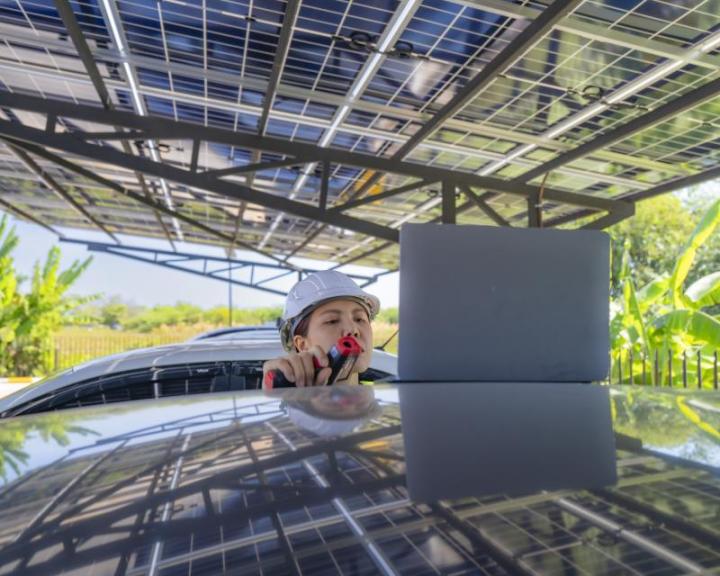
For the Pinoleville Pomo Nation — a community of 350 citizens — high utility costs and limited economic opportunity have long been persistent challenges. This project addresses both at once through an innovative dual-purpose initiative: installing a 42KW solar carport system with EV charging stations at the Tribal government complex, reducing utility costs by an estimated 25%, while delivering paid internships and workforce training for Tribal youth and adults.
Dive Deeper
Solar, Skills, and Sovereignty: Workforce Training Rooted in Tribal Culture
The workforce development component creates ten paid internships — four in renewable energy and six in traditional Tribal skills, agriculture, and social services — grounded in culturally sensitive decision-making that ensures equitable distribution of benefits throughout the community. Building on successful previous solar installations with GRID Alternatives, the project extends partnerships with local Tribes, educational institutions, and health services while advancing the Nation's Strategic Energy Plan.
Key Updates
Design and engineering for the solar carport moved forward with GRID Alternatives and Baja Construction Corporation–preliminary drawings were approved after height adjustments and final engineering drawings are on track for August 2026. On workforce, one solar intern completed 200 hours of IBT-200 certification training in Sacramento, while three more interns finished onboarding for upcoming cohorts. The 2026 cohort took part in water monitoring, financial literacy, and on-the-job mentorship in construction, plumbing, healthcare, and office administration. Ten RISE interns also traveled to Oklahoma City for the National UNITY Conference and University of Oklahoma college tour, ran solar STEM activities at the Pinoleville Big Time celebration serving roughly 350 community members, and supported youth leadership through the Pomo Summer Art program.
For the latest, follow Pinoleville Pomo Nation.
A note on portfolio changes: The Red Hills Bioenergy Facility & Central Wood Processing Plant, led by Scotts Valley Energy Corporation, was unable to secure a viable project site and therefore did not move forward as planned. To preserve both the southern regional focus and the Tribal-led intent of the original investment, funding was reallocated to the Pinoleville Solar Port & Renewable Energy Workforce Development Project — another Catalyst awardee advancing clean energy infrastructure and Tribal workforce development.
Navigate Back to Projects Overview
Explore other Redwood Region RISE projects