

Breadcrumb
Building More Than Homes in Hoopa
How one Native-led nonprofit, backed by the Redwood Region RISE Collaborative and funded through California Jobs First, is turning deep community roots into affordable homes, skilled careers, and a replicable model for rural resilience — one build at a time.
A Region Under Pressure
Hoopa sits in a part of California where opportunity and constraint exist side by side.
Economic barriers have shaped the local landscape for years. In the Hoopa Valley Tribe’s Comprehensive Economic Development Strategy (2016), about one in four residents age 16 and over was unemployed, and more than half of households were living below the poverty line. Housing has also been limited, making it difficult for teachers, nurses, and other essential workers to live in the community they serve. Many commute long distances each day.
Across the Redwood Region, these pressures are widely felt. Since 2014, home prices have climbed between 73% and 125%, outpacing wages (CA Assoc. of Realtors, cited in RRRISE Plan Part 2). More than 11,000 low-income renters do not have access to an affordable home (California Housing Partnership, 2024). At the same time, many skilled tradespeople are nearing retirement, leaving fewer workers available to build. Housing and skilled workforce development are recognized statewide as foundational anchors — the infrastructure on which any regional economy depends — and the Redwood Region is no exception.
These pressures are real, and point to where investment and new approaches are most needed.
The Project — Built From Within
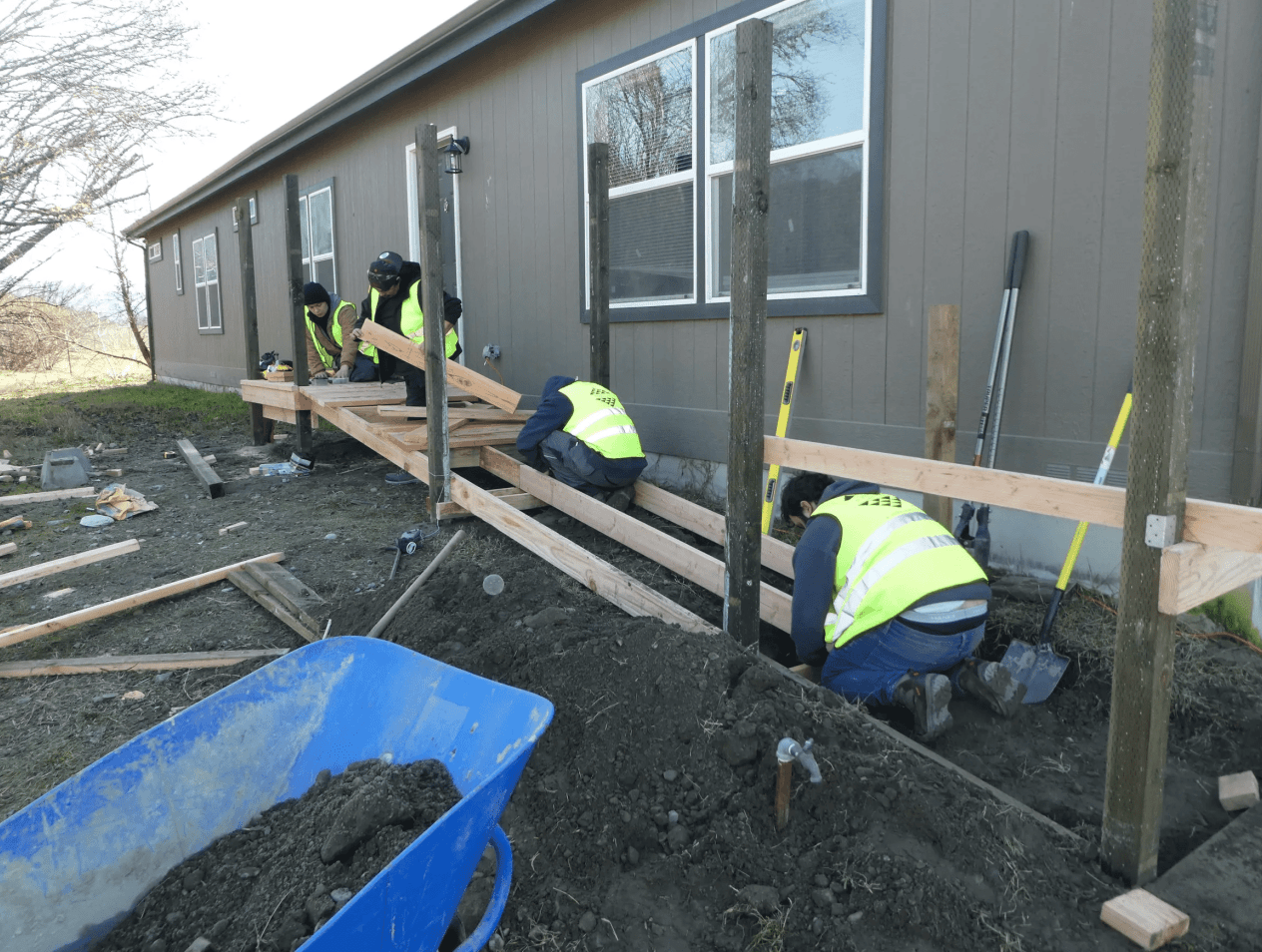
Hoopa Tribal members Franklin Richards and his sisters, Juliet Maestas and Connie McKinnon, founded Building Lives by Building Structure (BLBS) with a clear focus: train local people to build homes that the community needs.
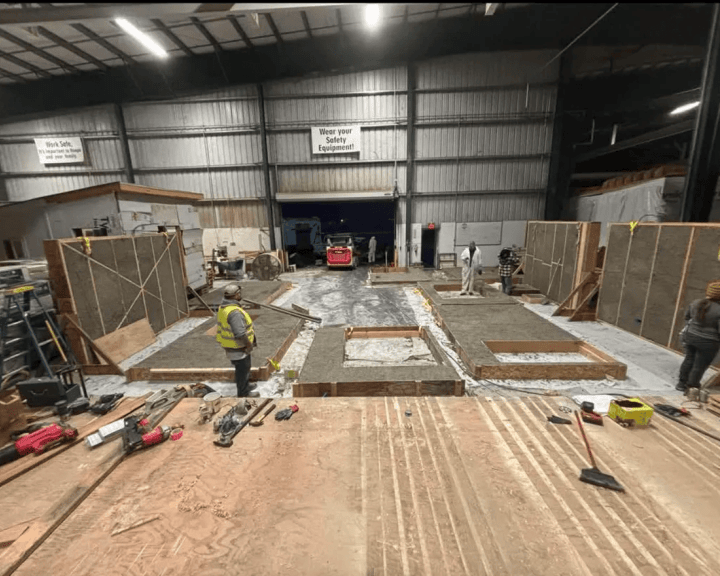
With support from Redwood Region RISE (RRRISE) and funding through California Jobs First, BLBS launched its first project at the Hoopa Modular Plant. The team began construction on two modular tiny homes while training youth and adults in the building trades. GRID Alternatives North Coast partnered with BLBS to incorporate a solar workforce component — connecting directly to the Redwood Region's priority sectors of renewable and resilient energy and working lands.
The work is grounded in relationships and purpose. As Juliet Maestas put it:
Hoopa has always been left out of a lot of things, left out of a lot of opportunities. We’re grateful for this opportunity. We do have allies over the hill.

Learning in Real Time
As the project moved forward, the organization grew with it. Managing payroll systems, workers’ compensation, and reimbursement processes required new capacity — the kind of organizational muscle-building that Redwood Region RISE was designed to support. The solar training program also evolved. Twelve participants enrolled in the online course, and four completed it to date. Plans are now in place to connect training more directly to hands-on installation during the next phase of construction. The team’s ability to adjust along the way has been part of what kept the work moving.
Additional support came through RRRISE’s technical assistance. Tribal Table Facilitator and Consultant Lorna McLeod (Northern California Indian Development Council) worked alongside the BLBS team during a period of transition, helping navigate budget updates and coordination across partners.
“When Lorna came on, it was a blessing,” Richards said. Juliet added, “She kept us on track.” McLeod described her role more simply: “I was a necessary partner in small places—and they carried it forward.”

Results: What’s Been Built
The outcomes are already visible. BLBS completed its first home, priced at $90,000, and has materials ready for a second. Over the course of the project, the organization created training and employment opportunities (BLBS Final Report, 2026):
- 5 part-time workers employed
- 5 adults trained in construction
- 4 youth engaged in hands-on learning
Several participants have moved into next steps:
- 3 entered the Carpenters Union apprenticeship
- 1 is pursuing a construction management degree
- 2 are working on a mass timber project at Cal Poly Humboldt
For Richards, the impact shows up most clearly in the people coming through the program:
Almost all the women that come to the program just excel. Seeing their accomplishments and appreciation in the community—that’s what I do it for.
Innovation Rooted in Place
The work has also opened the door to new building approaches. In partnership with regional collaborators, BLBS completed what is believed to be California's first permitted hemp panel home. The project connects to a broader regional effort to explore materials like hempcrete that can lower costs and support local job creation — and reflects the kind of place-based innovation that the California Jobs First framework envisions when it talks about regions stewarding their distinctive natural resources and working lands.
The work draws on relationships and expertise already present in the region, with materials suited for broad use over time.
What Comes Next
BLBS is preparing for its next phase. The organization is pursuing a $385,000 grant to develop a small housing cluster near the modular plant—housing that could support workforce retention in the Klamath-Trinity area, addressing one of the most persistent barriers to economic growth that rural regions across California share.
A new training cohort is scheduled to begin in June, with additional certifications in HVAC and solar planned.
In the near term, the sale of the first home will help fund continued construction and demonstrate the model’s viability. “I think we have formed a really good team of good people,” Richards said. “We’re ready for our next step.”
BLBS is still building—homes, skills, and capacity at the same time. The progress to date is exactly the kind of community-rooted, locally-led project California Jobs First was built to find: a demonstration that when investment aligns with local leadership, backed by regional support and commitment, it can move at the rate of trust — and still move.

Building Lives by Building Structure (BLBS) is a 100% Native-led and operated 501(c)(3) nonprofit on the Hoopa Valley Indian Reservation. The BLBS GRID Workforce Training Program was selected as a Catalyst Awardee by the Redwood Region RISE Collaborative, funded through California Jobs First and convened by North Edge and the California Center for Rural Policy at Cal Poly Humboldt.
Navigate Back to Resource Hub
Explore other Redwood Region RISE resources