Breadcrumb
Food for Indigenous Futures
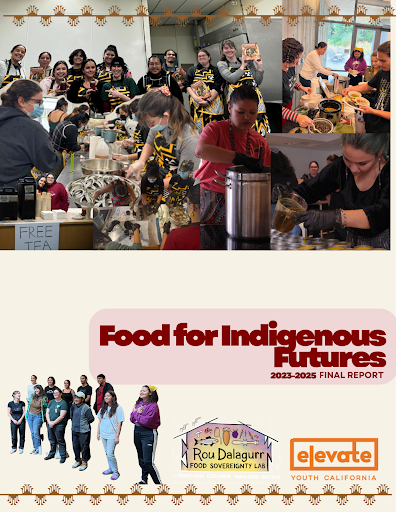
The Food for Indigenous Futures Program is an intervention derived from community-informed, culturally-based strategies and will implement health and wellness curriculum through youth camps (online and in-person), high school course modules, and youth-led research and evaluation practices. The project will assess how “Food for Indigenous Futures” can increase mental health and wellness while also serving as a drug, alcohol, and substance abuse intervention by bringing youth back into good relations with the land, their traditions, and community. The long-term objective of this study is to develop tribally informed, place-based, and culturally informed programming for mental health and substance abuse interventions amongst Native American youth and to provide publicly available curriculum and digital resources. The project is funded by a 1-million dollar Elevate Youth California: Youth Substance Use Disorder Prevention Program Grant. In the words of the Co-Director of the Lab and Assistant Professor in the Native American Studies Department, Dr. Kaitlin Reed, “The Food for Indigenous Futures Program demonstrates the transformative power of Indigenous food sovereignty for youth in our community and the impact of centering Indigenous knowledges, perspectives and experiences in place-based learning. I am so incredibly proud of the contributions of the Rou Dalagurr Food Sovereignty Lab to both our campus and broader community.”
In addition to the building programs that increase strength and resilience, reduce health disparities, and build health and wellness through place-based programming for Indigenous youth, this grant will support the creation of an Indigenous youth council that will serve in an advisory capacity to the FSL, and enable the Lab to host the annual Indigenous Foods Festival through 2025.
Project director and previous Food Sovereignty Lab Coordinator Marlene’ Dusek, who lead the project until March 2023, says that, “we have always lived in a world that centers the next generation as we know they will be the ones who lead us and continue forward. Youth will lead us in futures that our ancestors have always known, that our cultures have always known, that our places have always felt, on land that has always been taken care of and prayed upon. The Food for Indigenous Futures grant just carries forward those teachings and honors our ways to care for our children and communities by centering our collective mental health and connection to our traditional foods, and our responsibility as land caretakers, as providers for our families, as language carriers, and as traditional ecological knowledge practitioners. This work continues to support and center our youth and communities and is working in the continued fight for food justice and collective healing for Indigenous communities.” Dusek is an ethnobotanist and Indigenous scientist with extensive experience working with Indigenous youth. She has coordinated and implemented dozens of youth workshops. As project coordinator she will manage project activities alongside the youth council and steering committee.
Rou Dalagurr Indigenous Food Sovereignty Camp Curriculum
The Food for Indigenous Futures project is building a community and youth-informed curriculum to connect with cultural practices in health, wellness, transnational ecological knowledge, and food sovereignty. The program includes youth workshops, events, and school-based curriculum for Native American High School students alongside opportunities for Native American youth to create and implement programs and projects for food sovereignty, food justice, health & wellness.
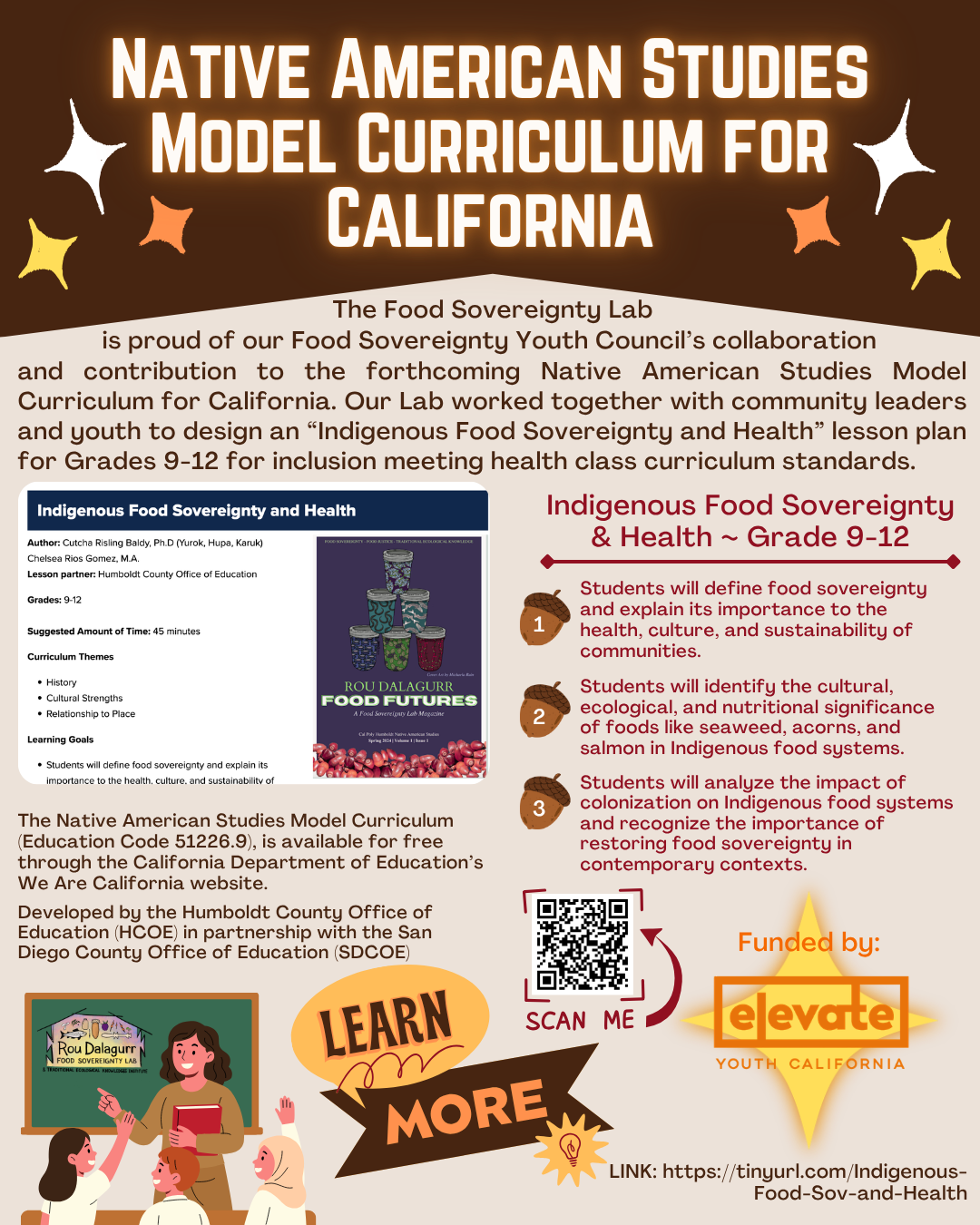
The Food Sovereignty Lab is proud of our Food Sovereignty Youth Council’s collaboration and contribution to the forthcoming Native American Studies Model Curriculum for California. Our Lab worked together with community leaders and youth to design an “Indigenous Food Sovereignty and Health” lesson plan for Grades 9-12 for inclusion meeting health class curriculum standards.
Indigenous Food Sovereignty & Health ~ Grade 9-12
- Students will define food sovereignty and explain its importance to the health, culture, and sustainability of communities.
- Students will identify the cultural, ecological, and nutritional significance of foods like seaweed, acorns, and salmon in Indigenous food systems.
- Students will analyze the impact of colonization on Indigenous food systems and recognize the importance of restoring food sovereignty in contemporary contexts.
The Native American Studies Model Curriculum (Education Code 51226.9), is available for free through the California Department of Education’s We Are California website. Developed by the Humboldt County Office of Education (HCOE) in partnership with the San Diego County Office of Education (SDCOE)
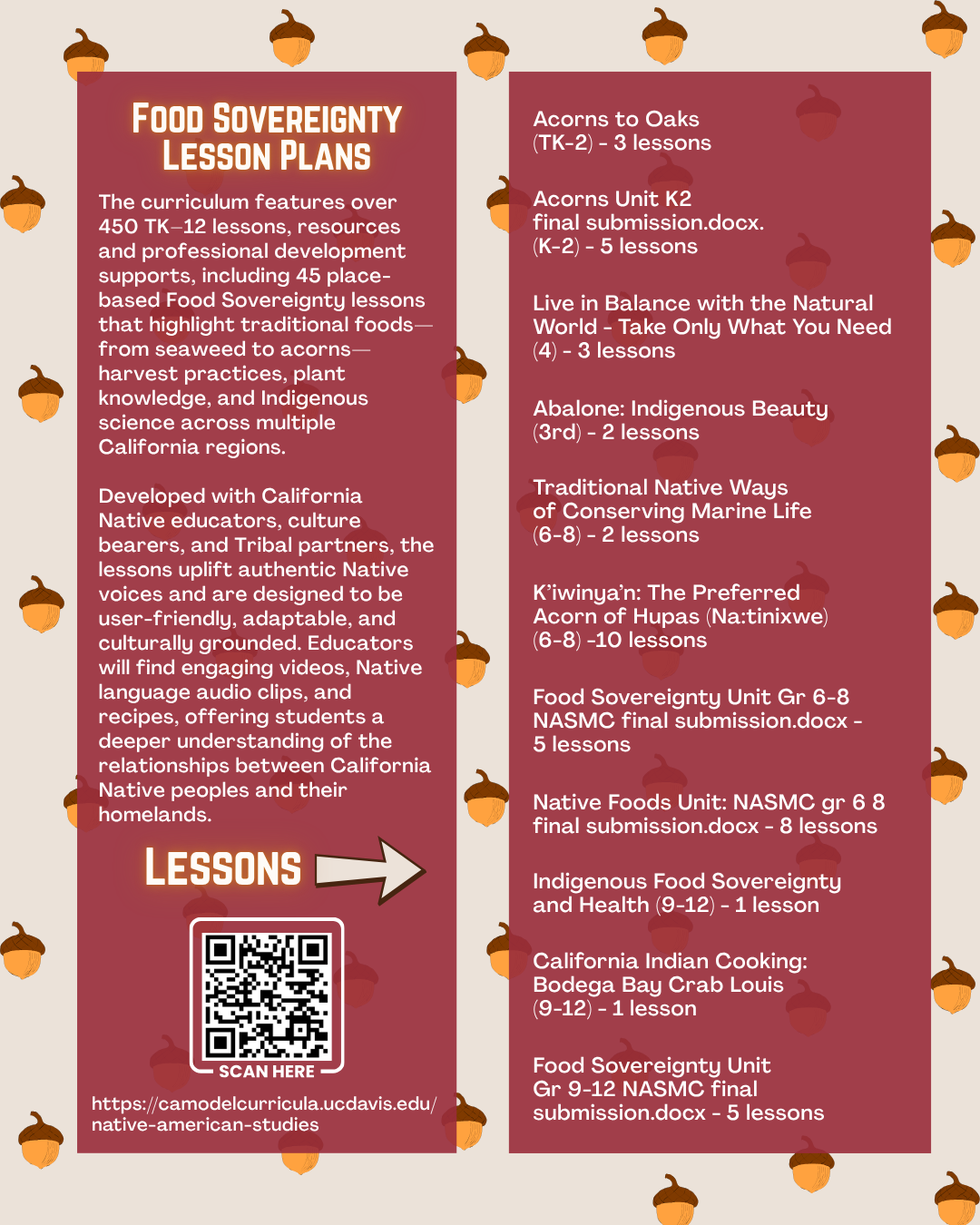
Food Sovereignty Lesson Plans
The curriculum features over 450 TK–12 lessons, resources and professional development supports, including 45 place-based Food Sovereignty lessons that highlight traditional foods—from seaweed to acorns—harvest practices, plant knowledge, and Indigenous science across multiple California regions.
Developed with California Native educators, culture bearers, and Tribal partners, the lessons uplift authentic Native voices and are designed to be user-friendly, adaptable, and culturally grounded. Educators will find engaging videos, Native language audio clips, and recipes, offering students a deeper understanding of the relationships between California Native peoples and their homelands.
- Acorns to Oaks (TK-2) - 3 lessons
- Acorns Unit K2 final submission.docx. (K-2) - 5 lessons
- Live in Balance with the Natural World - Take Only What You Need (4) - 3 lessons
- Abalone: Indigenous Beauty (3rd) - 2 lessons
- Traditional Native Ways of Conserving Marine Life (6-8) - 2 lessons
- K’iwinya’n: The Preferred Acorn of Hupas (Na:tinixwe) (6-8) -10 lessons
- Food Sovereignty Unit Gr 6-8 NASMC final submission.docx - 5 lessons
- Native Foods Unit: NASMC gr 6 8 final submission.docx - 8 lessons
- Indigenous Food Sovereignty and Health (9-12) - 1 lesson
- California Indian Cooking: Bodega Bay Crab Louis (9-12) - 1 lesson
- Food Sovereignty Unit Gr 9-12 NASMC final submission.docx - 5 lessons
FIF Youth Council Posters
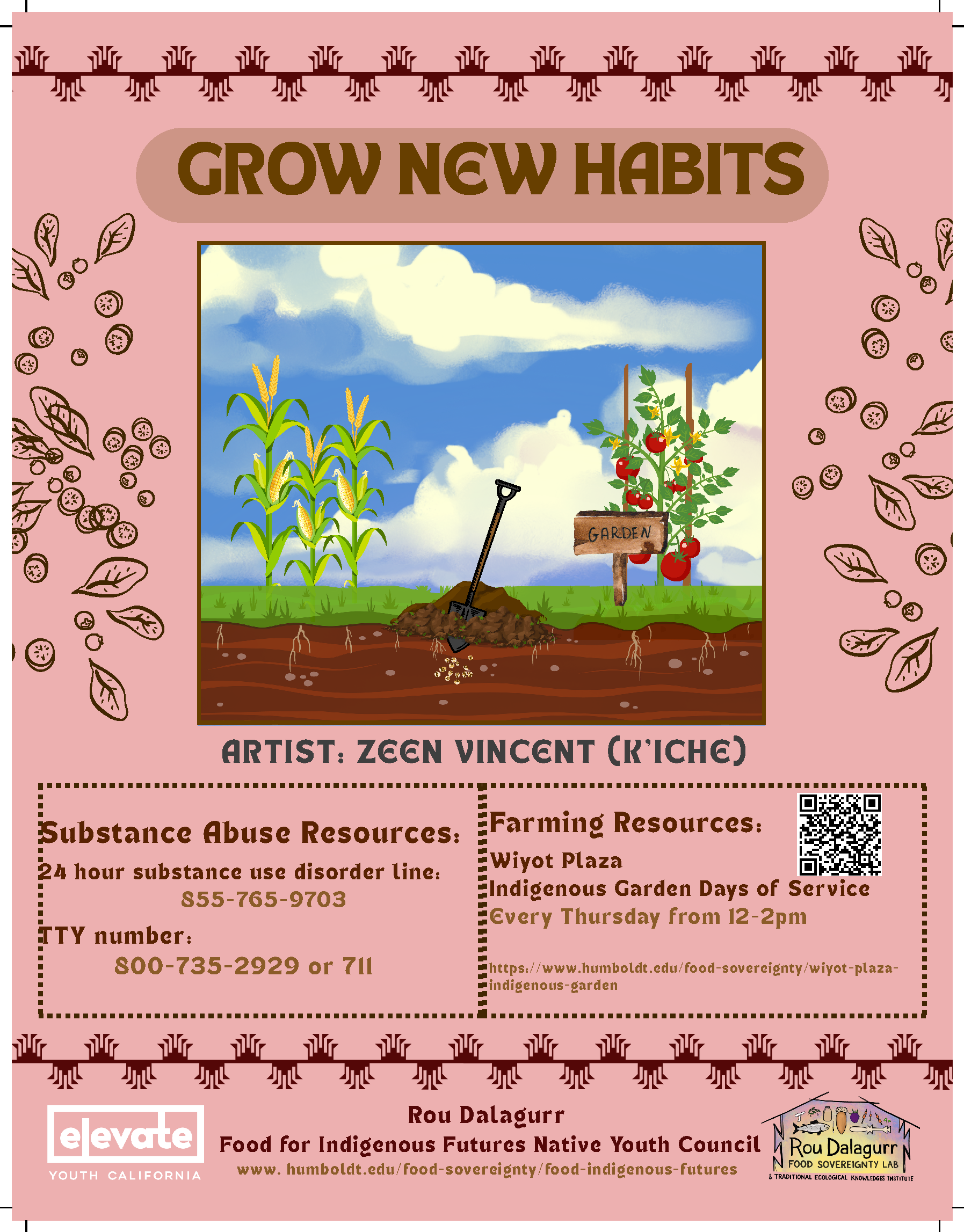
Artist: Zeen Vincent (K'iche)
Substance Abuse Resources:
24 hour substance abuse disorder line: 855-765-9703
TTY number: 800-735-2929 or 711
Farming Resources:
Wiyot Plaza Indigenous Garden Days of Service
Every Thursday from 12-2pm
https://www.humboldt.edu/food-sovereignty/wiyot-plaza-indigenous-garden
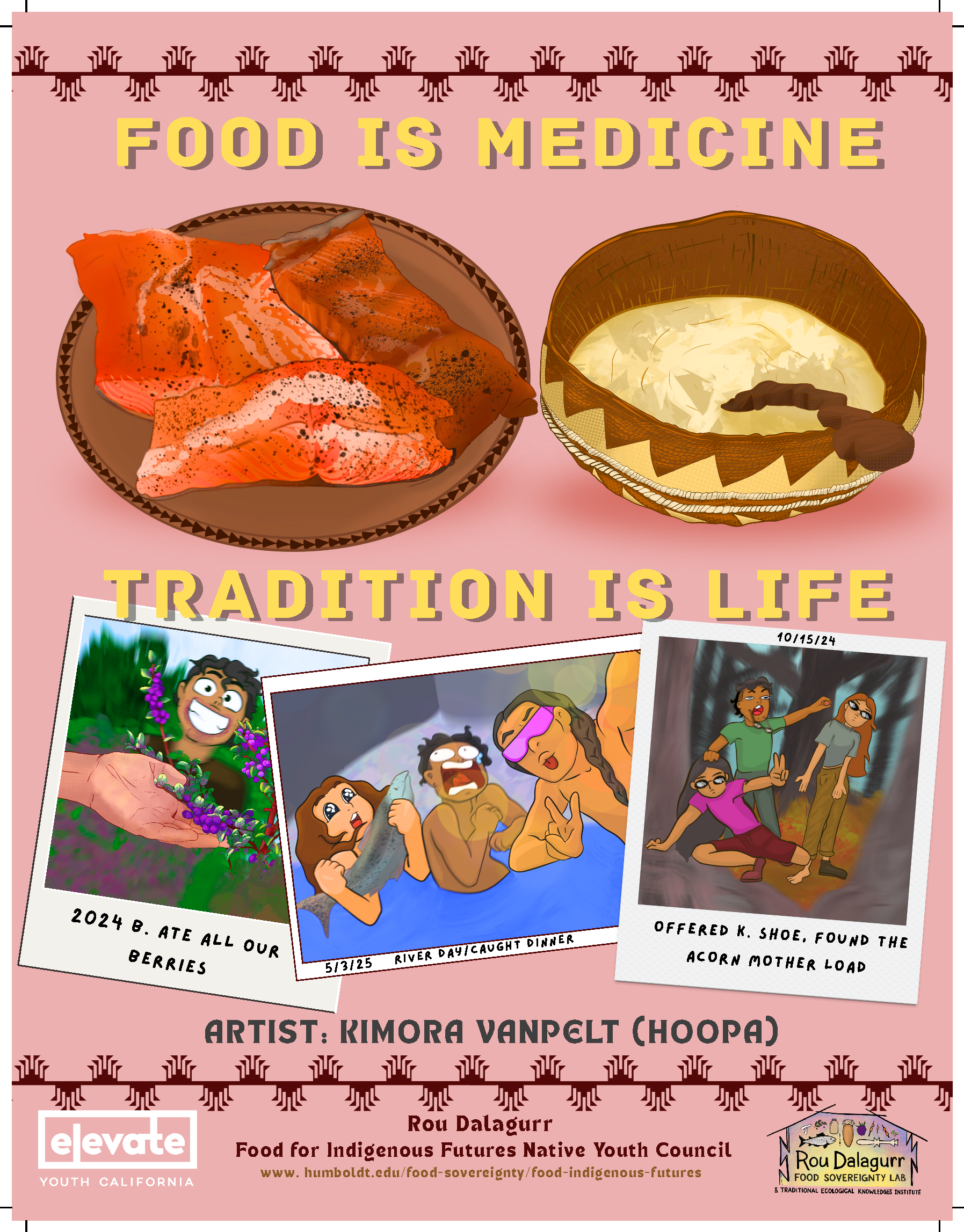
Artist: Kimora Vanpelt (Hoopa)
Food is Medicine
Tradition is Life
Statement: Since coming home, trading old habits for traditional foods has been the best medicine. The land feeds me in all the right ways- body, mind, and soul.
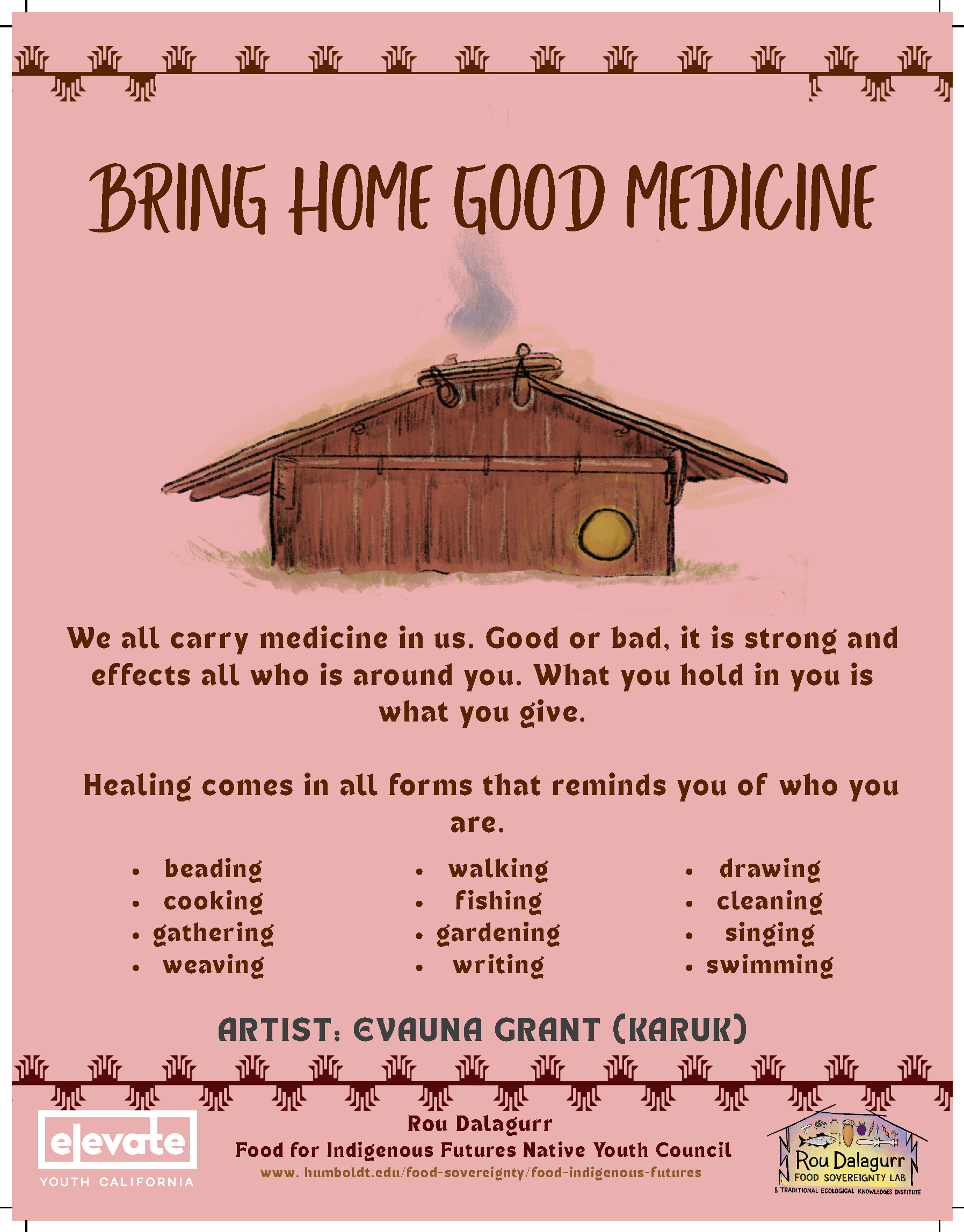
Artist: Evauna Grant (Karuk)
We all carry medicine in us. Good or bad, is is strong and effects all who is around you. What you hold in you is what you give.
Healing comes in all forms that reminds you of who you are.
-beading -walking -drawing
-cooking -fishing -cleaning
-gathering -gardening -signing
-weaving -writing -swimming
Statement: Bringing home good medicine, to me, means carrying a positive influence and a strong voice that uplifts those around you.‘Home’ is not only your house, but it is wherever you are. I wanted to make this flyer to remind us all how powerful our medicine is and how it shapes not only ourselves but everyone we interact with. T he actions we take can remind us of the goodness we carry and ability to create. In those actions we can create healing for ourselves and for others. Our medicine is powerful. Let us bring it home and let it ripple outward.
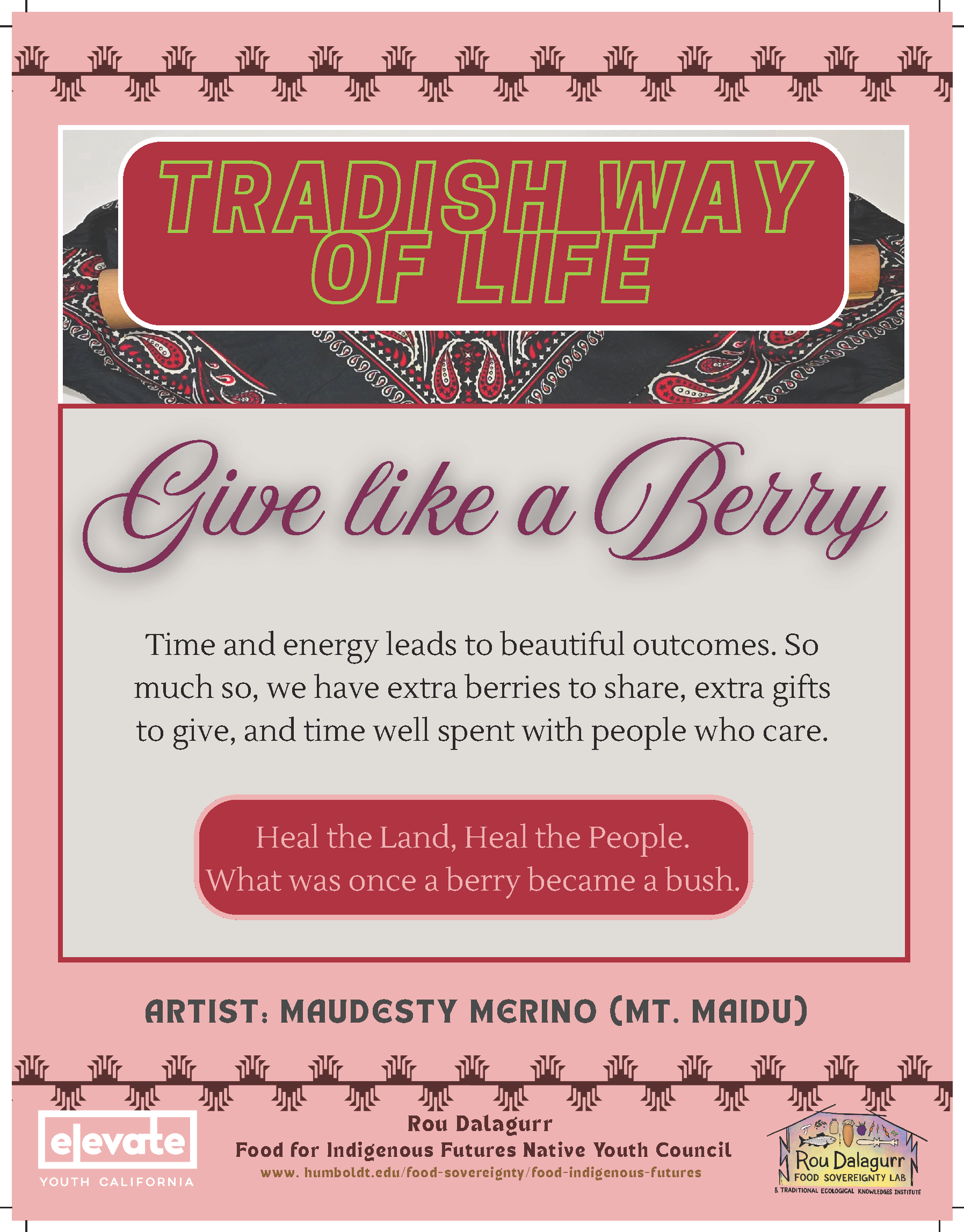
Artist: Maudesty Merino (Mt. Maidu)
Tradish Way of Living
Give like a Berry
Time and energy leads to beautiful outcomes. So much so, we have extra berries to share, extra gifts to give, and time well spent with people who care.
Heal the Land, Heal the People. What was once a berry became a bush.
Statement: Fresh berries feed many with only a short time to be eaten. What began as a simple teaching, blossomed into a beautiful way of life. A traditional and Berry People way of life.
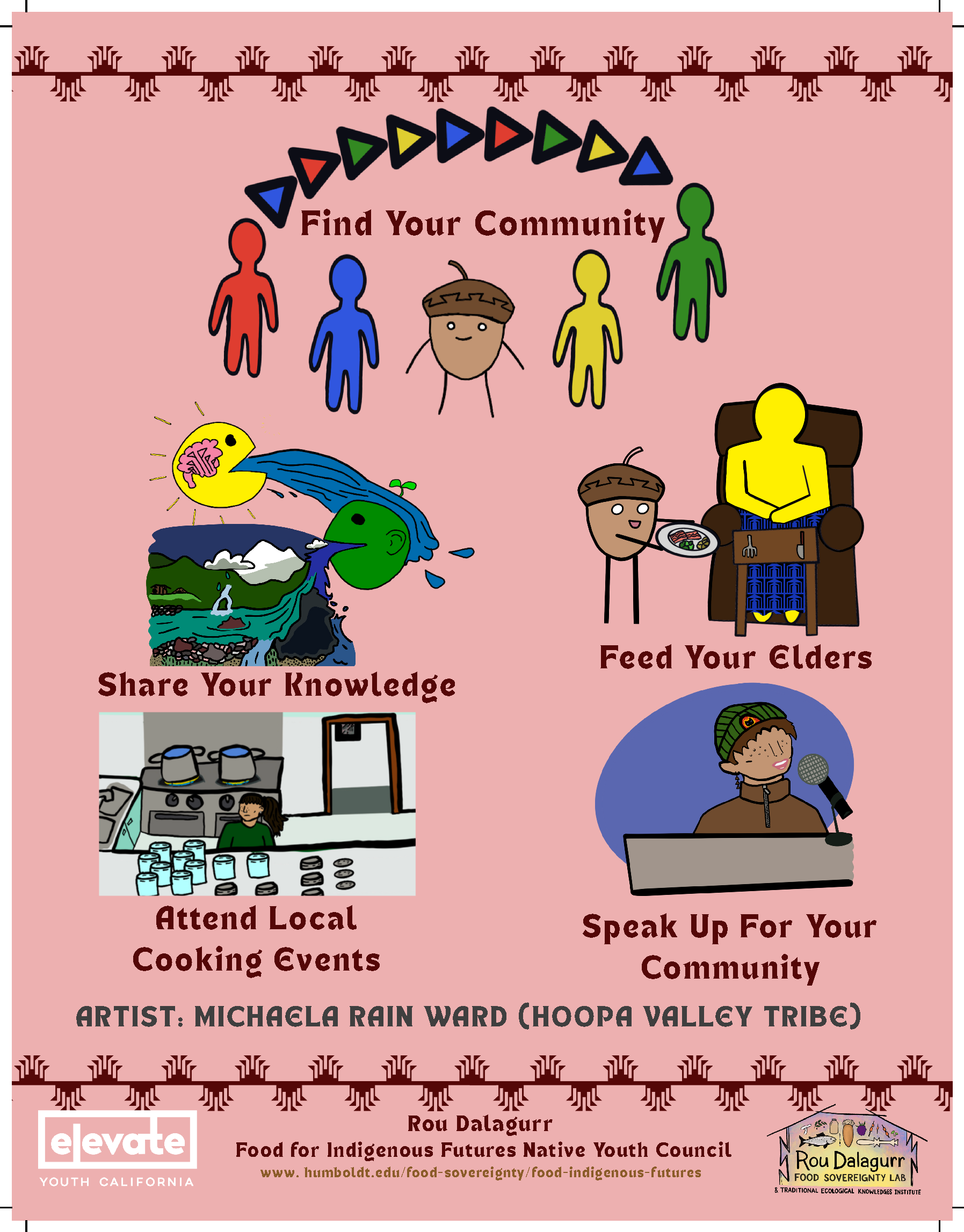
Artist: Michaela Rain Ward (Hoopa Valley Tribe)
Find Your Community
Share Your Knowledge
Feed Your Elders
Attend Local Cooking Events
Speak Up For Your Community
Statement: Within these past few years I have found my part in the local community. I find joy in learning new things and taking that knowledge to my home and teaching my siblings/family.
Being in these welcoming educational spaces is truly immeasurable.
IFF 2025- Youth Council Panel Discussion
Youth Council Listening Sessions
First Youth Council Listening Session
Second Youth Council Listening Session

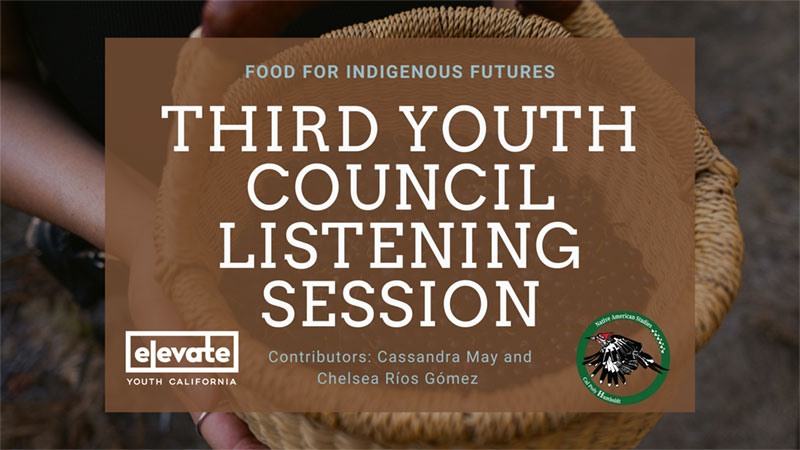
Third Youth Council Listening Session