
Breadcrumb
Good Fire Healing Coalition
Good Fire Healing Coalition- A partnership with Blue Lake Rancheria
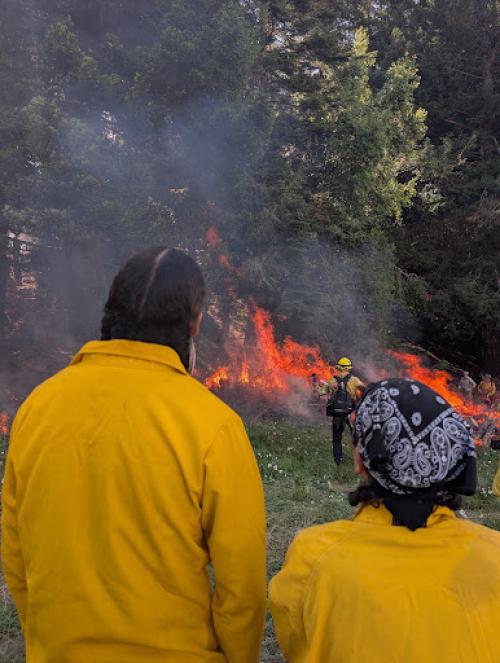
Blue Lake Rancheria’s (BLR) ‘Good Fire Healing Coalition’ looks to build a regional team of Indigenous women cultural burners to be
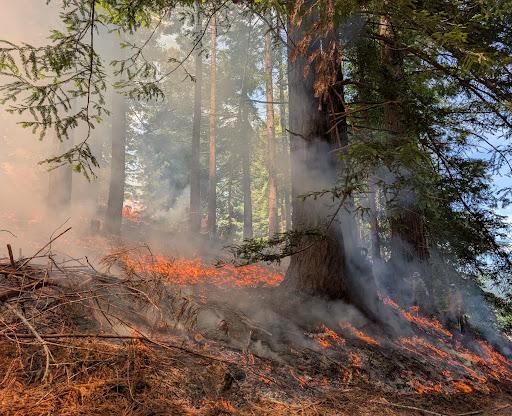
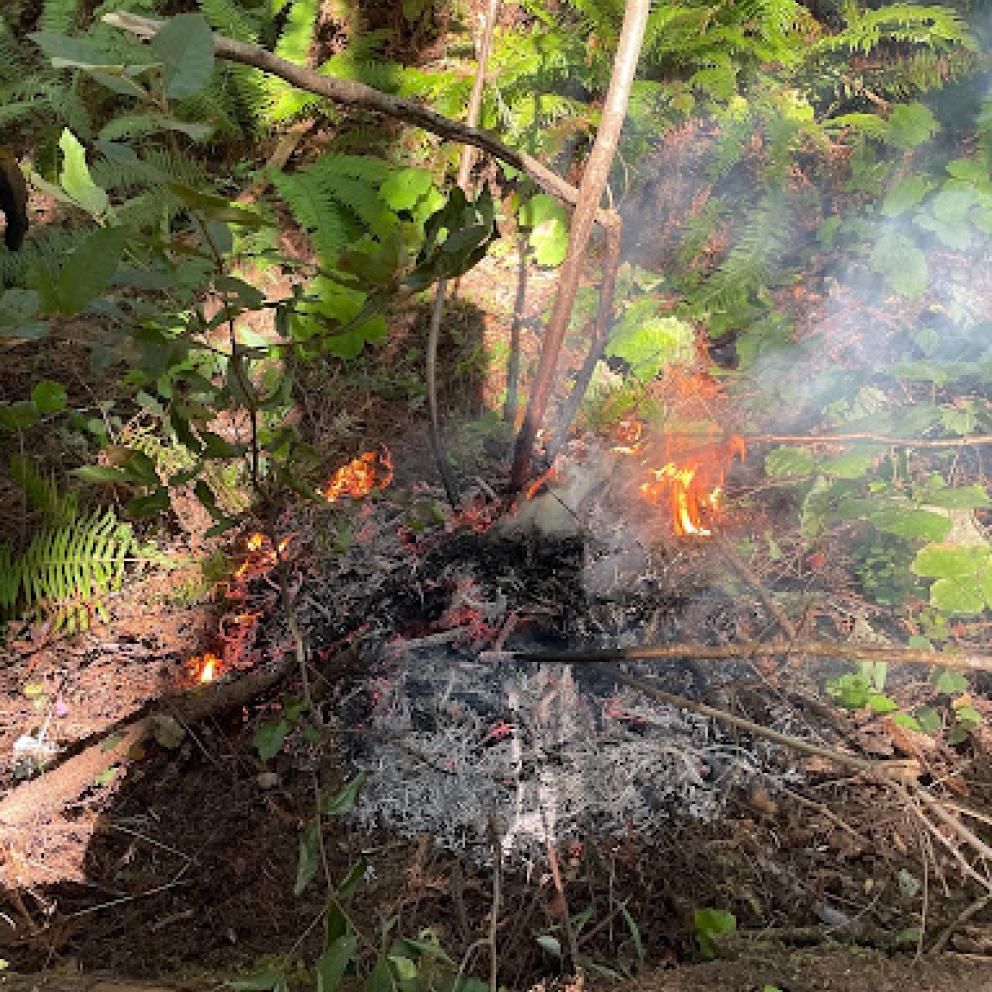
housed at the Rancheria. The project will enact fire management regimes on recently acquired fee title lands. Fire management regimes, including prescribed and cultural burns, will be implemented for the restoration of pyrodependent ecosystems and cultural resources, supporting food sovereignty and Traditional Ecological Knowledge resurgence. Burn implementation will be the subject
of research through demonstration data collection, hands-on site restoration, and impact assessment on cultural resources; they also act as training workshops.
This program will include a formal partnership with the Rou Dalagurr: Food Sovereignty
Lab and Traditional Ecological Knowledges Institute (FSL) at Cal Poly Humboldt, who will develop a Cultural Fire Literacy Certification, support Cultural Burn Team training, and a Fire-Centered Climate Action Plan.
Website: (https://www.bluelakerancheria-nsn.gov/)
Returning Good Fire to Wiyot Plaza
Sub project of the Good Fire Healing Coalition
Funded by SHIFT
Returning Good Fire to Wiyot Plaza aims to restore cultural fire practices to the Cal Poly Humboldt campus through education, collaboration, and ecological stewardship. Led by Indigenous students, the Rou Dalagurr Food Sovereignty Lab, the Traditional Ecological Knowledges Institute, and community cultural fire practitioners, the project is working to research, plan, and implement the first cultural burn at Wiyot Plaza. By creating a pathway for prescribed cultural fire on campus, the project seeks to heal the landscape, restore culturally important plants and ecosystems, and strengthen relationships between the university and the Wiyot community. The project supports the next generation of land stewards by reconnecting students with traditional ecological knowledge while demonstrating how universities can work collaboratively with Indigenous communities to support sovereignty, sustainability, and long-term care for the land.

Karuk Fire Plan Collaborative Meetings
Subproject of the Good Fire Healing Coalition.
Funded by the NSF
Through support from the National Science Foundation, the Karuk Department of Natural Resources and Cal Poly Humboldt will partner to coordinate a series of collaborative workshops and meetings focused on interconnecting Indigenous and Western knowledge systems related to fire science and management within the Karuk Aboriginal Territory. One of primary outcomes will be to solicit input and direction on high priority fire-related research, monitoring, and educational needs of the Karuk Tribe and assemble a team of researchers and practitioners that will develop tangible, innovative, and community-based projects that aim to promote indigenous fire stewardship and equitably address wildfire-related challenges.
Good Fire Healing Coalition Food Sovereignty Lab Team
Program Coordinator: Jordan Lee
Graduate Research Assistant: Tressa Moore
Graduate Research Assistant: Alyssa Ledesma Araiza
Graduate Research Assistant: Julian Jensen
Undergraduate Student Research Assistant: Christi Kennedy
Undergraduate Research Assistant: Olivia Chase
Good Fire Healing Coalition - Additional Projects
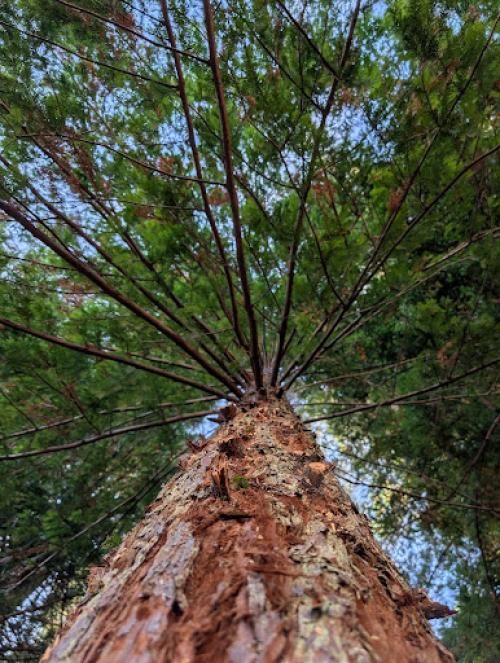
The Voupul Fellowship is a one-year graduate research fellowship focused on integrating Indigenous perspectives into the conservation, education, and public engagement of redwood forests in Humboldt and Del Norte counties. The Fellowship is hosted by the Rou Dalagurr Food Sovereignty Lab and Traditional Ecological Knowledges Institute (FSL) with support from Save the Redwoods League.
Indigenous peoples have long maintained reciprocal relationships with redwood forests through gathering and cultural fire, practices known to enhance biodiversity and resilience. However, data on these practices within redwood ecosystems remain limited, and few education programs translate them into conservation applications. This fellowship will fill those gaps by documenting how TEK-based stewardship supports forest health and by creating public resources that align ecological science with Indigenous knowledge systems. In doing so, it strengthens ongoing partnerships in co-management, expands opportunities for Indigenous graduate researchers, and models community-driven conservation that restores both ecological and cultural relationships with redwoods.
Supervisor - Dr. Cutcha Risling Baldy
Voupul Graduate Research Fellow - Alyssa Ledesma Araiza