

Breadcrumb
College of Natural Resources & Sciences
Get Your Hands Dirty Studying Science on California’s North Coast
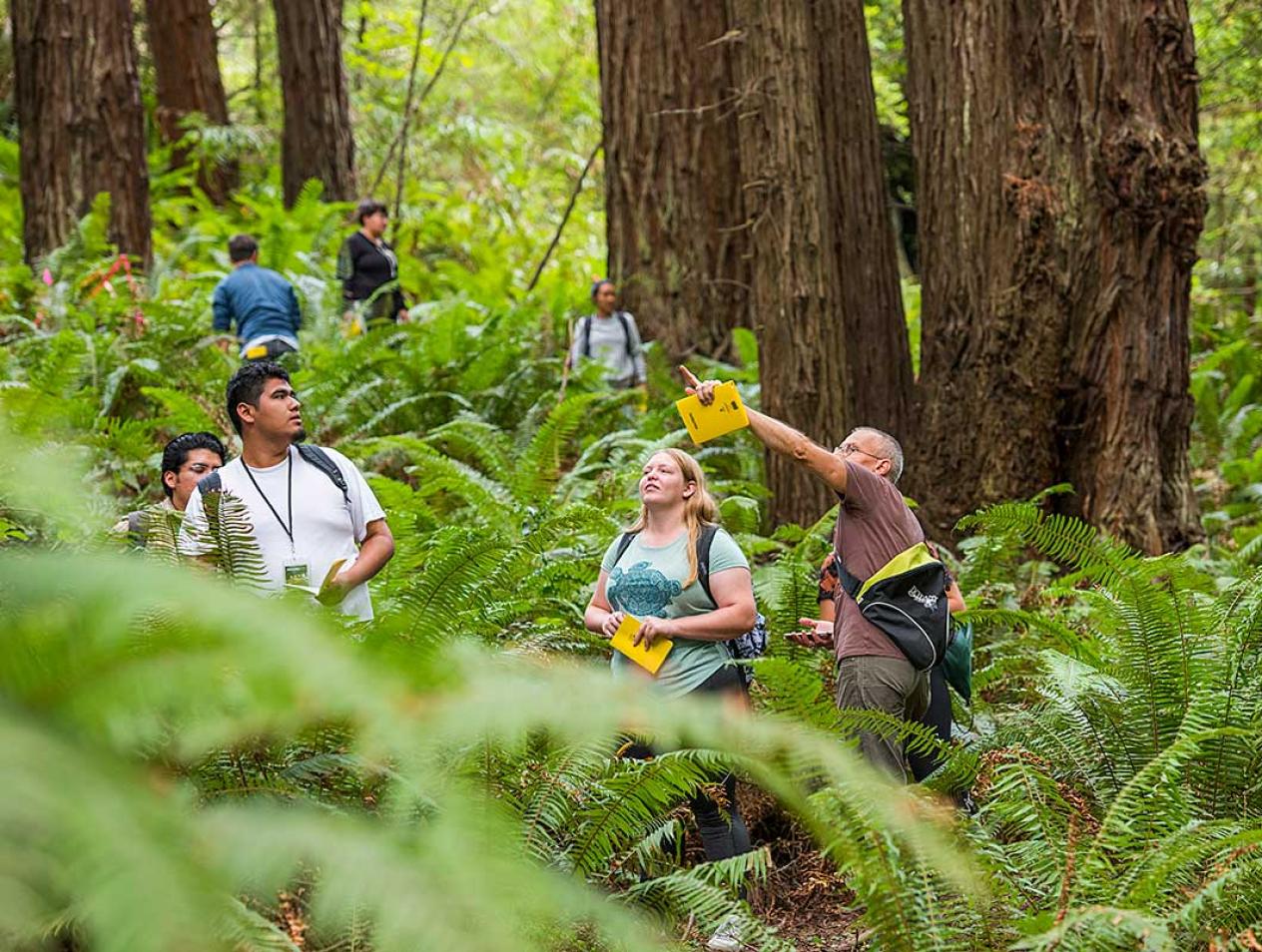
There’s no better place to study science than at Cal Poly Humboldt. Our community is a living laboratory with the Pacific Ocean, ancient redwoods, and other diverse ecosystems for you to explore.
The College of Natural Resources & Sciences boasts a wide variety of science-focused areas of study, from biochemistry to zoology. Our multiple fieldwork opportunities, Place-Based Learning Communities, and extensive research faculties paired with our stellar faculty and staff create an environment for you to feel inspired, challenged, and engaged with the science all around you.
Undergraduate Research
Many universities reserve research experience for graduate students. At Cal Poly Humboldt, you may conduct your own research or assist professors with their projects as early as your freshman year. Either way, you’ll put theory into practice, building a fundamental understanding of concepts and methodologies. With opportunities to present at local and national conferences, you’ll learn how to explain your findings, too. Experiences like these offer a glimpse of what it’s like to be a professional scientist and will help you discover your passion.
Fieldwork
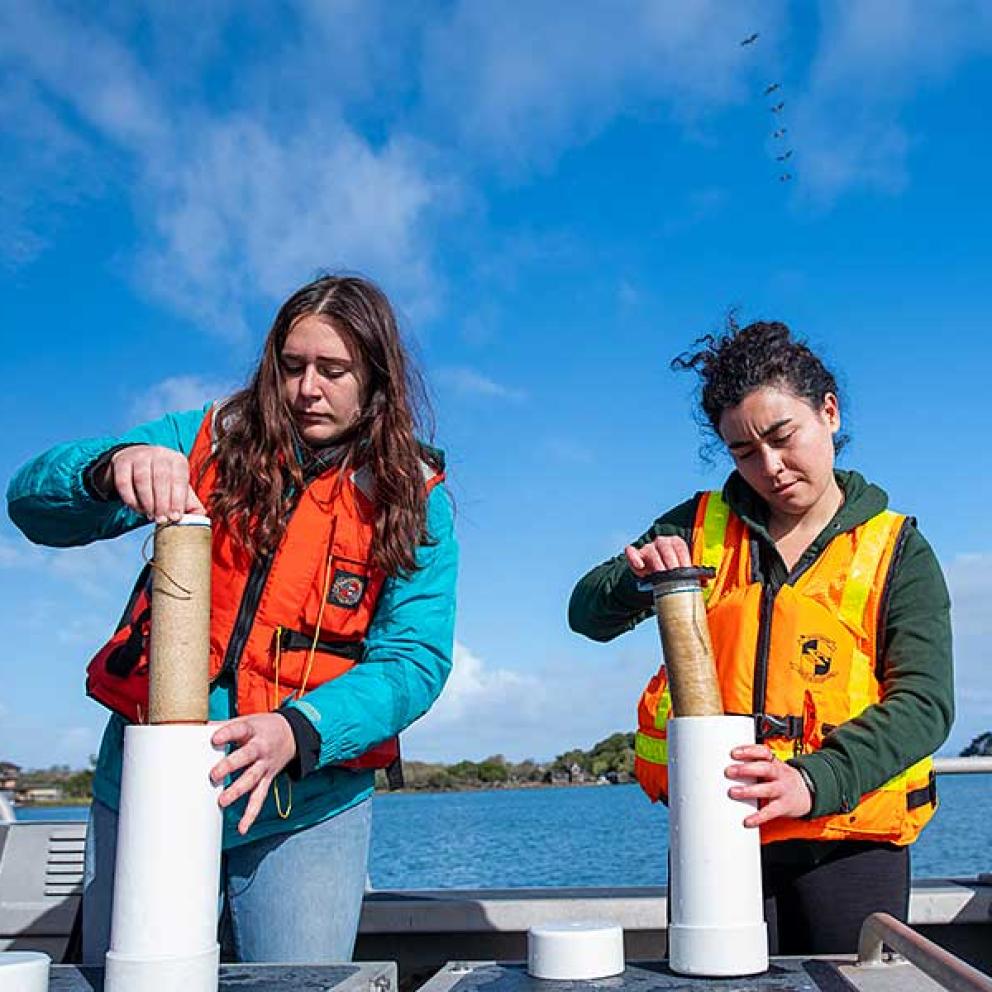
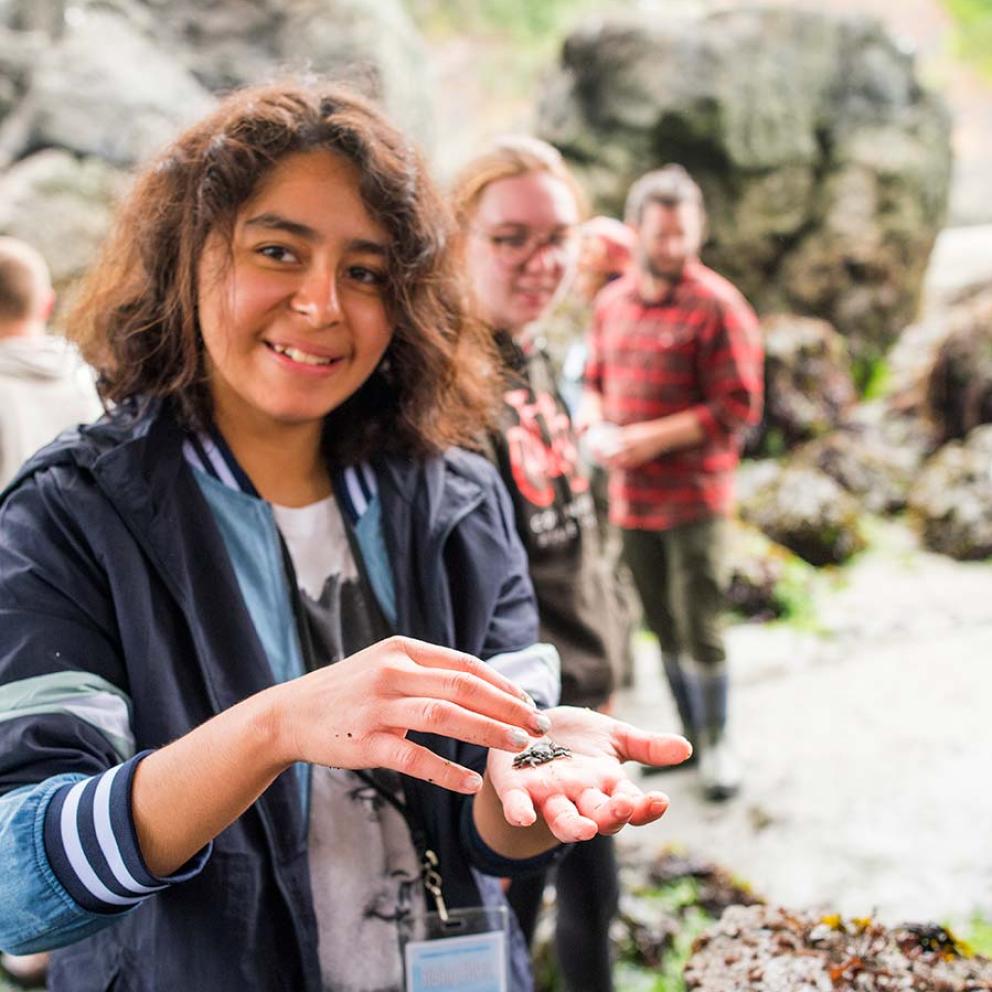
Located on the North Coast of California, Humboldt is surrounded by ancient redwoods and close to the Pacific Ocean, mountains, and rivers. You’ll find the region’s natural environment is the perfect outdoor classroom where learning happens through real-world experience. Track elk, hike through forests to measure redwoods, or take water samples from California’s second largest river—Humboldt provides a wide range of opportunities for fieldwork, which helps develop critical thinking and collaboration skills, and a passion for learning that will take you far in life.
Personal Attention
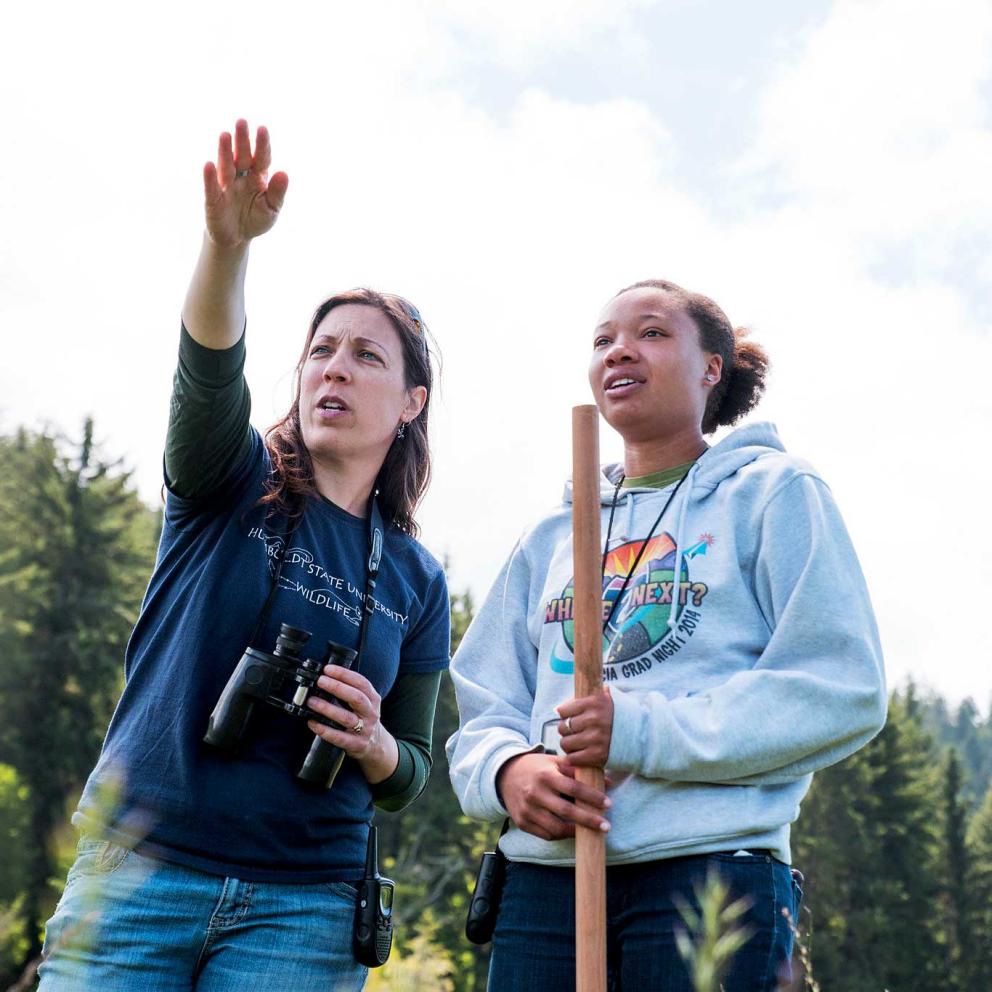
College is a time to expand your horizons and find out who you really are, and our attentive faculty are here to support you every step of the way. From the moment you begin your program, you won’t be just another face in the crowd. You’ll be part of a community as you get to know your professors. They’ll challenge you, but they’re accessible, too. Whether through mentoring or one-on-one feedback, they’ll help you build the knowledge and skills to be successful at Cal Poly Humboldt.
Undergraduate Programs
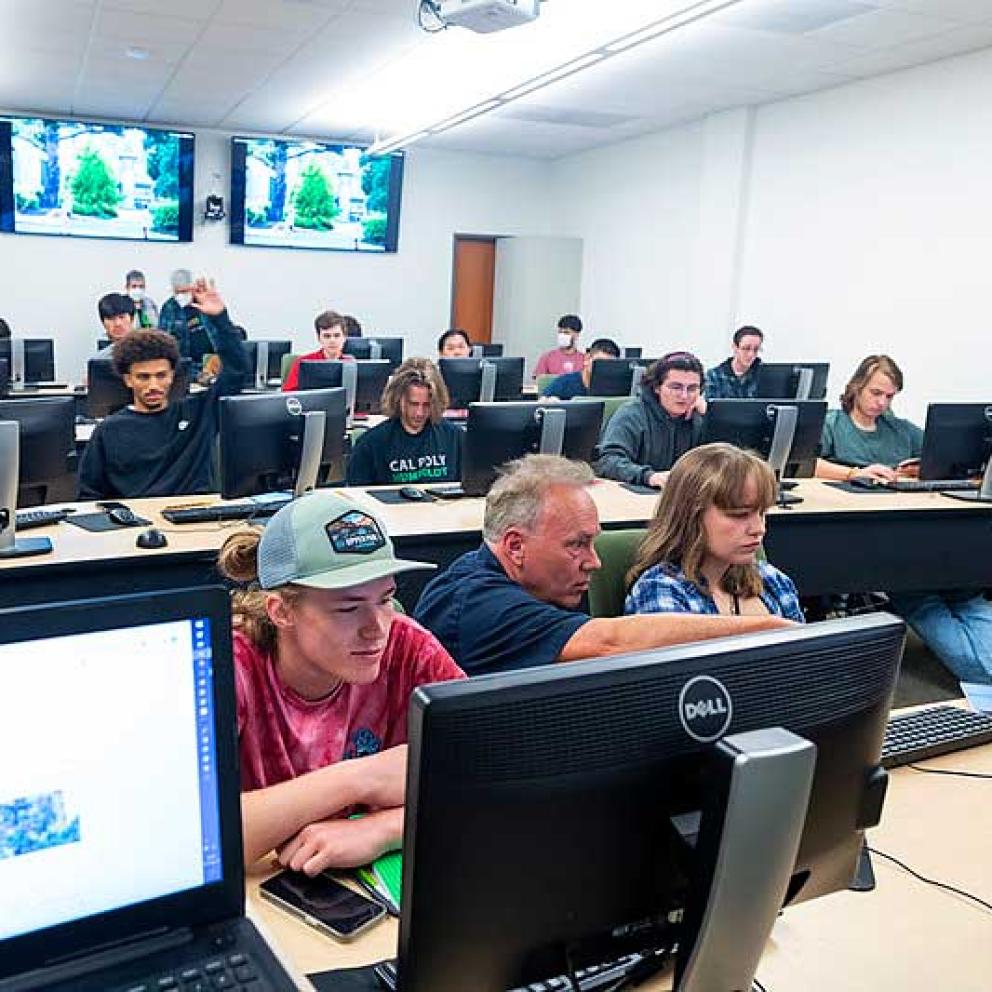
Cal Poly Humboldt offers a wide array of science majors and programs, led by highly skilled faculty who foster a supportive environment. You will develop the critical thinking skills needed to solve complex problems in science, engineering, and natural resources, leaving you well-prepared for professional careers and higher levels of study.
Graduate Programs
Cal Poly Humboldt has an established reputation for its graduate programs in the biological, environmental, engineering, and natural resources sciences, which provide the knowledge and experience necessary to address today’s scientific problems.
Equipped for Excellence
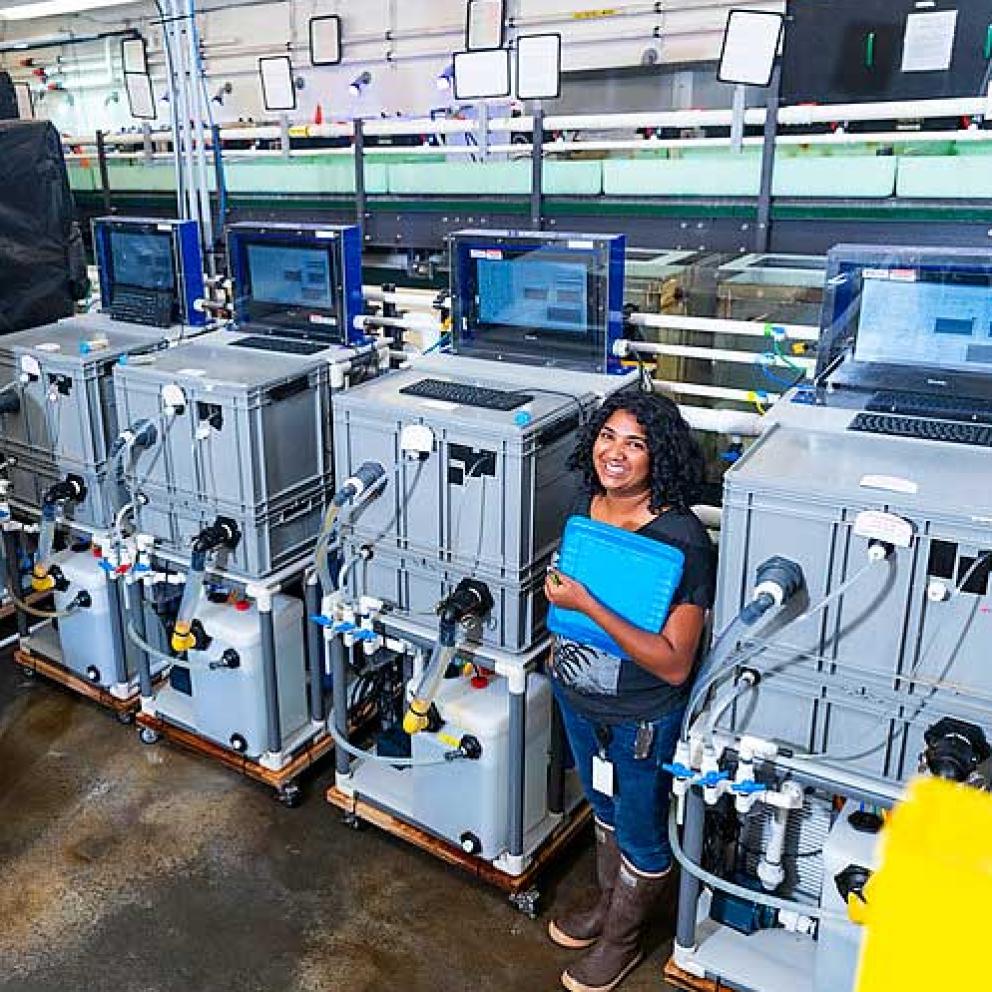
Cal Poly Humboldt has a diverse range of research facilities, labs, and special collections as essential tools for conducting research and gaining real-world experience. Utilizing a renewable energy technology research center, a marine laboratory, and the largest botanical collection in the CSU system, you will actively engage with research during your undergraduate years.
Place-Based Learning Communities
Learning goes beyond the classroom at Humboldt—we learn from the environment we are in. Our Place-Based Learning Communities provide you with a tight-knit community of like minded peers before classes even start.
We start right away—you’ll be immersed in major-related fieldwork, seminars, and classes with students like you before the semester even begins. These connections will help you navigate college life, gain confidence, succeed academically, and gain a sense of belonging within the Humboldt community.
Alumni Updates
Barry k Avery
Biological Sciences, 1965
Barry is still planting and maintaining Holcomb Tree Trail, an Arboretum in Granby, CT that was started by Barry and 2 others about 6 years ago. They have planted about 120 tree of all sorts and numerous native shrubs. The 120 acres is in a 99 year lease as the property is owned by the Town of Granby. It is part of a 340-acre farm that was a gift of Tudor and Laura Holcomb who were descendants of the first Holcombs who settled the farm in 1705. If anyone is in the area, Barry will give you the free tour.
Kenneth Liscom
Biological Sciences, 1950
Kenneth is still hanging in here at nearly 102 years old, and is an interested alumni! He was born and raised in Arcata right by the college.
Colby Hay
Wildlife, 2014
Since graduating in 2014, Colby worked seasonally for MRC doing spotted owl research, and was a contracted waterfowl biologist with Humboldt Bay National Wildlife Refuge. In the winter of 2016, he joined the Idaho Department of Fish and Game full time to address depredations. He was promoted to Regional Wildlife Biologist in October 2019 and completed his Masters of Natural Resource from the University of Idaho in May 2026. He studied elk interaction with feedlot fence alterations over winter.
Achievements
Find out what our students, faculty, and staff are being recognized for.
Bri Johnson, Ellery Brownlee, Patience Brennan, Lucas Kebow, Allison Bronson
Biological Sciences
Undergraduates Bri Johnson and Ellery Brownlee, alumna Patience Brennan, and faculty Lucas Kebow and Allison Bronson presented their work at the annual Gilbert Ichthyological Society conference. Topics included glue-producing fishes, invasive gobies, threatened species of local smelt, 400 million year old fossil fishes, and shark inner ears. A good time was had by all! The Gilbert Ichthyological Society is an annual gathering of Pacific Northwest fish biologists, hosted by the University of Washington and Oregon State University.
Pascal Biwole
School of Engineering
Pascal Biwole, a professor at the School of Engineering, recently co-authored an original research paper in the journal Energy (Elsevier). Title: "Building retrofitting towards net-zero energy under climate change: Application of a machine learning model". This work presents a robust, machine-learning-driven optimization framework to identify climate-adaptive retrofit measures for residential Net Zero Energy Buildings across diverse global locations, accounting for both current and future climate change scenarios.
Mihai Tomescu
Biological Sciences
Botany professor Mihai Tomescu attended the 12th European Palaeobotany and Palynology Conference in Münster, Germany, where he presented a paper on the early traces and evolution of plant-animal interactions, deep in the Silurian and Devonian fossil record; the paper was co-authored with scientists from Universidad Autónoma de Madrid (Spain), Université de Lille (France), and Kyoto University (Japan); Tomescu also co-authored three other papers presented at the conference, in collaboration with Cal Poly Humboldt undergraduate students and with scientists from Spain, Germany, and Romania.